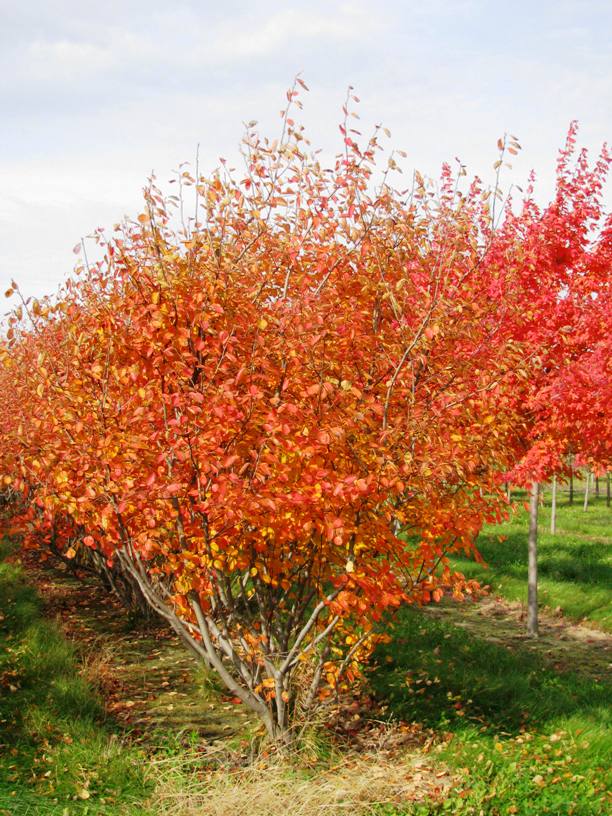
Multi Autumn Brilliance Serviceberry

AMELANCHIER X GRANDIFLORA ‘AUTUMN BRILLIANCE’

What if one plant could do everything? That’s the question serviceberry answers with a confident yes. The Multi Autumn Brilliance Serviceberry is like having four seasons’ worth of garden drama compressed into one gorgeous, elegant shrub. Spring arrives with clouds of delicate white flowers. Summer delivers fresh green foliage and edible berries that birds (and gardeners) absolutely adore. Fall? That’s when this plant truly earns its name, transforming into a blaze of crimson, orange, and gold that stops you mid-step every time you walk past. And winter adds its own quiet charm with an attractive branching structure that catches the snow. This is the plant that people ask about at dinner parties.

What it looks like

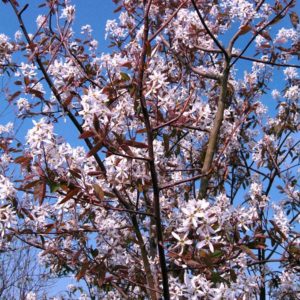
Multi Autumn Brilliance grows as a multi-stemmed shrub with a naturally graceful, airy form—think of it as the ballerina of the serviceberry world. In spring, it’s covered with delicate five-petaled white flowers that create a soft, romantic haze. By early summer, those flowers develop into small round berries that start out red and gradually darken to almost black. The real show-stopper, though, happens in autumn when the foliage transforms into shades of red, burgundy, and golden orange that seem to glow in the late afternoon light. The mature plant typically reaches 15 to 20 feet tall with a spread of 12 to 15 feet, though you can maintain a smaller size with selective pruning if space is tight.

Growing it in your garden

Here’s what makes Multi Autumn Brilliance such a joy for Connecticut gardeners: it’s unfussy. This plant handles the full range of New England conditions with grace. It thrives in full sun but adapts beautifully to part shade, making it perfect for those spots where you’re not getting six solid hours of direct sun. Soil-wise, it’s flexible—it prefers well-drained soil but tolerates everything from slightly acidic to neutral pH. It actually performs remarkably well in locations that stay a bit moist, which is a huge asset in Connecticut’s variable rainfall patterns.

Unlike some ornamental shrubs that demand perfect conditions, Multi Autumn Brilliance is genuinely low-maintenance. Plant it in spring or fall, water it well during the first growing season to establish a strong root system, and then largely let it do its thing. It’s naturally disease-resistant and pest-resistant, which means you’re not going to spend your evenings battling spider mites or fungal issues.

Through the seasons

Spring brings those ethereal white flowers that appear before the leaves fully emerge—it’s one of the first real signs that winter has finally released its grip on Connecticut. The flowers last several weeks, providing early-season interest and an important nectar source for pollinators waking from winter dormancy.

Summer sees the berries ripen and the plant settle into a lush green presence. The berries attract birds (so you may have less fruit than you’d like to eat yourself, but that’s honestly part of the joy of serviceberry—you’re feeding wildlife while beautifying your yard).

Fall is unquestionably the star season. The foliage color is particularly vibrant in years with cooler nights and sunny days, which Connecticut delivers reliably in September and October. Even in milder years, you’ll get dependable reds and oranges.

Winter reveals the elegant structure of the multi-stemmed form, creating visual interest when most of the garden is bare.

Where it shines

This is genuinely a plant that works beautifully in almost any garden role. Use it as a specimen shrub where you want year-round interest. Plant it at the back of a mixed border to add height and structure. Line a property line for a native screening plant that’s far more beautiful than a plain hedge. Position it where evening light can shine through the foliage in fall—that backlighting transforms the autumn color into something almost supernatural. It’s also fantastic in naturalized settings or woodland edge gardens, where it mingles happily with other native plants.

Perfect companions

Multi Autumn Brilliance pairs beautifully with other plants that respect its elegant simplicity. Underplant it with shade-tolerant perennials like hellebores, woodland phlox, or hostas. Combine it with native shrubs like ILEX VERTICILLATA (Winterberry) for extended seasonal interest and wildlife support. The white spring flowers look stunning against dark evergreens like ILEX or TAXUS. In fall, the warm tones coordinate gorgeously with ornamental grasses and late-blooming perennials in purple or gold.

Care tips

Prune lightly in late winter if you want to maintain a specific shape or remove any crossing branches. Multi Autumn Brilliance actually benefits from occasional selective pruning—it encourages the plant to fill in more densely. Fertilize only if your soil is particularly poor; most Connecticut soils provide adequate nutrition. Water deeply during establishment and during extended dry spells in summer. That’s genuinely it. This plant doesn’t require coddling.

Quick facts

  • Hardiness Zone: 4–9 (thrives throughout Connecticut)
  • Mature Height & Spread: 15–20 feet tall and 12–15 feet wide
  • Bloom Season: April–May (flowers); August–September (fruit ripening)
  • Light Requirements: Full sun to part shade
  • Water Needs: Moderate; prefers consistent moisture but tolerates some dryness once established
  • Available at: Both our retail and wholesale locations
Multi Autumn Brilliance Serviceberry

This is a small, deciduous, usually multi-trunked understory tree or tall shrub which typically matures to 15-20’ tall. Flowers bloom in April followed by edible fruits (3/8″ diameter) in June (hence the sometimes used common name of Juneberry for amelanchiers).

Description

Multi Autumn Brilliance Serviceberry

AMELANCHIER X GRANDIFLORA ‘AUTUMN BRILLIANCE’

What if one plant could do everything? That’s the question serviceberry answers with a confident yes. The Multi Autumn Brilliance Serviceberry is like having four seasons’ worth of garden drama compressed into one gorgeous, elegant shrub. Spring arrives with clouds of delicate white flowers. Summer delivers fresh green foliage and edible berries that birds (and gardeners) absolutely adore. Fall? That’s when this plant truly earns its name, transforming into a blaze of crimson, orange, and gold that stops you mid-step every time you walk past. And winter adds its own quiet charm with an attractive branching structure that catches the snow. This is the plant that people ask about at dinner parties.

What it looks like

Multi Autumn Brilliance grows as a multi-stemmed shrub with a naturally graceful, airy form—think of it as the ballerina of the serviceberry world. In spring, it’s covered with delicate five-petaled white flowers that create a soft, romantic haze. By early summer, those flowers develop into small round berries that start out red and gradually darken to almost black. The real show-stopper, though, happens in autumn when the foliage transforms into shades of red, burgundy, and golden orange that seem to glow in the late afternoon light. The mature plant typically reaches 15 to 20 feet tall with a spread of 12 to 15 feet, though you can maintain a smaller size with selective pruning if space is tight.

Growing it in your garden

Here’s what makes Multi Autumn Brilliance such a joy for Connecticut gardeners: it’s unfussy. This plant handles the full range of New England conditions with grace. It thrives in full sun but adapts beautifully to part shade, making it perfect for those spots where you’re not getting six solid hours of direct sun. Soil-wise, it’s flexible—it prefers well-drained soil but tolerates everything from slightly acidic to neutral pH. It actually performs remarkably well in locations that stay a bit moist, which is a huge asset in Connecticut’s variable rainfall patterns.

Unlike some ornamental shrubs that demand perfect conditions, Multi Autumn Brilliance is genuinely low-maintenance. Plant it in spring or fall, water it well during the first growing season to establish a strong root system, and then largely let it do its thing. It’s naturally disease-resistant and pest-resistant, which means you’re not going to spend your evenings battling spider mites or fungal issues.

Through the seasons

Spring brings those ethereal white flowers that appear before the leaves fully emerge—it’s one of the first real signs that winter has finally released its grip on Connecticut. The flowers last several weeks, providing early-season interest and an important nectar source for pollinators waking from winter dormancy.

Summer sees the berries ripen and the plant settle into a lush green presence. The berries attract birds (so you may have less fruit than you’d like to eat yourself, but that’s honestly part of the joy of serviceberry—you’re feeding wildlife while beautifying your yard).

Fall is unquestionably the star season. The foliage color is particularly vibrant in years with cooler nights and sunny days, which Connecticut delivers reliably in September and October. Even in milder years, you’ll get dependable reds and oranges.

Winter reveals the elegant structure of the multi-stemmed form, creating visual interest when most of the garden is bare.

Where it shines

This is genuinely a plant that works beautifully in almost any garden role. Use it as a specimen shrub where you want year-round interest. Plant it at the back of a mixed border to add height and structure. Line a property line for a native screening plant that’s far more beautiful than a plain hedge. Position it where evening light can shine through the foliage in fall—that backlighting transforms the autumn color into something almost supernatural. It’s also fantastic in naturalized settings or woodland edge gardens, where it mingles happily with other native plants.

Perfect companions

Multi Autumn Brilliance pairs beautifully with other plants that respect its elegant simplicity. Underplant it with shade-tolerant perennials like hellebores, woodland phlox, or hostas. Combine it with native shrubs like ILEX VERTICILLATA (Winterberry) for extended seasonal interest and wildlife support. The white spring flowers look stunning against dark evergreens like ILEX or TAXUS. In fall, the warm tones coordinate gorgeously with ornamental grasses and late-blooming perennials in purple or gold.

Care tips

Prune lightly in late winter if you want to maintain a specific shape or remove any crossing branches. Multi Autumn Brilliance actually benefits from occasional selective pruning—it encourages the plant to fill in more densely. Fertilize only if your soil is particularly poor; most Connecticut soils provide adequate nutrition. Water deeply during establishment and during extended dry spells in summer. That’s genuinely it. This plant doesn’t require coddling.

Quick facts

  • Hardiness Zone: 4–9 (thrives throughout Connecticut)
  • Mature Height & Spread: 15–20 feet tall and 12–15 feet wide
  • Bloom Season: April–May (flowers); August–September (fruit ripening)
  • Light Requirements: Full sun to part shade
  • Water Needs: Moderate; prefers consistent moisture but tolerates some dryness once established
  • Available at: Both our retail and wholesale locations