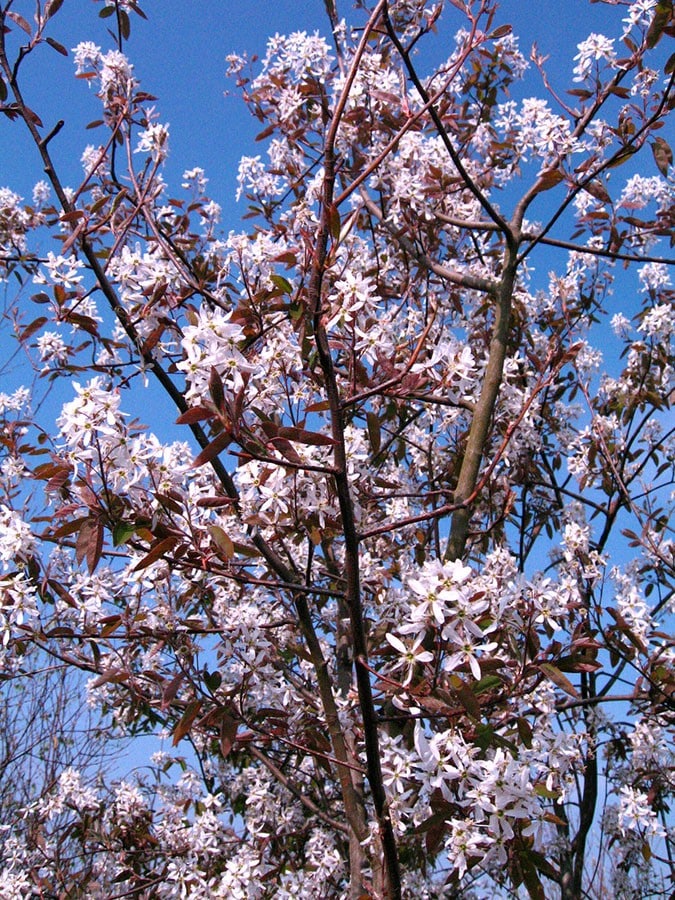
AMELANCHIER X GRANDIFLORA ‘ROBIN HILL’

If you’ve been searching for a plant that delivers on multiple fronts—gorgeous spring blooms, edible berries, stunning fall color, and architectural grace through winter—Serviceberry ‘Robin Hill’ is about to become your garden MVP. This hybrid Serviceberry has earned its place in Connecticut gardens through decades of reliable performance, offering the kind of four-season interest that makes gardeners feel genuinely clever about their planting choices.

What it looks like

Serviceberry ‘Robin Hill’ is a multi-stemmed deciduous shrub that develops a graceful, upright form as it matures. The plant’s real showstopper moment arrives in mid-spring when it becomes absolutely draped in pale pink flowers that fade to soft white as they open—a delicate, extended bloom show that lasts several weeks. These flowers emerge just as the new foliage unfurls, creating a stunning layered effect where bronze-red new growth contrasts beautifully with the lighter pink blooms.

The dark green, oval leaves provide reliable summer texture, and here’s where ‘Robin Hill’ flexes: in fall, the foliage transforms into brilliant shades of orange, red, and burgundy that persist well into autumn. Even the berries are handsome—small, dark purple fruits that ripen in early summer and attract birds while remaining ornamental if they don’t get completely devoured by wildlife. The plant’s winter branching structure remains attractive, with a tidy, well-proportioned silhouette that doesn’t look leggy or sparse.

Growing it in your garden

Serviceberry ‘Robin Hill’ is refreshingly adaptable and genuinely forgiving, which explains why it’s been a workhorse in New England landscapes for so long. It thrives in full sun to part shade conditions—though it performs best with at least four hours of direct sunlight for the most abundant flowering. The plant adapts well to Connecticut’s diverse soil conditions, preferring slightly acidic, well-draining soil but tolerating clay and rocky soils that would make other plants sulk.

One of its greatest gifts is its flexibility with moisture. While it prefers consistently moist soil, ‘Robin Hill’ can handle both wetter areas and periods of relative drought once established—a genuine asset in a region where spring can bring torrential rains followed by summer dry spells. It’s also reliably hardy throughout New England, requiring no winter protection or coddling in our Zone 5 and 6 gardens.

Through the seasons

Spring is when Serviceberry ‘Robin Hill’ commands attention with its spectacular two-toned flower display, often coinciding with the emergence of fresh bronze foliage. By early summer, the flowers have faded and small berries begin forming, ripening to that dark purple that signals they’re ready for birds and foraging humans alike. If you’re interested in the berries for jam or pie, you’ll want to net the plant or race the birds.

Summer brings solid, unfussy greenery that serves as a calm backdrop for other garden stars. Autumn is magnificent—the entire plant glows with warm tones while any remaining berries add dark jewel-like accents. Winter reveals that graceful branching structure, giving the plant quiet architectural interest even when deciduous.

Where it shines

This is a plant that works equally well as a specimen shrub in a prominent location or as part of a mixed border. In Connecticut woodland gardens, AMELANCHIER X GRANDIFLORA ‘ROBIN HILL’ integrates beautifully into naturalized settings while still looking intentional and refined. It’s excellent for screening, tall borders, or that tricky location where you need something with presence but not overpowering size. The plant also thrives in rain gardens and areas with seasonal wet soil, making it ideal for Connecticut properties dealing with stormwater management.

Perfect companions

Pair ‘Robin Hill’ with other spring bloomers like VIBURNUM for complementary texture and extended flowering interest. Shade-tolerant underplantings of spring bulbs—think hellebores, trillium, and shade-loving perennials—look elegant beneath the open branching structure. Late-season bloomers like Joe-Pye Weed or ornamental grasses extend the garden’s interest after Serviceberry has finished its spring performance. Evergreens like Boxwood provide welcome winter contrast to the deciduous form.

Care tips

Serviceberry ‘Robin Hill’ is genuinely low-maintenance once established. Prune right after flowering if needed, removing any crossing branches or shaping the form—the plant responds beautifully to selective pruning. Watch for occasional fungal issues (typical for Connecticut humidity) by ensuring good air circulation. Japanese beetles may visit but rarely cause serious damage. Water regularly the first year, then let the plant’s adaptability take over. Avoid heavy fertilizing, which encourages excessive growth over flowers.

Quick facts

  • Hardiness Zone: 4-9
  • Mature Height & Spread: 15-25 feet tall, 12-15 feet wide (varies with growing conditions)
  • Bloom Season: Mid-spring (April-May in Connecticut)
  • Light Requirements: Full sun to part shade (4+ hours direct sun preferred)
  • Water Needs: Moderate; adaptable to wet and dry conditions once established
  • Available at: Both our retail and wholesale locations.
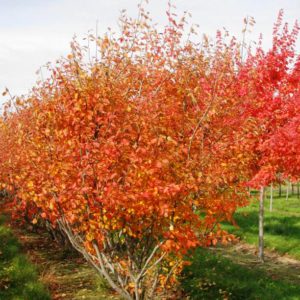
Serviceberry ‘ Robin Hill ‘

Robin Hill produces pink flower buds distinguish this variety from other selections. Topping out at 25′ with a width of 12′ to 15′ at maturity. Robin Hill’s upright habit also makes it a good choice for street plantings or other upright settings where a small and attractive tree is desired.

Pot Size (gallons), Height: #7 , 5-6′

Description

AMELANCHIER X GRANDIFLORA ‘ROBIN HILL’

If you’ve been searching for a plant that delivers on multiple fronts—gorgeous spring blooms, edible berries, stunning fall color, and architectural grace through winter—Serviceberry ‘Robin Hill’ is about to become your garden MVP. This hybrid Serviceberry has earned its place in Connecticut gardens through decades of reliable performance, offering the kind of four-season interest that makes gardeners feel genuinely clever about their planting choices.

What it looks like

Serviceberry ‘Robin Hill’ is a multi-stemmed deciduous shrub that develops a graceful, upright form as it matures. The plant’s real showstopper moment arrives in mid-spring when it becomes absolutely draped in pale pink flowers that fade to soft white as they open—a delicate, extended bloom show that lasts several weeks. These flowers emerge just as the new foliage unfurls, creating a stunning layered effect where bronze-red new growth contrasts beautifully with the lighter pink blooms.

The dark green, oval leaves provide reliable summer texture, and here’s where ‘Robin Hill’ flexes: in fall, the foliage transforms into brilliant shades of orange, red, and burgundy that persist well into autumn. Even the berries are handsome—small, dark purple fruits that ripen in early summer and attract birds while remaining ornamental if they don’t get completely devoured by wildlife. The plant’s winter branching structure remains attractive, with a tidy, well-proportioned silhouette that doesn’t look leggy or sparse.

Growing it in your garden

Serviceberry ‘Robin Hill’ is refreshingly adaptable and genuinely forgiving, which explains why it’s been a workhorse in New England landscapes for so long. It thrives in full sun to part shade conditions—though it performs best with at least four hours of direct sunlight for the most abundant flowering. The plant adapts well to Connecticut’s diverse soil conditions, preferring slightly acidic, well-draining soil but tolerating clay and rocky soils that would make other plants sulk.

One of its greatest gifts is its flexibility with moisture. While it prefers consistently moist soil, ‘Robin Hill’ can handle both wetter areas and periods of relative drought once established—a genuine asset in a region where spring can bring torrential rains followed by summer dry spells. It’s also reliably hardy throughout New England, requiring no winter protection or coddling in our Zone 5 and 6 gardens.

Through the seasons

Spring is when Serviceberry ‘Robin Hill’ commands attention with its spectacular two-toned flower display, often coinciding with the emergence of fresh bronze foliage. By early summer, the flowers have faded and small berries begin forming, ripening to that dark purple that signals they’re ready for birds and foraging humans alike. If you’re interested in the berries for jam or pie, you’ll want to net the plant or race the birds.

Summer brings solid, unfussy greenery that serves as a calm backdrop for other garden stars. Autumn is magnificent—the entire plant glows with warm tones while any remaining berries add dark jewel-like accents. Winter reveals that graceful branching structure, giving the plant quiet architectural interest even when deciduous.

Where it shines

This is a plant that works equally well as a specimen shrub in a prominent location or as part of a mixed border. In Connecticut woodland gardens, AMELANCHIER X GRANDIFLORA ‘ROBIN HILL’ integrates beautifully into naturalized settings while still looking intentional and refined. It’s excellent for screening, tall borders, or that tricky location where you need something with presence but not overpowering size. The plant also thrives in rain gardens and areas with seasonal wet soil, making it ideal for Connecticut properties dealing with stormwater management.

Perfect companions

Pair ‘Robin Hill’ with other spring bloomers like VIBURNUM for complementary texture and extended flowering interest. Shade-tolerant underplantings of spring bulbs—think hellebores, trillium, and shade-loving perennials—look elegant beneath the open branching structure. Late-season bloomers like Joe-Pye Weed or ornamental grasses extend the garden’s interest after Serviceberry has finished its spring performance. Evergreens like Boxwood provide welcome winter contrast to the deciduous form.

Care tips

Serviceberry ‘Robin Hill’ is genuinely low-maintenance once established. Prune right after flowering if needed, removing any crossing branches or shaping the form—the plant responds beautifully to selective pruning. Watch for occasional fungal issues (typical for Connecticut humidity) by ensuring good air circulation. Japanese beetles may visit but rarely cause serious damage. Water regularly the first year, then let the plant’s adaptability take over. Avoid heavy fertilizing, which encourages excessive growth over flowers.

Quick facts

  • Hardiness Zone: 4-9
  • Mature Height & Spread: 15-25 feet tall, 12-15 feet wide (varies with growing conditions)
  • Bloom Season: Mid-spring (April-May in Connecticut)
  • Light Requirements: Full sun to part shade (4+ hours direct sun preferred)
  • Water Needs: Moderate; adaptable to wet and dry conditions once established
  • Available at: Both our retail and wholesale locations.