Description

FAGUS SYLVATICA ‘RED OBELISK’
Picture a living exclamation point in your landscape—tall, narrow, and dressed in deep burgundy foliage that turns heads every single season. The Red Obelisk European Beech is for gardeners who want drama without sprawl, who crave that sophisticated European garden feel right here in Connecticut, and who understand that sometimes the most striking plants are those that break the mold. This is beech reimagined: elegant, vertical, and impossibly ornamental from spring through winter.
What it looks like
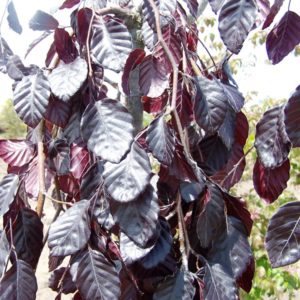
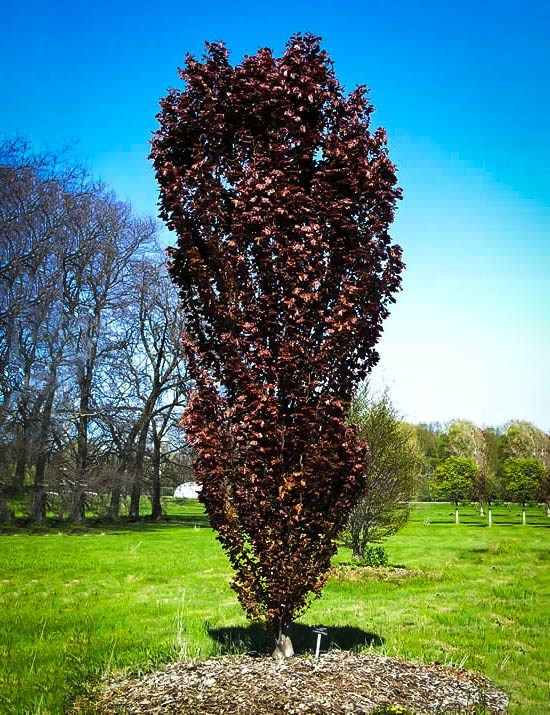
Unlike its spreading cousins, Red Obelisk grows in a distinctly columnar form—narrow and upright, almost architectural in its precision. The foliage emerges in spring as a gorgeous deep red-purple, a color that intensifies as the season progresses. By summer, you’re looking at rich burgundy leaves that seem to glow in afternoon light. Come autumn, the color deepens further into almost wine-dark tones before shifting to bronze-copper and finally holding onto those warm copper leaves well into winter. Yes, it keeps most of its foliage through our New England cold, giving you structure and color when you need it most.
The branching is dense and orderly, creating a neat columnar silhouette that requires minimal shaping. Tiny flowers appear in spring—inconspicuous but charming—followed by small triangular beechnuts nestled in spiky husks that add another layer of textural interest.
Growing it in your garden
European Beech is remarkably adaptable, which is part of why it’s thrived across gardens from England to Connecticut for centuries. Red Obelisk prefers full sun to part shade; you’ll want at least four hours of direct sun daily to get the deepest, richest color expression. It’s not fussy about soil pH and tolerates everything from slightly acidic to slightly alkaline conditions, which covers most Connecticut gardens beautifully.
The key is good drainage. Like all beeches, this one doesn’t love soggy feet, so avoid low spots that collect water after heavy rains. Plant it somewhere with air circulation—this helps prevent foliar diseases and keeps the tree healthy year-round. Give it room to grow vertically without crowding; the narrow form means you don’t need acres of space, but it shouldn’t be squeezed between other plants.
Through the seasons
Spring brings a flush of deep red growth—subtle but sophisticated—as the tree leafs out. Summer is when Red Obelisk really earns its keep, providing a vertical element of deep burgundy that grounds the garden and offers striking contrast against lighter-leaved plants and flowering perennials. The color is consistent and strong, not the fading red of some trees that turn greenish-brown by mid-July.
Autumn is spectacular; the temperature drops, and those burgundy leaves shift into coppery, rusty tones that glow warmly in the lower light. Many leaves persist through winter, creating a beautiful structural element and a backdrop for evergreens, ornamental grasses, and winter-blooming plants. Even in the bare months of deep winter, the silvery-gray bark and graceful branching pattern contribute quiet beauty to the landscape.
Where it shines
Red Obelisk is perfect as a specimen plant—it’s striking enough to anchor a corner, frame an entryway, or draw the eye vertically in a garden that needs height without width. It works beautifully in contemporary landscapes, cottage gardens, European-inspired designs, and formal settings. Try it at the end of a pathway, in a mixed border where it provides height and persistent color, or as a living screen that offers privacy without creating an impenetrable wall.
In smaller Connecticut yards, this columnar form solves the problem that traditional shade trees create: you get mature tree presence without the sprawling canopy that shades everything else out. It’s also excellent in containers for several years if you need a focal point for a patio or entryway garden.
Perfect companions
The deep burgundy foliage of Red Obelisk makes an excellent backdrop for silver-leaved plants like dusty miller or artemisia, chartreuse-foliaged plants like golden elderberry, and white or pale pink flowering shrubs. Pair it with ornamental grasses for textural contrast—the vertical line of the beech against the airy movement of feathery grasses is sophistication itself. Spring bulbs at its base—especially white or pale yellow varieties—look stunning against the emerging deep red foliage.
Care tips
Red Obelisk needs minimal pruning to maintain its natural columnar shape. A light shaping in late winter is all that’s usually necessary. Water regularly through the first year and during dry spells in summer; once established, it’s fairly drought-tolerant. Mulch around the base to retain moisture and keep roots cool. Watch for beech scale and woolly aphids in summer (common but manageable with horticultural oil if needed), and ensure good air circulation to prevent foliar diseases. Otherwise, this is a low-maintenance tree that rewards good placement with years of beautiful growth.
Quick facts
- Hardiness Zone: 4–7 (thrives in Connecticut)
- Mature Height & Spread: 40–50 feet tall, 8–12 feet wide
- Bloom Season: Spring (inconspicuous flowers)
- Light Requirements: Full sun to part shade (4+ hours direct sun for best color)
- Water Needs: Moderate; prefers well-draining soil, fairly drought-tolerant when established
- Available at: Both our retail and wholesale locations