Purpurea Pendula

PRUNUS SERRULATA ‘PURPUREA PENDULA’

What if you could have a living sculpture that transforms your entire garden into something from a dream? The Purpurea Pendula—often called the Weeping Purple Cherry—is that rare combination of architectural drama and delicate romance. With its gracefully cascading branches and deep purple-bronze foliage that seems to glow in spring sunlight, this tree doesn’t just grow in your garden; it becomes the focal point that makes people pause and stare. In New England, where we’re accustomed to reliable spring bloomers, this ornamental cherry offers something genuinely spectacular: a weeping form that brings Japanese garden elegance to Connecticut landscapes.

What it looks like

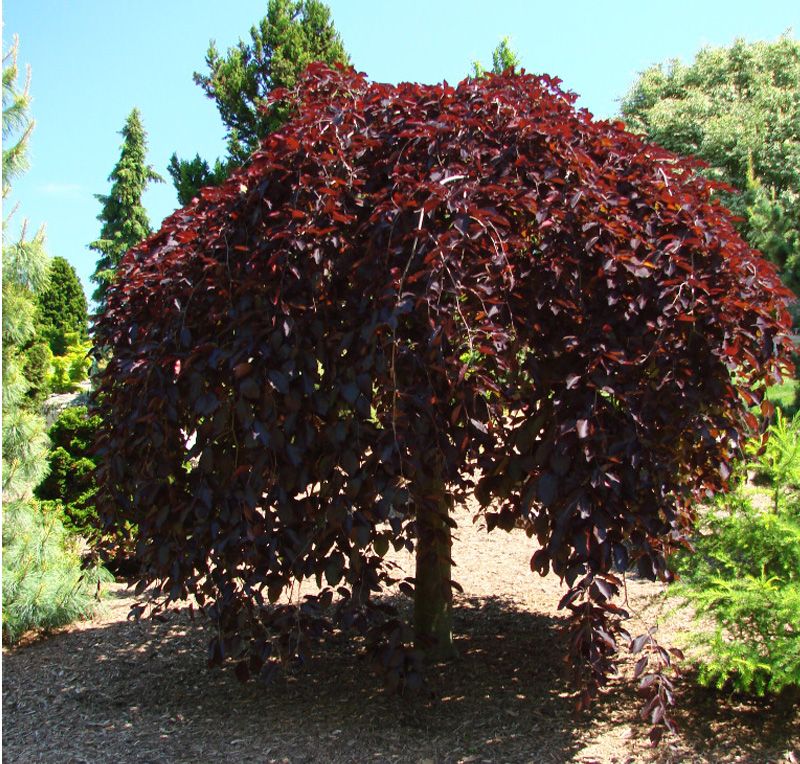
This is a small to medium tree with a distinctive weeping, fountain-like form. The branches cascade gracefully downward in an almost theatrical way, creating a natural umbrella shape that’s both architectural and romantic. What makes Purpurea Pendula truly special is its foliage—the emerging leaves are a rich, deep purple-bronze that transitions to darker green as spring progresses, then back to bronze-purple tones as fall arrives. In spring, delicate pink flowers appear along those drooping branches, creating layers of color and movement. The overall effect is of a tree perpetually in motion, even on still days.

Growing it in your garden

Purpurea Pendula thrives in full sun locations where it gets at least six hours of direct light daily—this is essential for developing those gorgeous purple tones and encouraging abundant spring blooms. It prefers well-draining soil and appreciates consistent moisture during its establishment period (the first year or two after planting). Unlike some ornamental cherries that struggle with Connecticut’s humidity and occasional disease pressure, this variety is reasonably hardy and adaptable. Plant it where you can see it daily; it’s too beautiful to tuck away in a back corner. Allow adequate space for its spreading form—this tree deserves room to express its natural weeping architecture without being crowded by neighbors.

Through the seasons

Spring is when Purpurea Pendula truly stars. As temperatures warm and days lengthen, delicate pink blossoms emerge along the cascading branches, creating an almost ethereal display. The combination of purple-bronze new growth and pink flowers is simply intoxicating. Summer brings rich, deep foliage that provides interesting color contrast against green specimen plantings. The weeping form means dappled shade underneath—a perfect spot to sit with your morning coffee. Fall offers another show as leaves transition back to bronze and purple before dropping, revealing the elegant branching structure. Winter reveals the tree’s architectural bones—that fountain-like form is surprisingly beautiful even without foliage, creating interest during Connecticut’s quieter months.

Where it shines

This is a specimen tree, pure and simple. Plant it as a focal point in your landscape where it can be appreciated from multiple angles and viewing distances. It’s magnificent as a centerpiece in a perennial garden, at the end of a garden path, or positioned to frame a view. Near water features, its weeping form is reflected beautifully. In Japanese-inspired or modern minimalist gardens, it provides the living sculpture that everything else in the design orbits around. If you have an area where you want to create a moment of quiet beauty—a meditation spot or a favorite viewing window—Purpurea Pendula is your answer.

Perfect companions

Plant Purpurea Pendula with shade-tolerant companions that won’t compete for attention. Hostas in blue-green varieties create beautiful color contrast beneath the canopy. Japanese maples with fine-textured foliage complement the weeping form without fighting for visual dominance. Hellebores and helleborus species provide early spring interest at ground level before your cherry truly takes center stage. Consider planting Japanese forest grass or other fine-textured groundcovers in the dappled shade zone underneath—they’ll soften the transition between tree and garden. Avoid planting anything demanding or showy nearby; let this tree be the showstopper.

Care tips

Water regularly during the first growing season to establish a strong root system—ornamental cherries are worth this investment. Apply a 2-3 inch mulch layer around the base, keeping it a few inches away from the trunk. Prune judiciously and only to maintain shape; these trees develop their beautiful form naturally with minimal intervention. In Connecticut, monitor for cherry leaf spot in humid summers, but this variety shows good resistance compared to some ornamental cherries. Avoid planting in areas with poor drainage or heavy clay soil—incorporate organic matter into the planting hole to improve drainage. Fertilizing is rarely necessary if the tree is planted in decent soil.

Quick facts

  • Hardiness Zone: 4-8
  • Mature Height & Spread: 20-25 feet tall with a similar or slightly greater spread depending on growing conditions
  • Bloom Season: Spring (April-May in Connecticut)
  • Light Requirements: Full sun (minimum 6 hours direct sunlight)
  • Water Needs: Moderate; consistent moisture during establishment, then drought-tolerant once established
  • Available at: Both our retail and wholesale locations
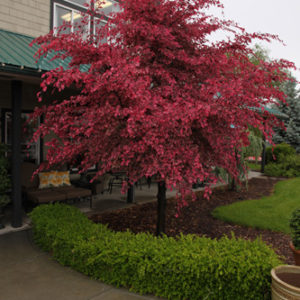
Purpurea Pendula

Category:

Best grown in deep, rich, moist but well-drained soils in full sun to part shade. Intolerant of wet, poorly drained soils. Difficult to transplant and does not always grow well in urban settings. Reportedly tolerates a wider range of soils than American beech.

Pot Size (gallons), Height: 5-6′

Description

Purpurea Pendula

PRUNUS SERRULATA ‘PURPUREA PENDULA’

What if you could have a living sculpture that transforms your entire garden into something from a dream? The Purpurea Pendula—often called the Weeping Purple Cherry—is that rare combination of architectural drama and delicate romance. With its gracefully cascading branches and deep purple-bronze foliage that seems to glow in spring sunlight, this tree doesn’t just grow in your garden; it becomes the focal point that makes people pause and stare. In New England, where we’re accustomed to reliable spring bloomers, this ornamental cherry offers something genuinely spectacular: a weeping form that brings Japanese garden elegance to Connecticut landscapes.

What it looks like

This is a small to medium tree with a distinctive weeping, fountain-like form. The branches cascade gracefully downward in an almost theatrical way, creating a natural umbrella shape that’s both architectural and romantic. What makes Purpurea Pendula truly special is its foliage—the emerging leaves are a rich, deep purple-bronze that transitions to darker green as spring progresses, then back to bronze-purple tones as fall arrives. In spring, delicate pink flowers appear along those drooping branches, creating layers of color and movement. The overall effect is of a tree perpetually in motion, even on still days.

Growing it in your garden

Purpurea Pendula thrives in full sun locations where it gets at least six hours of direct light daily—this is essential for developing those gorgeous purple tones and encouraging abundant spring blooms. It prefers well-draining soil and appreciates consistent moisture during its establishment period (the first year or two after planting). Unlike some ornamental cherries that struggle with Connecticut’s humidity and occasional disease pressure, this variety is reasonably hardy and adaptable. Plant it where you can see it daily; it’s too beautiful to tuck away in a back corner. Allow adequate space for its spreading form—this tree deserves room to express its natural weeping architecture without being crowded by neighbors.

Through the seasons

Spring is when Purpurea Pendula truly stars. As temperatures warm and days lengthen, delicate pink blossoms emerge along the cascading branches, creating an almost ethereal display. The combination of purple-bronze new growth and pink flowers is simply intoxicating. Summer brings rich, deep foliage that provides interesting color contrast against green specimen plantings. The weeping form means dappled shade underneath—a perfect spot to sit with your morning coffee. Fall offers another show as leaves transition back to bronze and purple before dropping, revealing the elegant branching structure. Winter reveals the tree’s architectural bones—that fountain-like form is surprisingly beautiful even without foliage, creating interest during Connecticut’s quieter months.

Where it shines

This is a specimen tree, pure and simple. Plant it as a focal point in your landscape where it can be appreciated from multiple angles and viewing distances. It’s magnificent as a centerpiece in a perennial garden, at the end of a garden path, or positioned to frame a view. Near water features, its weeping form is reflected beautifully. In Japanese-inspired or modern minimalist gardens, it provides the living sculpture that everything else in the design orbits around. If you have an area where you want to create a moment of quiet beauty—a meditation spot or a favorite viewing window—Purpurea Pendula is your answer.

Perfect companions

Plant Purpurea Pendula with shade-tolerant companions that won’t compete for attention. Hostas in blue-green varieties create beautiful color contrast beneath the canopy. Japanese maples with fine-textured foliage complement the weeping form without fighting for visual dominance. Hellebores and helleborus species provide early spring interest at ground level before your cherry truly takes center stage. Consider planting Japanese forest grass or other fine-textured groundcovers in the dappled shade zone underneath—they’ll soften the transition between tree and garden. Avoid planting anything demanding or showy nearby; let this tree be the showstopper.

Care tips

Water regularly during the first growing season to establish a strong root system—ornamental cherries are worth this investment. Apply a 2-3 inch mulch layer around the base, keeping it a few inches away from the trunk. Prune judiciously and only to maintain shape; these trees develop their beautiful form naturally with minimal intervention. In Connecticut, monitor for cherry leaf spot in humid summers, but this variety shows good resistance compared to some ornamental cherries. Avoid planting in areas with poor drainage or heavy clay soil—incorporate organic matter into the planting hole to improve drainage. Fertilizing is rarely necessary if the tree is planted in decent soil.

Quick facts

  • Hardiness Zone: 4-8
  • Mature Height & Spread: 20-25 feet tall with a similar or slightly greater spread depending on growing conditions
  • Bloom Season: Spring (April-May in Connecticut)
  • Light Requirements: Full sun (minimum 6 hours direct sunlight)
  • Water Needs: Moderate; consistent moisture during establishment, then drought-tolerant once established
  • Available at: Both our retail and wholesale locations