Description
POTENTILLA FRUTICOSA
If you’ve been searching for something that handles wet soil, deep shade, and Connecticut winters without complaint, while somehow still delivering months of cheerful flowers—well, Shrubby Cinquefoil might be the answer you’ve been waiting for. This is the kind of plant that quietly earns its place in every gardener’s landscape, not through drama, but through sheer, unshakeable dependability. It shows up, does its job, and asks for almost nothing in return.
What it looks like
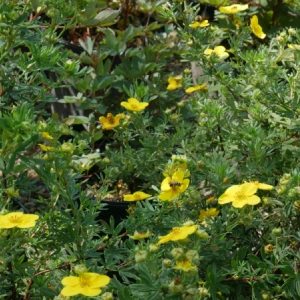
Shrubby Cinquefoil is a compact, rounded shrub with delicate, feathery foliage that looks almost fern-like when you get close enough to notice. The leaves are tiny and finely divided, creating an airy, fine-textured appearance that feels more refined than you’d expect from such a tough plant. But the real show comes from the flowers: small, five-petaled blooms that appear throughout the growing season in shades of yellow, pink, red, or white, depending on the cultivar. The flowers remind many gardeners of wild roses, which makes sense—POTENTILLA and roses are distant cousins in the plant world. Even when flowers fade, the plant maintains its neat, attractive form.
Growing it in your garden
Here’s what makes Shrubby Cinquefoil such a gift for Connecticut gardeners: it’s genuinely flexible about growing conditions. Full sun? Perfect. Part sun? Also fine. It’s one of the few flowering shrubs that won’t turn into a leggy mess in partial shade. Soil-wise, it tolerates everything from sandy to clay, wet to dry, acidic to alkaline. It’s like the ultimate problem-solver shrub. Plant it in spring or early fall, water it in regularly for the first season, and then mostly let it do its thing. Once established, it’s drought-tolerant and doesn’t demand fertilizer or coddling. This is a plant that actually gets better with a little neglect—the kind that thrives when you plant it and then turn your attention to the more fussy plants.
Through the seasons
Shrubby Cinquefoil is one of the longest-blooming shrubs you can grow in New England. It starts flowering in early summer—sometimes as early as May depending on the year—and keeps going strong all the way through frost. In years with mild falls, you might see flowers well into November. The foliage stays a fresh, pleasant medium green all season and turns a subtle bronze or russet in autumn, adding another layer of interest. Even in winter, the branching structure of the plant remains attractive, especially when you have snow clinging to it on a cold morning.
Where it shines
Use Shrubby Cinquefoil anywhere you need reliable color and a neat, manageable form. It’s perfect for mass plantings in mixed borders, where multiple plants can create a stunning display. It works beautifully as an informal hedge—it responds well to light shaping without ever looking rigid or formal. Plant it along pathways, in foundation plantings, in containers, or as a specimen in a small garden space where you want year-round structure and season-long flowers. It’s also excellent for xeriscaping and rain gardens, making it ideal for environmentally conscious Connecticut gardeners who want to reduce water usage. Many landscape designers use it extensively because it simply doesn’t fail them.
Perfect companions
Shrubby Cinquefoil pairs beautifully with other sun-loving, low-maintenance plants. Pair it with ornamental grasses like FESTUCA or CALAMAGROSTIS for textural contrast. Underplant it with salvia, catmint (NEPETA), or Russian sage (PEROVSKIA) for a cottage garden feel. It also looks lovely growing alongside other summerlong bloomers like coreopsis or rudbeckia. In shadier spots, combine it with shade-tolerant companions like hellebores, astilbe, or hostas to create dimension and interest in tricky corners.
Care tips
Shrubby Cinquefoil is genuinely low-maintenance. A light pruning in early spring keeps the plant tidy and encourages fuller growth—cut back any dead wood and shape as needed, though the plant rarely requires heavy pruning. Deadheading spent flowers extends the blooming season, but even if you skip this step, the plant keeps flowering regardless. Water young plants regularly during their first growing season to help them establish deep roots. After that, supplemental water during Connecticut’s dry spells will keep the plant looking its best, but it won’t die if you forget. No fertilizer needed. No pest problems. No diseases that typically plague our region.
Quick facts
- Hardiness Zone: Zones 2–7 (reliably hardy throughout Connecticut)
- Mature Height & Spread: 2–4 feet tall and wide, depending on cultivar
- Bloom Season: Early summer through fall frost
- Light Requirements: Full sun to part shade
- Water Needs: Low to moderate; drought-tolerant once established
- Available at: Both our retail and wholesale locations