POLYGONATUM BIFLORUM

If you’ve been searching for something that handles wet soil, deep shade, and Connecticut winters without complaint—while looking absolutely graceful doing it—Solomon’s Seal is the answer you’ve been waiting for. This native woodland perennial is one of those rare plants that doesn’t just survive in challenging spots; it actually thrives there, bringing an understated elegance to the shadiest corners of your garden. Once you plant it, you’ll wonder how you ever gardened without it.

What it looks like

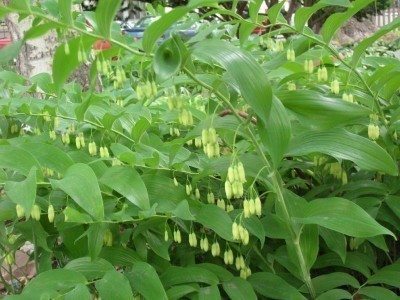
Solomon’s Seal is pure architectural grace. Arching stems rise from the ground in fountain-like sprays, lined with pairs of fresh green leaves that catch dappled light beautifully. In late spring, delicate creamy-white bell-shaped flowers hang beneath the stems in perfect little pairs—a detail that makes you want to get down close and admire them. The flowers give way to small blue-black berries in late summer that birds find irresistible. The overall effect is refined and naturally beautiful, like the plant knows exactly how to dress for a woodland setting.

Growing it in your garden

Here’s what makes Solomon’s Seal such a garden treasure: it’s genuinely easy to grow. Plant it in shade—deep shade, partial shade, it’s flexible—and give it soil that stays somewhat moist. Unlike some shade plants that seem to sulk, POLYGONATUM BIFLORUM actually prefers conditions that would challenge sun-lovers. It’s perfect for that spot under your oak trees where nothing else seems happy, or along a shaded fence line where you need something beautiful but unfussy. In Connecticut’s climate, this plant is completely at home. It’ll spread slowly over time, creating an increasingly lush presence without being invasive or demanding.

Through the seasons

Spring is Solomon’s Seal’s debut. Those elegant arching stems unfurl quickly, and by late May the delicate flowers appear—a subtle reward for patient gardeners. Summer is when the plant really shines, maintaining those gorgeous architectural lines while your shade garden looks polished and intentional. Fall brings the berries, which add visual interest and feed the wildlife heading south. Winter? The plant dies back completely, which is exactly what you want—it’s clean, tidy, and comes roaring back reliably each spring. This is a plant that respects the rhythm of New England seasons.

Where it shines

Solomon’s Seal is a problem-solver for woodland gardens, shade borders, and naturalized areas. It’s stunning planted in drifts along a shaded woodland edge, creating that effortless-looking abundance you see in mature gardens. It’s equally at home in a shade container garden, adding vertical interest and movement. Plant it near spring ephemeral bulbs—it won’t compete with them and will provide lovely greenery after they fade. It’s also excellent for erosion control on slopes and in areas with challenging wet soil where you need something stable and beautiful.

Perfect companions

Solomon’s Seal loves the company of other woodland shade plants. Pair it with hostas for contrasting leaf texture—the arching POLYGONATUM BIFLORUM against bold hosta foliage creates beautiful visual drama. It’s wonderful with hellebores for early season color while your Seal is still emerging. Add ferns—Christmas ferns, ostrich ferns, cinnamon ferns—for a lush, natural woodland feel. In spring, let it grow above emerging woodland ephemerals like trillium and bloodroot. The shade-loving astilbe is another excellent companion, adding feathery texture nearby.

Care tips

Plant Solomon’s Seal in fall or early spring, spacing plants about 18 inches apart if you’re creating a drift—they’ll fill in nicely over two to three years. Water regularly the first season to establish a strong root system, then let New England’s natural rainfall take over. Once established, this plant needs almost nothing from you. No fertilizer required, no pest problems, no disease issues. In early spring, simply clear away last year’s dead stems before new growth emerges. If you ever need to divide a mature planting to share with a friend or expand your woodland garden, do it in spring just as growth is beginning.

Quick facts

  • Hardiness Zone: 3-9
  • Mature Height & Spread: 2-3 feet tall and equally wide
  • Bloom Season: Late May through June
  • Light Requirements: Part shade to deep shade
  • Water Needs: Moderate; prefers consistently moist soil
  • Available at: Both our retail and wholesale locations

Solomon’s Seal

Category:

True Solomon’s seal plant reaches 12 inches (31 cm.) to several feet (1 m.) in height, blooming in April through June. White bell-shaped blossoms dangle below attractive, arching stems. Flowers become bluish black berries in late summer. The attractive, ribbed foliage turns a golden yellow color in autumn.

Pot Size (gallons), Height: #1

Description

POLYGONATUM BIFLORUM

If you’ve been searching for something that handles wet soil, deep shade, and Connecticut winters without complaint—while looking absolutely graceful doing it—Solomon’s Seal is the answer you’ve been waiting for. This native woodland perennial is one of those rare plants that doesn’t just survive in challenging spots; it actually thrives there, bringing an understated elegance to the shadiest corners of your garden. Once you plant it, you’ll wonder how you ever gardened without it.

What it looks like

Solomon’s Seal is pure architectural grace. Arching stems rise from the ground in fountain-like sprays, lined with pairs of fresh green leaves that catch dappled light beautifully. In late spring, delicate creamy-white bell-shaped flowers hang beneath the stems in perfect little pairs—a detail that makes you want to get down close and admire them. The flowers give way to small blue-black berries in late summer that birds find irresistible. The overall effect is refined and naturally beautiful, like the plant knows exactly how to dress for a woodland setting.

Growing it in your garden

Here’s what makes Solomon’s Seal such a garden treasure: it’s genuinely easy to grow. Plant it in shade—deep shade, partial shade, it’s flexible—and give it soil that stays somewhat moist. Unlike some shade plants that seem to sulk, POLYGONATUM BIFLORUM actually prefers conditions that would challenge sun-lovers. It’s perfect for that spot under your oak trees where nothing else seems happy, or along a shaded fence line where you need something beautiful but unfussy. In Connecticut’s climate, this plant is completely at home. It’ll spread slowly over time, creating an increasingly lush presence without being invasive or demanding.

Through the seasons

Spring is Solomon’s Seal’s debut. Those elegant arching stems unfurl quickly, and by late May the delicate flowers appear—a subtle reward for patient gardeners. Summer is when the plant really shines, maintaining those gorgeous architectural lines while your shade garden looks polished and intentional. Fall brings the berries, which add visual interest and feed the wildlife heading south. Winter? The plant dies back completely, which is exactly what you want—it’s clean, tidy, and comes roaring back reliably each spring. This is a plant that respects the rhythm of New England seasons.

Where it shines

Solomon’s Seal is a problem-solver for woodland gardens, shade borders, and naturalized areas. It’s stunning planted in drifts along a shaded woodland edge, creating that effortless-looking abundance you see in mature gardens. It’s equally at home in a shade container garden, adding vertical interest and movement. Plant it near spring ephemeral bulbs—it won’t compete with them and will provide lovely greenery after they fade. It’s also excellent for erosion control on slopes and in areas with challenging wet soil where you need something stable and beautiful.

Perfect companions

Solomon’s Seal loves the company of other woodland shade plants. Pair it with hostas for contrasting leaf texture—the arching POLYGONATUM BIFLORUM against bold hosta foliage creates beautiful visual drama. It’s wonderful with hellebores for early season color while your Seal is still emerging. Add ferns—Christmas ferns, ostrich ferns, cinnamon ferns—for a lush, natural woodland feel. In spring, let it grow above emerging woodland ephemerals like trillium and bloodroot. The shade-loving astilbe is another excellent companion, adding feathery texture nearby.

Care tips

Plant Solomon’s Seal in fall or early spring, spacing plants about 18 inches apart if you’re creating a drift—they’ll fill in nicely over two to three years. Water regularly the first season to establish a strong root system, then let New England’s natural rainfall take over. Once established, this plant needs almost nothing from you. No fertilizer required, no pest problems, no disease issues. In early spring, simply clear away last year’s dead stems before new growth emerges. If you ever need to divide a mature planting to share with a friend or expand your woodland garden, do it in spring just as growth is beginning.

Quick facts

  • Hardiness Zone: 3-9
  • Mature Height & Spread: 2-3 feet tall and equally wide
  • Bloom Season: Late May through June
  • Light Requirements: Part shade to deep shade
  • Water Needs: Moderate; prefers consistently moist soil
  • Available at: Both our retail and wholesale locations