
Description
TSUGA CANADENSIS
If you’ve been searching for something that handles wet soil, deep shade, and Connecticut winters without complaint, while also bringing an elegant, fine-textured grace to your landscape, Eastern Hemlock might be exactly what you’ve been missing. This native conifer has quietly anchored New England’s forests for centuries, and for good reason—it’s a plant that seems to thrive on the very conditions that challenge so many others. There’s something almost meditative about standing beneath a mature hemlock grove, surrounded by its soft, feathery foliage and the gentle filtering of light through its branches.
What it looks like
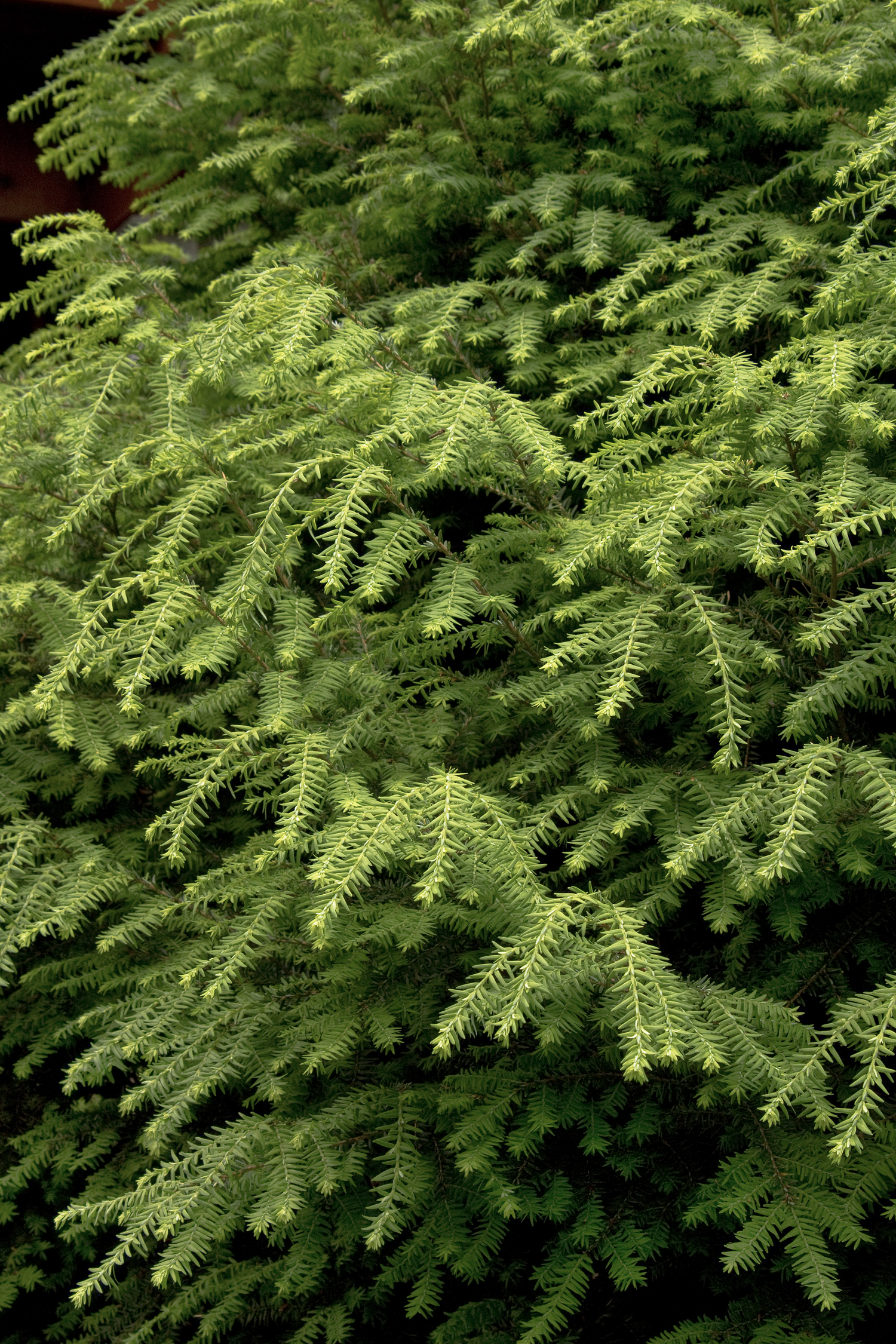
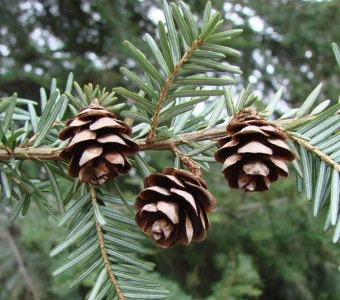
The Eastern Hemlock is a study in quiet elegance. Unlike the bold, architectural conifers that announce themselves from across the yard, hemlock invites you to look closer. Its tiny, delicate needles—soft as a whispered secret—create a feathery texture that sets it apart from spruces and firs. The foliage ranges from deep forest green to a softer sage tone depending on the season and growing conditions. Small cones dangle gracefully from branch tips, and the overall silhouette is naturally pyramidal and refined, with branches that sweep toward the ground.
As the hemlock matures, it develops an elegant, full form that becomes more columnar and stately. The bark is reddish-brown and deeply furrowed—beautiful in winter when every detail of the tree’s architecture shows. In Connecticut’s landscape, hemlock creates a sense of permanence and natural beauty that few plants can match.
Growing it in your garden
Eastern Hemlock is fundamentally a forest tree, which means it’s happiest where it mimics its natural habitat. It prefers consistent moisture and genuinely thrives in partial to full shade—in fact, too much intense afternoon sun can stress it in our hot New England summers. While it can tolerate some drier conditions once established, it performs best when moisture is steady, never waterlogged but never parched.
The good news: this tree is remarkably adaptable. It tolerates acidic soils beautifully (which aligns perfectly with Connecticut’s naturally acidic terrain), and it handles clay and even compacted soils better than you might expect. Plant it where it will benefit from afternoon shade, particularly in our warmer growing zones, and give it room to develop its naturally attractive shape without heavy pruning.
Through the seasons
Eastern Hemlock is a year-round beauty. Spring brings soft new growth that’s even more delicate than mature foliage, creating an almost luminous effect. Summer is when the hemlock truly shines—that feathery texture creates beautiful dappled shade and movement, and the cool microclimate beneath its branches becomes a refuge during Connecticut’s humid season.
Fall? The hemlock doesn’t put on a flashy show, but its deep green becomes richer and more pronounced as deciduous trees around it change. This is actually one of the hemlock’s greatest gifts—it provides continuity and structure when everything else is in transition. Winter reveals the elegant branching pattern, and snow clinging to those fine needles creates a sight that feels almost magical.
Where it shines
Eastern Hemlock is perfect for creating woodland gardens, shaded groves, or natural screening. It’s an excellent choice for rain gardens and bioswales where you need something that won’t mind wet feet. Use it as a backdrop to showcase understory plantings, or mass several together to create a natural-looking forest edge. It’s also magnificent as a specimen tree where its refined texture can be fully appreciated.
In Connecticut gardens where deep shade has been a limiting factor—under mature oaks, along north-facing home foundations, or in those perpetually damp corners—hemlock opens up design possibilities. It’s also invaluable for native plantings and pollinator gardens, as it provides food and shelter for wildlife throughout the year.
Perfect companions
Hemlock pairs beautifully with other shade-tolerant plants that share its woodland aesthetic. Consider underplanting with native ferns, hellebores, or shade-loving perennials like hostas and coral bells. Rhododendrons and mountain laurel complement hemlock’s fine texture with their bolder foliage and spring flowers. In a naturalistic setting, combine hemlock with native understory shrubs like sweetspire or oakleaf hydrangea. The key is choosing companions that thrive in the cool, moist, shaded environment that hemlock creates.
Care tips
Once established, Eastern Hemlock is relatively low-maintenance, but there are a few things to know. Keep an eye out for hemlock woolly adelgid, an invasive pest that can damage or kill hemlock trees in some areas of Connecticut. While not present everywhere, it’s worth monitoring your trees. Water regularly during the first few years after planting to ensure deep root establishment. Avoid planting in hot, dry sites or areas with strong afternoon sun exposure. Minimal pruning is needed—hemlock naturally develops an attractive form, so let it be itself.
Quick facts
- Hardiness Zone: 3–8
- Mature Height & Spread: 40–70 feet tall, 25–35 feet wide (varies by cultivar)
- Bloom Season: Spring (small, inconspicuous flowers; decorative cones follow)
- Light Requirements: Partial to full shade
- Water Needs: Moderate to consistent moisture; prefers evenly moist soils
- Available at: Both our retail and wholesale locations