Description
HYDRANGEA PANICULATA ‘CANDLEABRA’
What if you could have a hydrangea that doesn’t demand constant fussing, actually thrives in Connecticut’s unpredictable summers, and creates dramatic vertical interest that stops people mid-conversation? The Candelabra Hydrangea is exactly that plant. Unlike the floppy panicle types that need staking and babying, this cultivar grows with an almost architectural precision—upright, commanding, and honestly, a little bit smug about how well it performs in New England gardens.
What it looks like
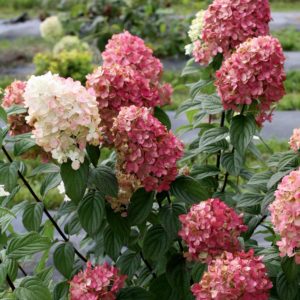
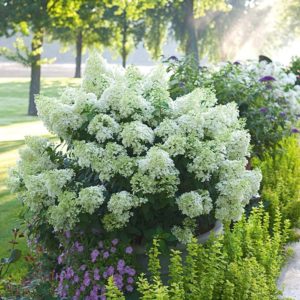
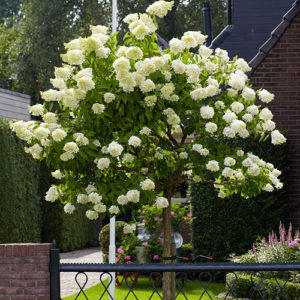
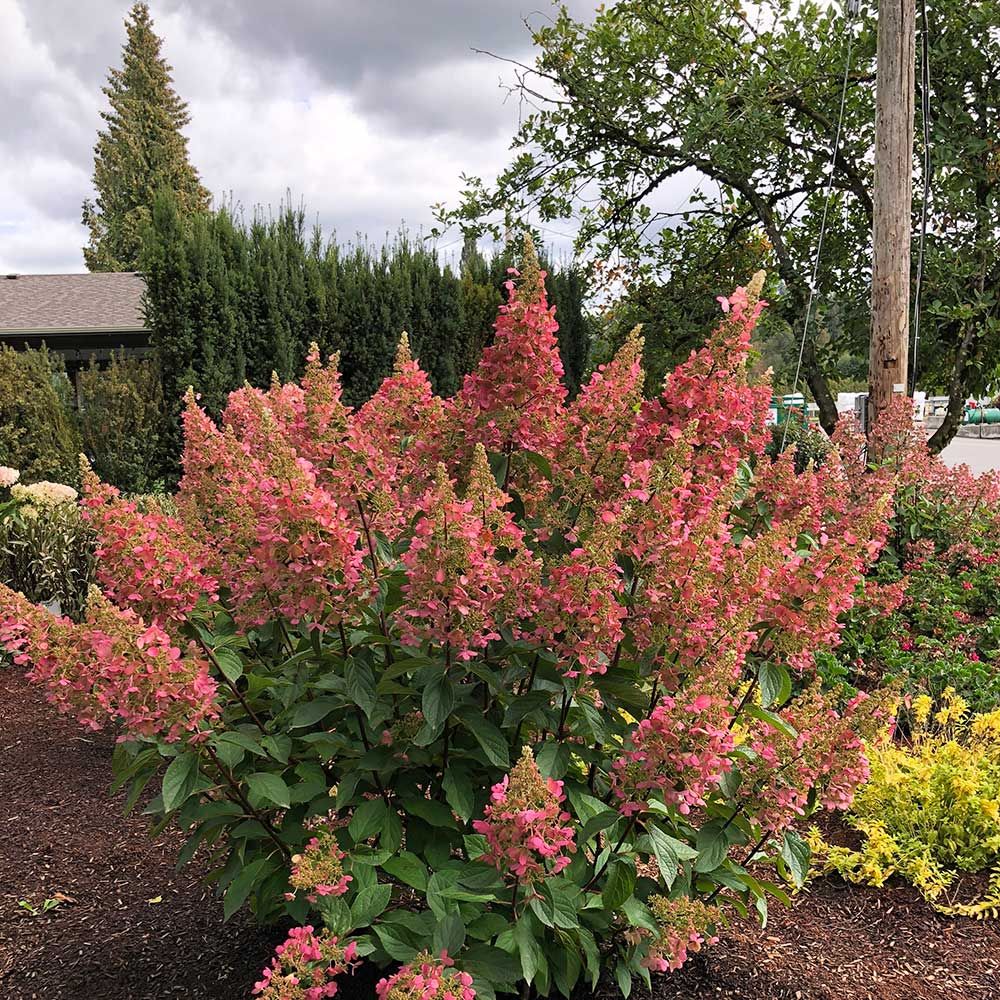
Imagine a plant that respects your garden’s space and doesn’t sprawl all over the place. That’s the Candelabra. It grows as a naturally compact, upright shrub with a distinctly columnar habit—no awkward spreading, no flopping over after a summer storm. The foliage is a deep, healthy green that provides a handsome backdrop all season long. And then come the flowers: magnificent, creamy white panicles that emerge in mid-summer and age to the most beautiful dusty rose tones as fall approaches. These aren’t the loose, open panicles you might be expecting; they’re tighter, more formal, and held on sturdy stems that actually hold themselves up without looking like they’re about to surrender to gravity.
Growing it in your garden
Here’s what makes the Candelabra different: it’s genuinely adaptable. Sure, it prefers full sun to light shade and well-draining soil, but unlike some fussier hydrangeas, it doesn’t throw a tantrum if conditions aren’t absolutely perfect. Plant it in a location where it gets at least six hours of direct sun—this is when it truly performs—but it’ll also accept morning sun with afternoon shade if that’s what your garden offers. The soil doesn’t need to be amended to death either. A basic, well-draining growing medium works beautifully.
In Connecticut, the Candelabra proves itself incredibly hardy and reliable. It handles our wet springs without developing root issues, laughs at temperature fluctuations, and doesn’t get caught by late frosts the way some tender plants do. This is a shrub that earns its place in your garden year after year.
Through the seasons
Spring arrives with fresh green growth emerging on a strong, well-branched framework. There’s nothing sparse or hesitant about the Candelabra’s leafing-out process. By early summer, the plant is fully leafed and ready for what’s coming next. Late June through August, you get those stunning white flower panicles—not shy, delicate blooms, but substantial, sculptural flowers that feel almost architectural in their precision. As autumn cools things down, the flowers shift to rosy-mauve and wine tones, creating this gorgeous interplay between the aging blooms and the foliage. Even as winter approaches and the plant goes dormant, the bare branches maintain that elegant upright structure, providing winter interest without looking dead or depressing.
Where it shines
The Candelabra’s vertical habit makes it invaluable in smaller spaces, foundation plantings, and mixed borders where you need impact without spreading. Plant it as a focal point in your summer garden, use it to create a screen or backdrop for shade lovers below, or anchor a perennial bed with its presence. It’s equally at home in a formal garden setting or a naturalistic landscape. The long bloom season and the color-shifting flowers mean it’s practically a living sculpture that changes its mood every few weeks.
Perfect companions
Pair the Candelabra with shade-loving perennials like HOSTA and ASTILBE, which appreciate the light dapple it provides while adding textural variety at ground level. Interplant with late-season bloomers like CIMICIFUGA for a knockout fall combination, or tuck shade-tolerant ornamental grasses like HAKONECHLOA at its base for movement and lightness. Even other panicle hydrangeas work beautifully nearby—the Candelabra’s upright habit creates a nice contrast with more spreading forms.
Care tips
Pruning is refreshingly straightforward. In late winter or very early spring, while the plant is still dormant, cut back the previous year’s growth to just above a pair of buds—this encourages a full, branched framework. You can also do a light shaping in late summer if needed. Deadheading spent flowers isn’t strictly necessary, especially since the color shift is part of the show, but if you want to tidy things up, feel free. Water regularly the first season to establish a strong root system, then the Candelabra becomes quite drought-tolerant once established. A light layer of mulch keeps roots happy in our Connecticut summers without creating rot issues.
Quick facts
- Hardiness Zone: Zones 3-8
- Mature Height & Spread: 6-8 feet tall, 3-4 feet wide
- Bloom Season: Late June through October
- Light Requirements: Full sun to light shade
- Water Needs: Moderate; drought-tolerant once established
- Available at: Both our retail and wholesale locations