PRUNUS X INCAMP ‘OKAME’

The Okame Cherry doesn’t wait for spring to make an entrance—it practically shouts about it. While most of Connecticut’s flowering trees are still sleeping under February’s frost, this Japanese treasure is already unfurling masses of deep pink blossoms that stop traffic on quiet suburban streets. If you’ve driven past a bare landscape and thought “there has to be something flowering by now,” this is the plant that answers that wish.

What it looks like

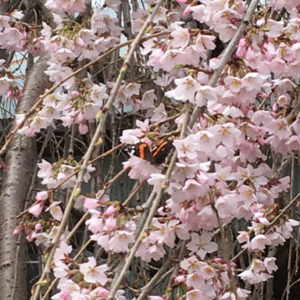
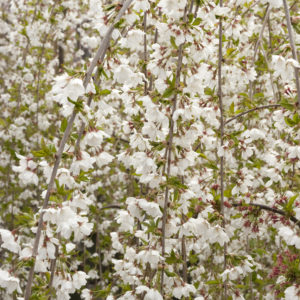
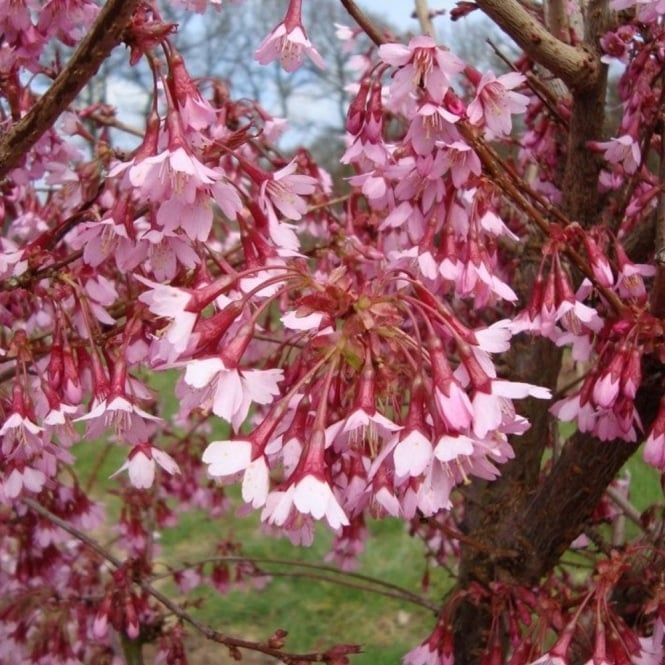
Picture a vase-shaped deciduous tree with a refined, architectural branch structure. The Okame Cherry produces single flowers in a stunning warm rose-pink—not the pale, washed-out pink of some ornamental cherries, but a rich, saturated color that practically glows against brown spring branches. These flowers emerge in such abundance that you’ll barely see the bark underneath. The blooms come early, typically in late February through March here in Connecticut, often before the leaves appear. Once spring truly arrives, the foliage emerges bronze-tinged, then matures to a glossy dark green. Come autumn, that foliage turns brilliant orange and red, giving you two distinct seasons of color from a single tree.

Growing it in your garden

The Okame Cherry is one of the most obliging ornamental cherries for New England gardeners. It doesn’t demand perfect conditions or fussy maintenance. What it does want is good drainage and full sun—ideally six or more hours of direct light daily. Unlike some of its more delicate cousins, it handles Connecticut’s temperature swings without sulking. The vase-shaped habit means you get a naturally elegant form without needing to wrestle it into submission with heavy pruning. This is a tree that grows up naturally beautiful.

Through the seasons

Late winter through early spring is the Okame’s moment of glory, when those deep pink blossoms transform the entire landscape. Spring rain might shorten the flower show slightly, but the display is so profuse that there’s always plenty to enjoy. By mid-spring, fresh green foliage fills in, creating a lovely textured canopy through summer. The tree’s branching structure is always visible and attractive, which means winter doesn’t leave you with a blank spot in the garden. And then there’s autumn—those bronze-red leaves are a quieter show than the spring flowers, but they’re a beautiful surprise many people don’t expect from an ornamental cherry.

Where it shines

The Okame Cherry is a perfect focal point for early-season interest. Use it where you can see it from your house on those first warm February days. It makes an excellent specimen tree in smaller residential lots because it won’t overwhelm the space. Many Connecticut gardeners plant it near an entryway or along a driveway so they get the full impact of that early bloom season every single year. In mixed borders, it provides essential spring color and a sturdy backbone that looks good even in winter. It’s also a great choice for anyone who feels like their spring landscape is empty—this tree fills that gap beautifully.

Perfect companions

Combine your Okame Cherry with spring bulbs like daffodils and hellebores that bloom simultaneously and appreciate the dappled shade from the tree’s canopy. Underplant it with shade-tolerant shrubs like native azaleas or pieris that have their own spring interest. Nearby, consider planting a witch hazel for additional early-season flowers in different tones. Later in the season, let ornamental grasses or late-blooming perennials take center stage while your cherry provides cooling green foliage and architectural interest overhead.

Care tips

Plant your Okame Cherry in autumn or early spring in well-draining soil. Once established, it’s quite drought-tolerant, though it appreciates regular water during its first growing season. Pruning is rarely necessary—the tree naturally grows into a beautiful vase shape. If you do need to remove branches, do it right after flowering. Japanese beetles occasionally bother ornamental cherries, and you might see some aphids in spring, but neither typically causes serious problems. The Okame is not prone to the canker issues that plague some cherry varieties in wet climates, making it a more reliable choice for the Northeast than many of its relatives.

Quick facts

  • Hardiness Zone: 5-8
  • Mature Height & Spread: 25-30 feet tall, 20-25 feet wide
  • Bloom Season: Late February to March
  • Light Requirements: Full sun (6+ hours daily)
  • Water Needs: Moderate; prefers well-draining soil
  • Available at: Both our retail and wholesale locations
Okame Cherry

Category:

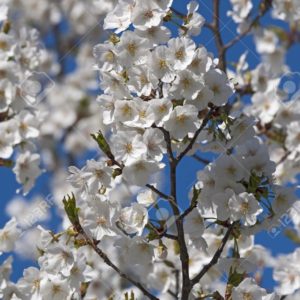
Mildly fragrant pink blooms on striking reddish brown bark. A hybrid of P. Campanulata and P. Incisa. Blooms slightly longer than most Cherries.

Zoning: 6-8
Mature Height and Spread: 15-30’ & 20-30’

Description

PRUNUS X INCAMP ‘OKAME’

The Okame Cherry doesn’t wait for spring to make an entrance—it practically shouts about it. While most of Connecticut’s flowering trees are still sleeping under February’s frost, this Japanese treasure is already unfurling masses of deep pink blossoms that stop traffic on quiet suburban streets. If you’ve driven past a bare landscape and thought “there has to be something flowering by now,” this is the plant that answers that wish.

What it looks like

Picture a vase-shaped deciduous tree with a refined, architectural branch structure. The Okame Cherry produces single flowers in a stunning warm rose-pink—not the pale, washed-out pink of some ornamental cherries, but a rich, saturated color that practically glows against brown spring branches. These flowers emerge in such abundance that you’ll barely see the bark underneath. The blooms come early, typically in late February through March here in Connecticut, often before the leaves appear. Once spring truly arrives, the foliage emerges bronze-tinged, then matures to a glossy dark green. Come autumn, that foliage turns brilliant orange and red, giving you two distinct seasons of color from a single tree.

Growing it in your garden

The Okame Cherry is one of the most obliging ornamental cherries for New England gardeners. It doesn’t demand perfect conditions or fussy maintenance. What it does want is good drainage and full sun—ideally six or more hours of direct light daily. Unlike some of its more delicate cousins, it handles Connecticut’s temperature swings without sulking. The vase-shaped habit means you get a naturally elegant form without needing to wrestle it into submission with heavy pruning. This is a tree that grows up naturally beautiful.

Through the seasons

Late winter through early spring is the Okame’s moment of glory, when those deep pink blossoms transform the entire landscape. Spring rain might shorten the flower show slightly, but the display is so profuse that there’s always plenty to enjoy. By mid-spring, fresh green foliage fills in, creating a lovely textured canopy through summer. The tree’s branching structure is always visible and attractive, which means winter doesn’t leave you with a blank spot in the garden. And then there’s autumn—those bronze-red leaves are a quieter show than the spring flowers, but they’re a beautiful surprise many people don’t expect from an ornamental cherry.

Where it shines

The Okame Cherry is a perfect focal point for early-season interest. Use it where you can see it from your house on those first warm February days. It makes an excellent specimen tree in smaller residential lots because it won’t overwhelm the space. Many Connecticut gardeners plant it near an entryway or along a driveway so they get the full impact of that early bloom season every single year. In mixed borders, it provides essential spring color and a sturdy backbone that looks good even in winter. It’s also a great choice for anyone who feels like their spring landscape is empty—this tree fills that gap beautifully.

Perfect companions

Combine your Okame Cherry with spring bulbs like daffodils and hellebores that bloom simultaneously and appreciate the dappled shade from the tree’s canopy. Underplant it with shade-tolerant shrubs like native azaleas or pieris that have their own spring interest. Nearby, consider planting a witch hazel for additional early-season flowers in different tones. Later in the season, let ornamental grasses or late-blooming perennials take center stage while your cherry provides cooling green foliage and architectural interest overhead.

Care tips

Plant your Okame Cherry in autumn or early spring in well-draining soil. Once established, it’s quite drought-tolerant, though it appreciates regular water during its first growing season. Pruning is rarely necessary—the tree naturally grows into a beautiful vase shape. If you do need to remove branches, do it right after flowering. Japanese beetles occasionally bother ornamental cherries, and you might see some aphids in spring, but neither typically causes serious problems. The Okame is not prone to the canker issues that plague some cherry varieties in wet climates, making it a more reliable choice for the Northeast than many of its relatives.

Quick facts

  • Hardiness Zone: 5-8
  • Mature Height & Spread: 25-30 feet tall, 20-25 feet wide
  • Bloom Season: Late February to March
  • Light Requirements: Full sun (6+ hours daily)
  • Water Needs: Moderate; prefers well-draining soil
  • Available at: Both our retail and wholesale locations