ROSA SPP. ‘GROUNDCOVER VARIETIES’

What if you could have the romance of roses without the fuss? Groundcover roses are the rebels of the rose world—they sprawl, they spread, they bloom their hearts out without demanding your constant attention. These are roses for gardeners who want color and fragrance without the pruning clinic, roses that laugh in the face of winter and come back stronger every year. If you’ve been intimidated by traditional roses, these tough, beautiful plants are your permission slip to finally grow the flowers you’ve been dreaming about.

What it looks like

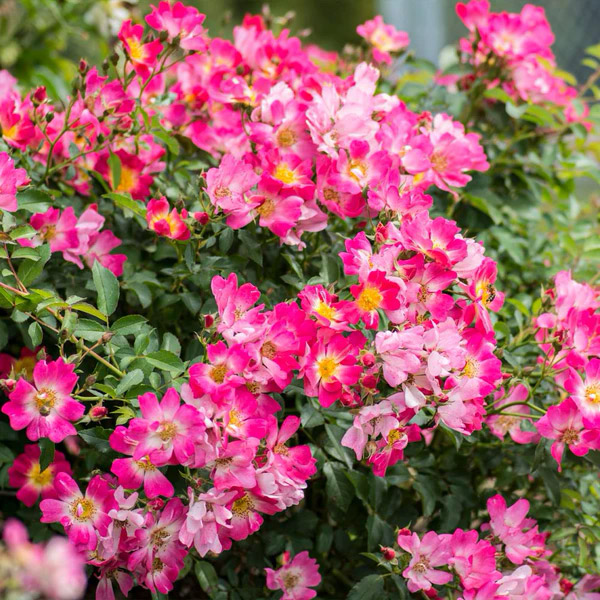
Groundcover roses are nature’s way of saying “more is more.” Unlike their upright cousins, these varieties spread horizontally in wide, dense mats that can stretch 3 to 6 feet across, staying just 18 to 24 inches tall. The foliage is typically glossy and disease-resistant, creating a beautiful green foundation even when flowers aren’t at peak bloom. Flowers come in clusters—sometimes dozens blooming together—in shades ranging from soft pastels to vibrant reds, cheerful pinks, and sunny yellows. Each flower might be smaller than a hybrid tea rose, but the sheer abundance more than makes up for it. You’re not getting a few perfect roses; you’re getting a glorious blanket of bloom.

Growing it in your garden

Groundcover roses are genuinely among the easiest roses to grow, especially here in Connecticut. They’re bred to be tough, and tough is what we need in New England. Plant them in full sun—at least six hours daily—where they’ll thrive and bloom most abundantly. They’re flexible about soil; while they prefer well-draining earth enriched with organic matter, they’re far more forgiving than hybrid teas. Space plants 3 to 4 feet apart, allowing them room to spread and maintain good air circulation, which helps prevent the fungal issues that plague some traditional roses in our humid summers.

These roses actually want to sprawl, so let them. Resist the urge to prune them into neat mounds like you might with other plants. Instead, trim them back hard in early spring—about one-third of their growth—to encourage dense, vigorous new growth. Beyond that initial spring pruning, you can lightly shear them after their first flush of bloom to encourage repeat flowering through the season. Many groundcover varieties are repeat bloomers, meaning you’ll get flowers in waves from early summer right through fall, with minimal deadheading required.

Through the seasons

Spring is when groundcover roses truly come alive. New foliage emerges fresh and clean, and flower buds begin forming almost immediately. By early summer, the first wave of blooms arrives—sometimes so profuse you can barely see the leaves beneath. Summer brings consistent flowering, with a pause during the hottest weeks before a second flush arrives as temperatures moderate. Fall is often the best show of all; cooler nights intensify flower colors, and extended bloom time means September and October gardens glow with rose color. Winter is when you’ll appreciate these plants’ hardiness; they sleep soundly through Connecticut winters without protection, ready to wake up strong come spring.

Where it shines

Groundcover roses are perfect for creating living color at the front of a border, spilling over walls or raised beds, or covering slopes where mowing is difficult. They’re excellent in mixed perennial gardens, where their reliable bloom time and spreading habit anchor the design. They work beautifully along driveways, pathways, and property lines, creating fragrant, colorful boundaries without the maintenance demands of hedges. In containers—particularly large decorative pots—they trail beautifully and deliver months of flowers. They’re also ideal for gardeners with limited time; these are roses that don’t resent being neglected occasionally.

Perfect companions

Groundcover roses pair beautifully with ornamental grasses like PANICUM VIRGATUM and CALAMAGROSTIS, whose airy texture contrasts with the roses’ density. Silvery-leaved plants like ARTEMISIA and SANTOLINA complement rose colors while softening their appearance. Catmint (NEPETA), salvia, and lavender bloom alongside roses and attract pollinators. For vertical interest behind groundcover roses, try BAPTISIA, Russian sage (PEROVSKIA), or tall coneflowers (ECHINACEA). The key is choosing plants that won’t compete for space or crowd your spreading roses.

Care tips

Water deeply but less frequently to encourage deep rooting; groundcover roses handle occasional drought better than shallow, constant watering. Water at soil level rather than overhead to minimize fungal disease. Apply 2 to 3 inches of mulch around plants, keeping it away from the stems. Fertilize lightly in spring and again in mid-summer with a balanced rose fertilizer or compost. These varieties are bred for disease resistance, but good air circulation remains your best ally against mildew and black spot. If pests appear, address them early; healthy, happy roses are less susceptible to problems.

Quick facts

  • Hardiness Zone: Zones 4-9 (perfect for Connecticut)
  • Mature Height & Spread: 18-24 inches tall; 3-6 feet wide
  • Bloom Season: Late spring through fall with repeat blooms
  • Light Requirements: Full sun (6+ hours daily)
  • Water Needs: Moderate; water deeply and less frequently
  • Available at: Both our retail and wholesale locations

Groundcover Rose

Category:

A disease resistant groundcover Rose, flowering from late Spring through frost.

Zoning: 4-11
Mature Height and Spread: 1-2’ & 2-3’

Description

ROSA SPP. ‘GROUNDCOVER VARIETIES’

What if you could have the romance of roses without the fuss? Groundcover roses are the rebels of the rose world—they sprawl, they spread, they bloom their hearts out without demanding your constant attention. These are roses for gardeners who want color and fragrance without the pruning clinic, roses that laugh in the face of winter and come back stronger every year. If you’ve been intimidated by traditional roses, these tough, beautiful plants are your permission slip to finally grow the flowers you’ve been dreaming about.

What it looks like

Groundcover roses are nature’s way of saying “more is more.” Unlike their upright cousins, these varieties spread horizontally in wide, dense mats that can stretch 3 to 6 feet across, staying just 18 to 24 inches tall. The foliage is typically glossy and disease-resistant, creating a beautiful green foundation even when flowers aren’t at peak bloom. Flowers come in clusters—sometimes dozens blooming together—in shades ranging from soft pastels to vibrant reds, cheerful pinks, and sunny yellows. Each flower might be smaller than a hybrid tea rose, but the sheer abundance more than makes up for it. You’re not getting a few perfect roses; you’re getting a glorious blanket of bloom.

Growing it in your garden

Groundcover roses are genuinely among the easiest roses to grow, especially here in Connecticut. They’re bred to be tough, and tough is what we need in New England. Plant them in full sun—at least six hours daily—where they’ll thrive and bloom most abundantly. They’re flexible about soil; while they prefer well-draining earth enriched with organic matter, they’re far more forgiving than hybrid teas. Space plants 3 to 4 feet apart, allowing them room to spread and maintain good air circulation, which helps prevent the fungal issues that plague some traditional roses in our humid summers.

These roses actually want to sprawl, so let them. Resist the urge to prune them into neat mounds like you might with other plants. Instead, trim them back hard in early spring—about one-third of their growth—to encourage dense, vigorous new growth. Beyond that initial spring pruning, you can lightly shear them after their first flush of bloom to encourage repeat flowering through the season. Many groundcover varieties are repeat bloomers, meaning you’ll get flowers in waves from early summer right through fall, with minimal deadheading required.

Through the seasons

Spring is when groundcover roses truly come alive. New foliage emerges fresh and clean, and flower buds begin forming almost immediately. By early summer, the first wave of blooms arrives—sometimes so profuse you can barely see the leaves beneath. Summer brings consistent flowering, with a pause during the hottest weeks before a second flush arrives as temperatures moderate. Fall is often the best show of all; cooler nights intensify flower colors, and extended bloom time means September and October gardens glow with rose color. Winter is when you’ll appreciate these plants’ hardiness; they sleep soundly through Connecticut winters without protection, ready to wake up strong come spring.

Where it shines

Groundcover roses are perfect for creating living color at the front of a border, spilling over walls or raised beds, or covering slopes where mowing is difficult. They’re excellent in mixed perennial gardens, where their reliable bloom time and spreading habit anchor the design. They work beautifully along driveways, pathways, and property lines, creating fragrant, colorful boundaries without the maintenance demands of hedges. In containers—particularly large decorative pots—they trail beautifully and deliver months of flowers. They’re also ideal for gardeners with limited time; these are roses that don’t resent being neglected occasionally.

Perfect companions

Groundcover roses pair beautifully with ornamental grasses like PANICUM VIRGATUM and CALAMAGROSTIS, whose airy texture contrasts with the roses’ density. Silvery-leaved plants like ARTEMISIA and SANTOLINA complement rose colors while softening their appearance. Catmint (NEPETA), salvia, and lavender bloom alongside roses and attract pollinators. For vertical interest behind groundcover roses, try BAPTISIA, Russian sage (PEROVSKIA), or tall coneflowers (ECHINACEA). The key is choosing plants that won’t compete for space or crowd your spreading roses.

Care tips

Water deeply but less frequently to encourage deep rooting; groundcover roses handle occasional drought better than shallow, constant watering. Water at soil level rather than overhead to minimize fungal disease. Apply 2 to 3 inches of mulch around plants, keeping it away from the stems. Fertilize lightly in spring and again in mid-summer with a balanced rose fertilizer or compost. These varieties are bred for disease resistance, but good air circulation remains your best ally against mildew and black spot. If pests appear, address them early; healthy, happy roses are less susceptible to problems.

Quick facts

  • Hardiness Zone: Zones 4-9 (perfect for Connecticut)
  • Mature Height & Spread: 18-24 inches tall; 3-6 feet wide
  • Bloom Season: Late spring through fall with repeat blooms
  • Light Requirements: Full sun (6+ hours daily)
  • Water Needs: Moderate; water deeply and less frequently
  • Available at: Both our retail and wholesale locations