Description
VIBURNUM DENTATUM
If you’ve been searching for something that handles wet soil, deep shade, and Connecticut winters without complaint, while also delivering four-season interest and wildlife benefits that’ll make you the neighborhood hero, Arrowwood Viburnum might just be the answer you’ve been waiting for. This native shrub is proof that the most rewarding plants are often the ones that ask the least from you while giving the most in return.
What it looks like
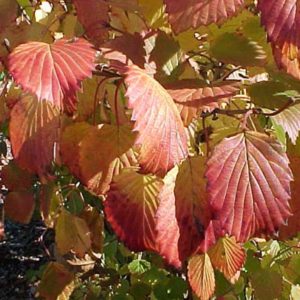
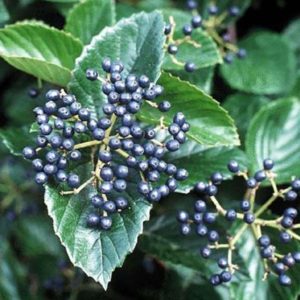
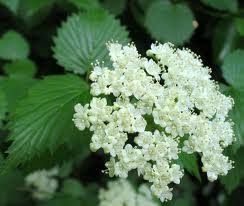
Arrowwood is a deciduous shrub with an elegant, upright-spreading habit that naturally forms a full, rounded silhouette without much fussing. The dark green foliage is distinctly coarse-textured with deeply veined leaves that have a slightly wrinkled appearance—charming in the way that well-loved things always are. In late spring, tiny white flowers emerge in flat-topped clusters called cymes, creating clouds of delicate blooms that smell faintly sweet. But here’s where it gets exciting: by late summer, the flowers transform into berries that shift from pale pink to deep blue-black as they ripen, often with multiple colors visible on the same branch. Come autumn, the foliage puts on a reliable show of burgundy and wine-red tones that can persist well into November.
Growing it in your garden
This is where VIBURNUM DENTATUM earns its reputation as an unfussy workhorse. It thrives in full sun to partial shade—even deep shade, though you’ll get fewer flowers and berries in denser shade. What really sets it apart is its adaptability to soil conditions that would challenge other shrubs. Wet, poorly drained soil? No problem. Heavy clay? Bring it on. It actually prefers slightly moist conditions, making it ideal for those low spots in your yard where water tends to collect. Connecticut’s humid summers and harsh winters are precisely what this native plant evolved to handle. Plant it in spring or fall, water well for the first season, and then largely step back and let it do its thing.
Through the seasons
Spring arrives with fresh, bright green foliage that provides a lovely backdrop for the delicate white flower clusters. Early pollinating insects absolutely flock to these blooms. Through summer, the berry show begins—this is your visual drama and your bird magnet all rolled into one. The fruits persist well into winter, feeding cardinals, cedar waxwings, and countless other species. Even after the berries are gone, the bare branches have a nice architectural quality. The reliable fall color is a bonus; you won’t get the fiery drama of a maple, but the deep burgundy tones are sophisticated and lovely.
Where it shines
Native plant gardens are where Arrowwood truly belongs, but its uses extend far beyond the purist’s landscape. It’s exceptional as a screen or hedge, perfect for stabilizing stream banks or managing stormwater in rain gardens. Plant it in those challenging spots—the low-lying area that stays damp, the spot where nothing else seems to want to grow, the shaded corner behind the garage. Pair several together for a natural wildlife corridor, or tuck single specimens into mixed borders where their structure and seasonal interest complement other plantings. It’s equally at home in formal and informal gardens, which speaks to its versatility.
Perfect companions
Arrowwood loves other native companions with similar growing requirements. Pair it with native ferns like Cinnamon Fern for textural variety in shaded areas. Combine it with Black-eyed Susans and native sedges in sunnier spots. Ninebark offers complementary foliage color and a similar architectural presence. Oakleaf Hydrangea makes an excellent companion, sharing the preference for moisture and partial shade. In wetter areas, plant it alongside native Wetland Dogwood or Elderberry for a dynamic, multi-layered native planting.
Care tips
Pruning is optional—Arrowwood naturally develops a pleasing shape. If you want to maintain size or remove crossing branches, prune immediately after flowering. Water regularly for the first year while the root system establishes. Mature plants are drought-tolerant once established, though they prefer consistent moisture. No serious pests trouble this plant in Connecticut gardens. It rarely needs fertilizing if planted in average soil; if anything, richer soil can reduce the intensity of fall color and berry production. Some pruning immediately after bloom can encourage fuller branching and increase next year’s flowers and fruit.
Quick facts
- Hardiness Zone: 2-8 (thrives throughout Connecticut)
- Mature Height & Spread: 6-8 feet tall and wide
- Bloom Season: Late May to early June
- Light Requirements: Full sun to deep shade (flowers and berries best in sun to partial shade)
- Water Needs: Moderate to high; tolerates wet soil
- Available at: Both our retail and wholesale locations.