Red Twig , Yellow Twig , Ivory Halo
# Red Twig Dogwood

CORNUS SERICEA

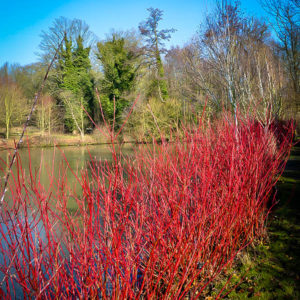
The moment winter arrives in Connecticut, this shrub becomes the show everyone comes to see. While your neighbors’ gardens fade to shades of brown and gray, Red Twig Dogwood glows—its brilliant crimson stems practically luminous against snow and frost. It’s not just a plant; it’s a winter garden feature that transforms the coldest months into your garden’s finest hour.

What it looks like

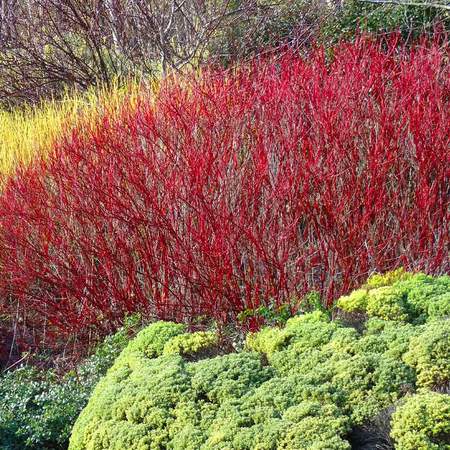
CORNUS SERICEA grows as a multi-stemmed deciduous shrub with an elegant, naturally spreading form. In summer, it wears soft green foliage that’s pleasant enough, but unremarkable—this plant saves its drama for winter. That’s when the magic happens: the stems turn a stunning deep crimson-red that deepens with cold. Small white flowers appear in early spring, followed by pale blue berries that birds find irresistible. The real star, though, is that luminous bark.

Growing it in your garden

Red Twig Dogwood is one of those rare plants that actually improves in tougher conditions. Wet soil? It thrives. Boggy areas where nothing else wants to live? Perfect. It handles New England’s heavy clay, dense soils, and poorly drained spots without breaking a sweat. Full sun keeps the color most vibrant, but it’s flexible and performs well in partial shade too. This is a plant that works with your garden’s reality rather than demanding you change it.

Through the seasons

Spring brings those delicate white flower clusters and the fresh green of new growth. Summer is quiet—lush foliage that provides a nice backdrop for other plants. Fall transitions gradually, as leaves shift to purple-red tones. But winter is when CORNUS SERICEA commands attention. As temperatures drop, the stems develop increasingly brilliant red color. By January and February, they’re practically glowing. Late winter and early spring, birds feast on the blue berries, adding movement and life to your garden.

Where it shines

Plant this along property lines where you want visual interest in winter months. It’s stunning reflected in water features or positioned where morning sun can backlight those brilliant stems. Use it to anchor foundation plantings, screen views, or create privacy in a four-season design. In native plant gardens, it supports local ecosystems. Along stream banks and in rain gardens, it prevents erosion while looking gorgeous.

Perfect companions

Pair CORNUS SERICEA with other winter-interest plants like Japanese Pieris for its early spring blooms, or underplant with spring bulbs that will emerge before the dogwood fully leafs out. Evergreen shrubs nearby—perhaps dwarf conifers—provide textural contrast and make the red stems pop. In wetter areas, combine it with native sedges, Winterberry Holly, and other moisture-loving plants for a cohesive native planting.

Care tips

To maintain the best color, prune out the oldest stems in late winter, cutting them right to the ground. This encourages new growth, and younger stems always display the most vibrant color. Aim to remove about one-third of the stems each year in a mature planting. This pruning also keeps the shrub from becoming overly dense. Water during establishment and through Connecticut’s dry summers. Once established, CORNUS SERICEA is notably tough and low-maintenance.

Quick facts

  • Hardiness Zone: 4-8 (perfect for Connecticut)
  • Mature Height & Spread: 6-9 feet tall and wide
  • Bloom Season: Early spring
  • Light Requirements: Full sun to partial shade
  • Water Needs: Wet to moist soil; thrives in difficult, poorly drained spots
  • Available at: Both our retail and wholesale locations

# Yellow Twig Dogwood

CORNUS SERICEA ‘FLAVIRAMEA’

What if winter didn’t have to mean darkness and gray? What if your garden could glow with warm golden light even on the shortest, cloudiest days? That’s the promise of Yellow Twig Dogwood—a sun-bright shrub that brings unexpected warmth and optimism to the bleakest season. This is the plant for gardeners who want winter color but prefer their landscapes a little brighter, a little cheerier.

What it looks like

CORNUS SERICEA ‘FLAVIRAMEA’ is structurally identical to its red-stemmed cousin, but with a completely different personality. The summer foliage is the same soft, unassuming green, but when autumn arrives and temperatures begin dropping, the magic transforms those stems into warm, buttery yellow. Against snow, it’s luminous. Against evergreens, it’s pure sunshine. The stems retain this golden color through winter and into early spring, creating a glow that feels almost unnatural in its brightness.

Growing it in your garden

Yellow Twig Dogwood shares Red Twig’s no-nonsense attitude about growing conditions. Wet feet? Bring it on. Heavy Connecticut clay? No problem. Poorly drained spots where other plants sulk? This shrub laughs and thrives. It’s genuinely indifferent to soil type, which makes it invaluable for difficult garden situations. Plant it in full sun for the brightest color, though it tolerates partial shade. Once established, it asks almost nothing from you except for occasional pruning to maintain its vigor and color intensity.

Through the seasons

Spring offers delicate white flower clusters that are lovely if understated. Summer passes in pleasant green anonymity—which is fine; this is a supporting player until winter. Fall is when the transition begins, as stems gradually shift from green toward gold. By November, the color shift is well underway. December through February is when CORNUS SERICEA ‘FLAVIRAMEA’ becomes essential, its warm yellow stems providing visual heat in the frozen landscape. Spring’s pale blue berries attract songbirds to whatever garden space you create.

Where it shines

Position this shrub where morning sun can illuminate those golden stems—against a dark evergreen background or where it’s visible from windows where you spend winter mornings. Use it in groupings for stronger color impact, or plant a single specimen as a focal point in a small garden. Along driveways and walkways, it brightens the approach to your home. In native plant communities and rain gardens, it provides structure while handling moisture issues.

Perfect companions

Yellow Twig Dogwood creates striking contrast with Red Twig Dogwood—plant them together for a winter color combination that’s impossible to ignore. Red ornamental grasses, burgundy-leaved plants, and purple-stemmed willows all play beautifully against the golden stems. Evergreens with dark foliage—like American Holly or boxwoods—make the color pop. Underplant with spring bulbs or shade-tolerant perennials for season-long interest.

Care tips

Annual pruning is essential for maintaining bright color. Remove the oldest stems right to the ground in late winter, taking out roughly one-third of the plant’s stem structure. Younger stems always display the most vibrant golden color, so this pruning approach keeps your shrub looking its best. Water regularly during establishment and through Connecticut’s dry summer months. Once settled, CORNUS SERICEA ‘FLAVIRAMEA’ is wonderfully low-maintenance and long-lived.

Quick facts

  • Hardiness Zone: 4-8 (excellent for Connecticut winters)
  • Mature Height & Spread: 6-8 feet tall and equally wide
  • Bloom Season: Early spring
  • Light Requirements: Full sun to partial shade
  • Water Needs:

Red Twig , Yellow Twig , Ivory Halo

No matter what time of year you see an Ivory Halo dogwood, it’s a show stopper. From the large, variegated leaves edged in white in summer, to the bright red twigs in winter – this shrub is a wonderful ornamental to add to any landscape.

Pot Size (gallons), Height: #3

Description

Red Twig , Yellow Twig , Ivory Halo
# Red Twig Dogwood

CORNUS SERICEA

The moment winter arrives in Connecticut, this shrub becomes the show everyone comes to see. While your neighbors’ gardens fade to shades of brown and gray, Red Twig Dogwood glows—its brilliant crimson stems practically luminous against snow and frost. It’s not just a plant; it’s a winter garden feature that transforms the coldest months into your garden’s finest hour.

What it looks like

CORNUS SERICEA grows as a multi-stemmed deciduous shrub with an elegant, naturally spreading form. In summer, it wears soft green foliage that’s pleasant enough, but unremarkable—this plant saves its drama for winter. That’s when the magic happens: the stems turn a stunning deep crimson-red that deepens with cold. Small white flowers appear in early spring, followed by pale blue berries that birds find irresistible. The real star, though, is that luminous bark.

Growing it in your garden

Red Twig Dogwood is one of those rare plants that actually improves in tougher conditions. Wet soil? It thrives. Boggy areas where nothing else wants to live? Perfect. It handles New England’s heavy clay, dense soils, and poorly drained spots without breaking a sweat. Full sun keeps the color most vibrant, but it’s flexible and performs well in partial shade too. This is a plant that works with your garden’s reality rather than demanding you change it.

Through the seasons

Spring brings those delicate white flower clusters and the fresh green of new growth. Summer is quiet—lush foliage that provides a nice backdrop for other plants. Fall transitions gradually, as leaves shift to purple-red tones. But winter is when CORNUS SERICEA commands attention. As temperatures drop, the stems develop increasingly brilliant red color. By January and February, they’re practically glowing. Late winter and early spring, birds feast on the blue berries, adding movement and life to your garden.

Where it shines

Plant this along property lines where you want visual interest in winter months. It’s stunning reflected in water features or positioned where morning sun can backlight those brilliant stems. Use it to anchor foundation plantings, screen views, or create privacy in a four-season design. In native plant gardens, it supports local ecosystems. Along stream banks and in rain gardens, it prevents erosion while looking gorgeous.

Perfect companions

Pair CORNUS SERICEA with other winter-interest plants like Japanese Pieris for its early spring blooms, or underplant with spring bulbs that will emerge before the dogwood fully leafs out. Evergreen shrubs nearby—perhaps dwarf conifers—provide textural contrast and make the red stems pop. In wetter areas, combine it with native sedges, Winterberry Holly, and other moisture-loving plants for a cohesive native planting.

Care tips

To maintain the best color, prune out the oldest stems in late winter, cutting them right to the ground. This encourages new growth, and younger stems always display the most vibrant color. Aim to remove about one-third of the stems each year in a mature planting. This pruning also keeps the shrub from becoming overly dense. Water during establishment and through Connecticut’s dry summers. Once established, CORNUS SERICEA is notably tough and low-maintenance.

Quick facts

  • Hardiness Zone: 4-8 (perfect for Connecticut)
  • Mature Height & Spread: 6-9 feet tall and wide
  • Bloom Season: Early spring
  • Light Requirements: Full sun to partial shade
  • Water Needs: Wet to moist soil; thrives in difficult, poorly drained spots
  • Available at: Both our retail and wholesale locations

# Yellow Twig Dogwood

CORNUS SERICEA ‘FLAVIRAMEA’

What if winter didn’t have to mean darkness and gray? What if your garden could glow with warm golden light even on the shortest, cloudiest days? That’s the promise of Yellow Twig Dogwood—a sun-bright shrub that brings unexpected warmth and optimism to the bleakest season. This is the plant for gardeners who want winter color but prefer their landscapes a little brighter, a little cheerier.

What it looks like

CORNUS SERICEA ‘FLAVIRAMEA’ is structurally identical to its red-stemmed cousin, but with a completely different personality. The summer foliage is the same soft, unassuming green, but when autumn arrives and temperatures begin dropping, the magic transforms those stems into warm, buttery yellow. Against snow, it’s luminous. Against evergreens, it’s pure sunshine. The stems retain this golden color through winter and into early spring, creating a glow that feels almost unnatural in its brightness.

Growing it in your garden

Yellow Twig Dogwood shares Red Twig’s no-nonsense attitude about growing conditions. Wet feet? Bring it on. Heavy Connecticut clay? No problem. Poorly drained spots where other plants sulk? This shrub laughs and thrives. It’s genuinely indifferent to soil type, which makes it invaluable for difficult garden situations. Plant it in full sun for the brightest color, though it tolerates partial shade. Once established, it asks almost nothing from you except for occasional pruning to maintain its vigor and color intensity.

Through the seasons

Spring offers delicate white flower clusters that are lovely if understated. Summer passes in pleasant green anonymity—which is fine; this is a supporting player until winter. Fall is when the transition begins, as stems gradually shift from green toward gold. By November, the color shift is well underway. December through February is when CORNUS SERICEA ‘FLAVIRAMEA’ becomes essential, its warm yellow stems providing visual heat in the frozen landscape. Spring’s pale blue berries attract songbirds to whatever garden space you create.

Where it shines

Position this shrub where morning sun can illuminate those golden stems—against a dark evergreen background or where it’s visible from windows where you spend winter mornings. Use it in groupings for stronger color impact, or plant a single specimen as a focal point in a small garden. Along driveways and walkways, it brightens the approach to your home. In native plant communities and rain gardens, it provides structure while handling moisture issues.

Perfect companions

Yellow Twig Dogwood creates striking contrast with Red Twig Dogwood—plant them together for a winter color combination that’s impossible to ignore. Red ornamental grasses, burgundy-leaved plants, and purple-stemmed willows all play beautifully against the golden stems. Evergreens with dark foliage—like American Holly or boxwoods—make the color pop. Underplant with spring bulbs or shade-tolerant perennials for season-long interest.

Care tips

Annual pruning is essential for maintaining bright color. Remove the oldest stems right to the ground in late winter, taking out roughly one-third of the plant’s stem structure. Younger stems always display the most vibrant golden color, so this pruning approach keeps your shrub looking its best. Water regularly during establishment and through Connecticut’s dry summer months. Once settled, CORNUS SERICEA ‘FLAVIRAMEA’ is wonderfully low-maintenance and long-lived.

Quick facts

  • Hardiness Zone: 4-8 (excellent for Connecticut winters)
  • Mature Height & Spread: 6-8 feet tall and equally wide
  • Bloom Season: Early spring
  • Light Requirements: Full sun to partial shade
  • Water Needs: