Description
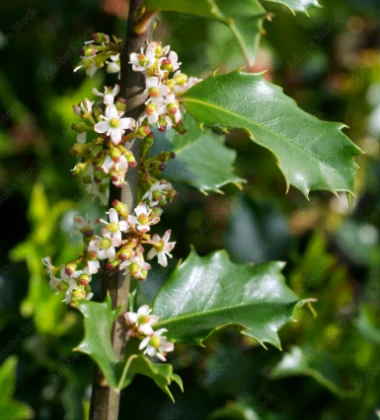
ILEX X MESERVEAE ‘BLUE PRINCESS’
What if one plant could give you glossy evergreen foliage year-round, delicate spring flowers, and brilliant berries that persist well into winter—all while being genuinely tough enough for Connecticut’s unpredictable climate? Meet Blue Princess Holly, a hybrid that proves the best plants often deliver on multiple fronts. Unlike some hollies that seem designed more for Southern gardens, this cultivar was specifically bred to thrive in New England, handling our cold snaps and variable winters without losing its charm or its characteristic berry display.
What it looks like
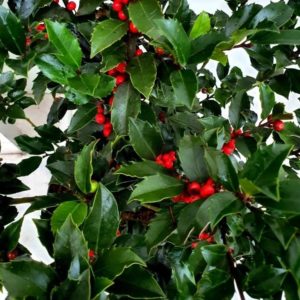
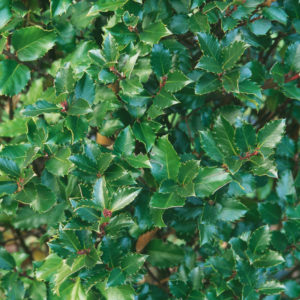
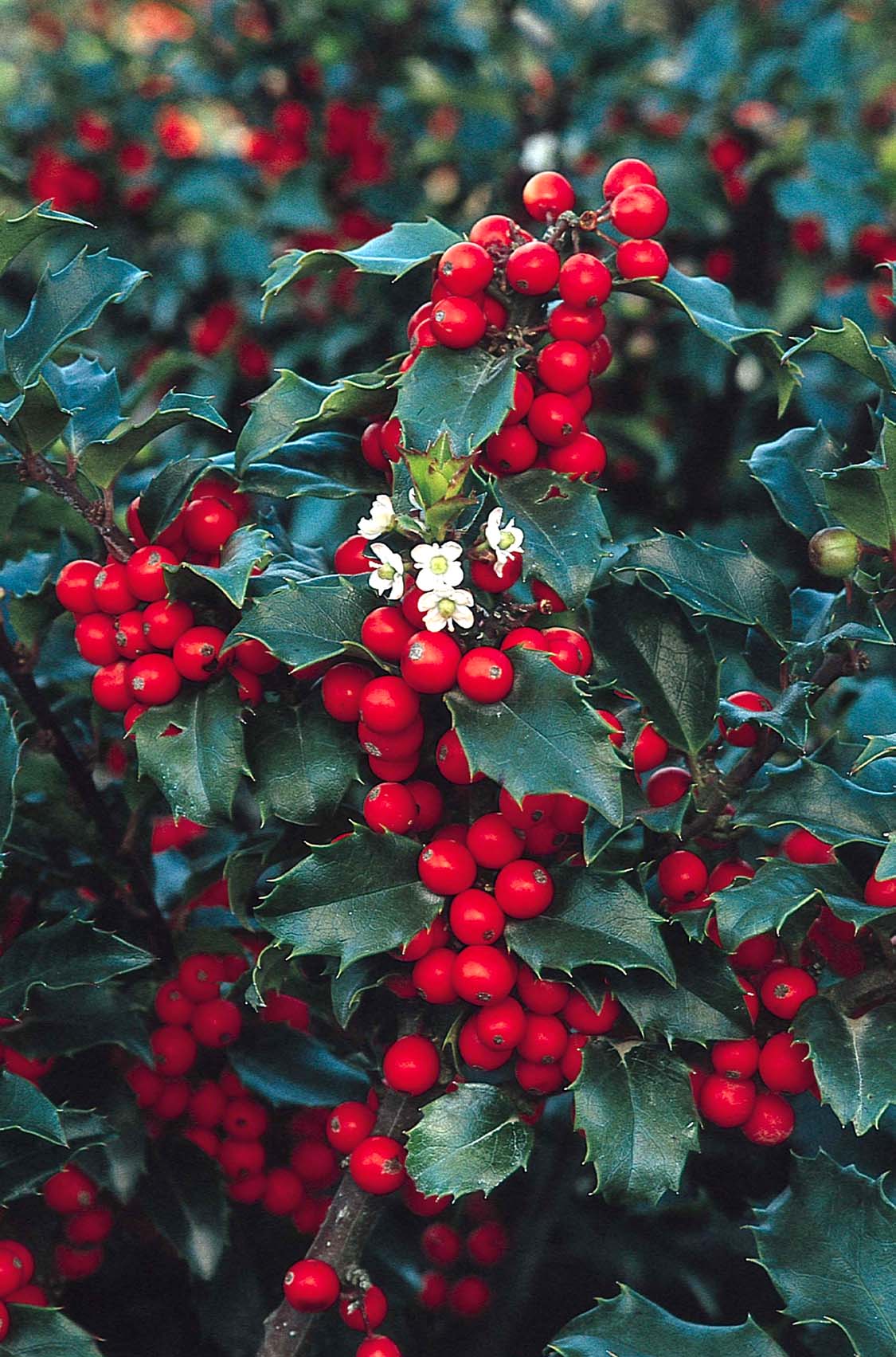
Blue Princess is an evergreen shrub with a naturally upright, pyramidal form that gives gardens immediate structure and year-round presence. The foliage is a deep, lustrous green with that distinctive waxy shine that makes holly leaves so satisfying to run your fingers across. The leaves are smaller and more delicate than some coarser hollies, with fine spines along the margins that add textural interest without being aggressively prickly.
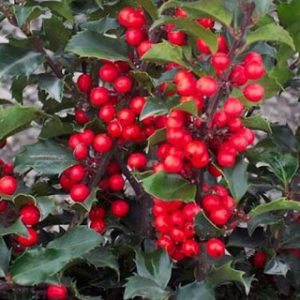
In late spring, small white flowers appear in clusters along the stems—they’re subtle, unassuming, and absolutely necessary if you want the real star of the show: the berries. And here’s where Blue Princess really earns her name. The fruit is a brilliant bright red, persisting on the branches well into winter when the garden is otherwise looking rather tired. The contrast between the dark foliage and those jewel-toned berries is genuinely stunning, especially when snow caps the branches or morning frost catches them just right.
Growing it in your garden
Blue Princess is fundamentally easygoing, though there’s one detail that matters: most hollies require a male pollinator nearby to set fruit. Fortunately, if you want berries on your Blue Princess, you’ll need a compatible male holly close by—think ILEX X MESERVEAE ‘BLUE PRINCE’ or similar male cultivars. Many gardeners pair these two and enjoy the romantic symbolism of the partnership. If you’re not worried about berries and simply want the architectural evergreen form and foliage, one plant will perform beautifully on its own.
She’s not fussy about soil as long as drainage is reasonable, though she does prefer soil that doesn’t dry out completely. Plant her in full sun to partial shade—she’ll be most floriferous and berry-laden in sun, but she’ll perform respectably in conditions that receive at least four hours of direct light daily. In Connecticut’s climate, she’s incredibly reliable, unfazed by winter cold, and won’t sulk through our sometimes-humid summers.
Through the seasons
Spring brings those delicate flowers and fresh new growth. Summer offers dependable, untroublesome foliage—no browning, no major pest issues, just steady green presence. Autumn is when she starts showing off, as the berries develop their vivid red color and become increasingly ornamental as other plants fade. Winter is her time to shine brightest. While deciduous neighbors are bare and brown, Blue Princess stands proud in her evergreen coat, the berries gleaming like jewelry against the winter landscape. In late winter, the birds often discover these berries and enjoy them as a valuable food source.
Where it shines
Blue Princess thrives as a focal point plant, especially when positioned where winter sun hits her berry-laden branches. She’s perfect for evergreen screens, foundation plantings where you want year-round interest, and formal hedging. The upright form makes her ideal for smaller spaces where you want vertical emphasis without sprawling width. She works wonderfully as a specimen plant where her winter berries can be appreciated from inside the house, and she’s equally at home in mixed shrub borders where she provides structure and winter color.
Perfect companions
Pair her with plants that offer complementary winter interest—ornamental grasses that catch frost and hold their form, evergreens with different foliage colors like golden junipers or blue-toned conifers, or winter-blooming hellebores at her feet for early-season color. Her vertical form looks striking beside lower-growing evergreens like boxwoods or dwarf conifers. She also works beautifully with deciduous plants like serviceberries or viburnums that provide spring interest, allowing Blue Princess to take center stage in winter.
Care tips
Once established, Blue Princess is remarkably self-sufficient. Water regularly during her first growing season to encourage a strong root system, then water during extended dry spells. No heavy pruning is necessary—she naturally develops a neat pyramidal form. Light shaping in early spring can encourage bushiness if desired. She’s generally unbothered by pests and diseases, though maintaining good air circulation prevents any moisture-related issues. A light application of balanced fertilizer in early spring supports vigorous growth.
Quick facts
- Hardiness Zone: Zones 5–9
- Mature Height & Spread: 12–15 feet tall, 6–8 feet wide
- Bloom Season: Late spring; berries persist fall through winter
- Light Requirements: Full sun to partial shade
- Water Needs: Moderate; consistent moisture, well-drained soil
- Available at: Both our retail and wholesale locations.