Coral Bark Maple

ACER PALMATUM ‘BLOODGOOD’

The Coral Bark Maple is Connecticut’s answer to year-round garden drama. While most Japanese maples fade into the background come winter, this stunning cultivar practically glows on a grey New England afternoon—those brilliant coral-red stems commanding attention when everything else has gone dormant. It’s a plant that reminds us why we garden in the first place: to create moments of unexpected beauty in every season.

What it looks like

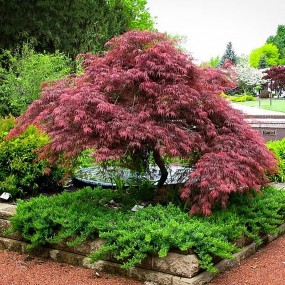
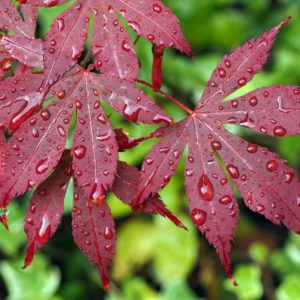
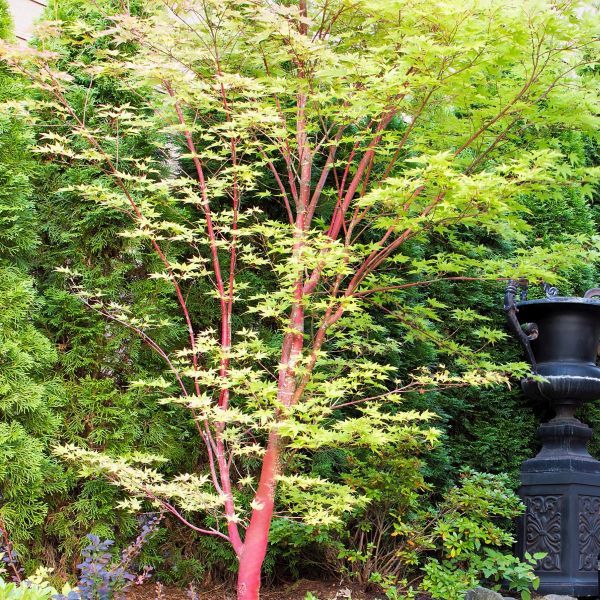
This is a deciduous tree of refined elegance, growing into an upright, vase-shaped form with a naturally graceful branching structure. The deeply lobed, palmate leaves emerge deep red in spring—almost burgundy—and deepen further as the season progresses, turning shades of crimson and scarlet before dropping in autumn to reveal the real showstopper: brilliant coral-red bark that intensifies through winter, especially in cold years. The younger stems are the most vibrant; older wood mellows to a deeper mahogany. At maturity, you’re looking at a multi-stemmed small tree or large shrub, perfect for gardens where you want architectural interest without overwhelming space.

Growing it in your garden

Japanese maples have a reputation for being fussy, but Coral Bark Maple is more forgiving than many of its cousins—though it still appreciates thoughtful placement. This isn’t a plant you stick in full afternoon Connecticut sun and forget about. Instead, choose a spot with morning sun or dappled afternoon shade, protected from harsh westerly winds. Afternoon shade is especially important in our hottest summers; the foliage will thank you with richer color and less leaf scorch.

Soil is your other consideration. Like most ACER PALMATUM selections, Coral Bark Maple prefers well-draining, slightly acidic soil rich in organic matter. If your garden leans alkaline, amend with compost and peat moss before planting. Mulch around the base with 2-3 inches of shredded bark to keep roots cool and moist, but leave space around the trunk to prevent rot. In New England’s dry winters, regular watering during establishment is crucial—don’t let young trees dry out completely between snows.

Through the seasons

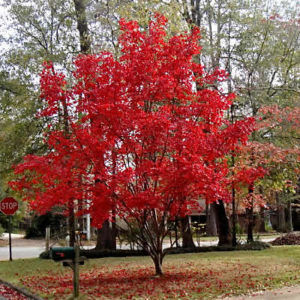
Spring arrives with a flush of deep burgundy foliage that captures morning light beautifully. Small red flowers appear in April and May, subtle but charming. Through summer, the foliage darkens to nearly black-red, creating a dramatic backdrop for shade-loving perennials. Autumn brings the transition—leaves shift through scarlet and crimson before dropping to expose the real treasure. Winter is when Coral Bark Maple truly shines in Connecticut gardens. Those coral-red stems glow against snow and evergreens, and on sunny winter days, they’re absolutely luminous. It’s the plant that gives you something to admire even in February.

Where it shines

Use Coral Bark Maple as a specimen tree where its winter bark can be appreciated—perhaps near a seating area or visible from a favorite window. It’s perfect for Japanese-inspired gardens, contemporary landscapes seeking sculptural form, or woodland edge settings where it gets filtered light and protection from brutal afternoon sun. In containers on a sunny patio, it performs beautifully too, though it’ll need regular watering. The mature size makes it ideal for residential Connecticut gardens where you want impact without a huge footprint.

Perfect companions

Pair Coral Bark Maple with hostas and ferns that appreciate the dappled shade it provides. Shade-tolerant perennials like hellebores, astilbe, and coral bells create interesting textural combinations below. Evergreen underplantings—boxwood, dwarf conifers, or soft Japanese holly—keep the winter garden interesting and frame the maple’s colorful stems. In spring, underplant with hellebores or early bulbs that bloom before the maple canopy fully leafs out.

Care tips

Pruning should be minimal and done in late summer or early fall—never in spring, when ACER PALMATUM bleeds sap excessively. Remove any crossing branches or dead wood, but otherwise let the natural form develop. Japanese maples are relatively pest-free in Connecticut, though spider mites can be problematic in hot, dry years—consistent watering helps prevent this. Watch for verticillium wilt or anthracnose in unusually wet seasons; improve air circulation if needed. Young trees benefit from winter protection in their first few years; a burlap windbreak on the west side shields them from desiccating winter winds.

Quick facts

  • Hardiness Zone: 5-8
  • Mature Height & Spread: 15-25 feet tall and wide (slower growing than many trees)
  • Bloom Season: April-May (small red flowers)
  • Light Requirements: Morning sun, afternoon shade; dappled light ideal
  • Water Needs: Moderate to consistently moist; avoid waterlogging
  • Available at: Both our retail and wholesale locations
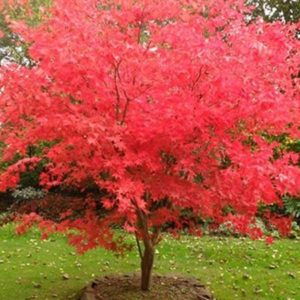
Coral Bark Maple

Category:

When planting coral bark Japanese maples, select a site with moist, well-draining soil, light shade to guard against the intense afternoon sun, and protection from high winds that can dry the plant out too quickly

Trunk Diameter: 3-3.5″

Description

Coral Bark Maple

ACER PALMATUM ‘BLOODGOOD’

The Coral Bark Maple is Connecticut’s answer to year-round garden drama. While most Japanese maples fade into the background come winter, this stunning cultivar practically glows on a grey New England afternoon—those brilliant coral-red stems commanding attention when everything else has gone dormant. It’s a plant that reminds us why we garden in the first place: to create moments of unexpected beauty in every season.

What it looks like

This is a deciduous tree of refined elegance, growing into an upright, vase-shaped form with a naturally graceful branching structure. The deeply lobed, palmate leaves emerge deep red in spring—almost burgundy—and deepen further as the season progresses, turning shades of crimson and scarlet before dropping in autumn to reveal the real showstopper: brilliant coral-red bark that intensifies through winter, especially in cold years. The younger stems are the most vibrant; older wood mellows to a deeper mahogany. At maturity, you’re looking at a multi-stemmed small tree or large shrub, perfect for gardens where you want architectural interest without overwhelming space.

Growing it in your garden

Japanese maples have a reputation for being fussy, but Coral Bark Maple is more forgiving than many of its cousins—though it still appreciates thoughtful placement. This isn’t a plant you stick in full afternoon Connecticut sun and forget about. Instead, choose a spot with morning sun or dappled afternoon shade, protected from harsh westerly winds. Afternoon shade is especially important in our hottest summers; the foliage will thank you with richer color and less leaf scorch.

Soil is your other consideration. Like most ACER PALMATUM selections, Coral Bark Maple prefers well-draining, slightly acidic soil rich in organic matter. If your garden leans alkaline, amend with compost and peat moss before planting. Mulch around the base with 2-3 inches of shredded bark to keep roots cool and moist, but leave space around the trunk to prevent rot. In New England’s dry winters, regular watering during establishment is crucial—don’t let young trees dry out completely between snows.

Through the seasons

Spring arrives with a flush of deep burgundy foliage that captures morning light beautifully. Small red flowers appear in April and May, subtle but charming. Through summer, the foliage darkens to nearly black-red, creating a dramatic backdrop for shade-loving perennials. Autumn brings the transition—leaves shift through scarlet and crimson before dropping to expose the real treasure. Winter is when Coral Bark Maple truly shines in Connecticut gardens. Those coral-red stems glow against snow and evergreens, and on sunny winter days, they’re absolutely luminous. It’s the plant that gives you something to admire even in February.

Where it shines

Use Coral Bark Maple as a specimen tree where its winter bark can be appreciated—perhaps near a seating area or visible from a favorite window. It’s perfect for Japanese-inspired gardens, contemporary landscapes seeking sculptural form, or woodland edge settings where it gets filtered light and protection from brutal afternoon sun. In containers on a sunny patio, it performs beautifully too, though it’ll need regular watering. The mature size makes it ideal for residential Connecticut gardens where you want impact without a huge footprint.

Perfect companions

Pair Coral Bark Maple with hostas and ferns that appreciate the dappled shade it provides. Shade-tolerant perennials like hellebores, astilbe, and coral bells create interesting textural combinations below. Evergreen underplantings—boxwood, dwarf conifers, or soft Japanese holly—keep the winter garden interesting and frame the maple’s colorful stems. In spring, underplant with hellebores or early bulbs that bloom before the maple canopy fully leafs out.

Care tips

Pruning should be minimal and done in late summer or early fall—never in spring, when ACER PALMATUM bleeds sap excessively. Remove any crossing branches or dead wood, but otherwise let the natural form develop. Japanese maples are relatively pest-free in Connecticut, though spider mites can be problematic in hot, dry years—consistent watering helps prevent this. Watch for verticillium wilt or anthracnose in unusually wet seasons; improve air circulation if needed. Young trees benefit from winter protection in their first few years; a burlap windbreak on the west side shields them from desiccating winter winds.

Quick facts

  • Hardiness Zone: 5-8
  • Mature Height & Spread: 15-25 feet tall and wide (slower growing than many trees)
  • Bloom Season: April-May (small red flowers)
  • Light Requirements: Morning sun, afternoon shade; dappled light ideal
  • Water Needs: Moderate to consistently moist; avoid waterlogging
  • Available at: Both our retail and wholesale locations