Red Select Japanese Maple

ACER PALMATUM ‘RED SELECT’

If you’ve ever stood beneath a Japanese maple and felt like you’d stepped into a different world entirely, you understand the magic of these trees. RED SELECT ACER PALMATUM is where that enchantment becomes reality for Connecticut gardens. This is the maple that makes neighbors stop mid-walk, the one that earns its real estate like few plants can. Deep burgundy foliage that seems to glow from within, delicate branching that reads as both architecture and art—this is a tree that doesn’t just grow in your garden. It becomes the garden’s beating heart.

What it looks like

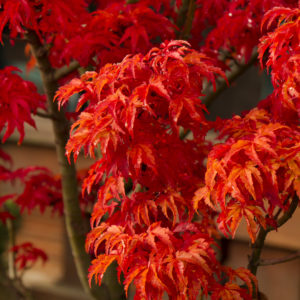
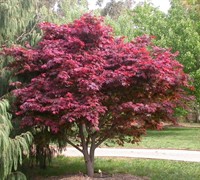
RED SELECT Japanese maple is a study in refined elegance. The deeply lobed leaves emerge in spring with a crimson blush that intensifies throughout the growing season into a rich, almost wine-dark red that holds remarkably well through summer. Unlike some red maples that fade to green by midsummer, RED SELECT maintains its color commitment—a quality that makes it worth every penny you invest. The leaves are finely dissected, creating that signature feathery appearance that Japanese maples are prized for.

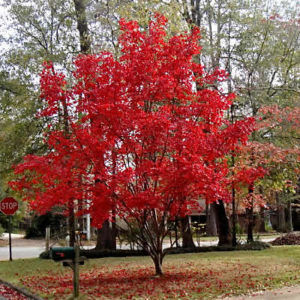
The tree’s form is naturally graceful, with an upright-spreading habit that doesn’t require constant correction or aggressive pruning. Growth is moderate and measured—you won’t wake up one morning to find it’s taken over the neighborhood. Mature specimens develop an elegant, somewhat layered branching pattern that’s particularly stunning when backlit by afternoon sun or silhouetted against snow.

Growing it in your garden

Here’s the thing about RED SELECT in Connecticut: it appreciates protection from our harshest western sun. Morning light? Absolutely. That intense afternoon heat beating down relentlessly? Less ideal. Plant it where it receives dappled shade or morning sun with afternoon shelter—beneath a taller deciduous tree is perfect, or on the east side of your home. This positioning also protects new spring growth from late frost damage, something we Connecticuters know is always a possibility.

Soil matters with this beauty. Japanese maples prefer well-draining conditions that are rich in organic matter. If you’re working with heavy clay (and honestly, who in Connecticut isn’t?), amend generously with compost before planting. These aren’t plants that appreciate soggy feet, but they also don’t want to dry out completely. Think of it like Goldilocks: consistently moist, but not wet.

The good news? RED SELECT is cold-hardy through Zone 5, which means our New England winters are well within its comfort zone. You don’t need to baby it through December. What you do want to avoid is planting it in a wind tunnel—our March nor’easters can damage tender new growth in spring.

Through the seasons

Spring brings that excitement of watching new leaves unfurl—the crimson emerging almost immediately, with that rich color deepening week by week. By early summer, you’ve got a fully colored specimen that seems impossibly vibrant against the greens of neighboring plants.

Summer is when RED SELECT truly earns its name. The color holds steady, providing that reliable deep red presence while the tree’s branching structure becomes increasingly apparent as you view it from different angles throughout the day.

Fall is where this tree gets to show off one final time. The burgundy deepens into scarlet and burnt orange before dropping, revealing those elegant branches beneath. The leaf drop is gradual enough to enjoy, fast enough that cleanup isn’t a burden.

Winter shows off the tree’s bare architecture—dark branches with a refined branching pattern that’s genuinely ornamental, especially with snow clinging to the limbs or morning frost emphasizing every line.

Where it shines

RED SELECT is your answer for creating focal points. Use it as a specimen tree where you want to draw the eye—near an entryway, beside a patio, or as an anchor point in a mixed border. It’s equally stunning in a Japanese-inspired garden design, but honestly, it works beautifully in any aesthetic because its color and form are simply that compelling.

It’s also perfect for containers if you’re working with limited space, though you’ll want to select a substantial pot and be more attentive to watering. It works wonderfully in shade gardens where it provides color and interest without needing full sun like so many red-foliaged plants demand.

Perfect companions

Think about what complements deep red foliage. Variegated hostas, ferns, and astilbe create wonderful contrast and texture below. Japanese forest grass (HAKONECHLOA) in golden tones creates stunning interplay. Shade-loving hydrangeas (especially whites and pale blues) look magnificent nearby. Evergreen companions like Japanese holly or boxwood provide winter structure that makes the maple’s bare branches even more striking.

Care tips

Pruning is minimal—these trees have naturally beautiful form. Remove any dead or crossing branches in late winter, but resist the urge to shape aggressively. Mulch around the base to keep roots cool and consistent with moisture, but keep mulch away from the actual trunk. In our Connecticut springs, watch for Japanese beetle activity; you can hand-pick or use targeted controls if populations get problematic. Water during dry spells, particularly the first year after planting while the root system establishes.

Quick facts

  • Hardiness Zone: 5-8
  • Mature Height & Spread: 20-25 feet tall, 15-20 feet wide
  • Bloom Season: Spring (inconspicuous flowers; valued for foliage)
  • Light Requirements: Dappled shade to morning sun; afternoon shade in Connecticut
  • Water Needs: Consistent moisture; well-draining soil essential
  • Available at: Both our retail and wholesale locations
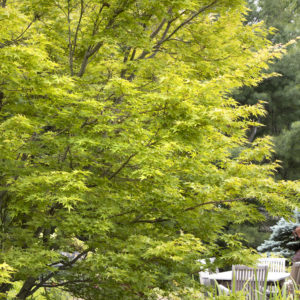
Red Select Japanese Maple

Category:

Red Select Cutleaf Japanese Maple has attractive red foliage which emerges burgundy in spring.

Pot Size (gallons), Height: #15

Description

Red Select Japanese Maple

ACER PALMATUM ‘RED SELECT’

If you’ve ever stood beneath a Japanese maple and felt like you’d stepped into a different world entirely, you understand the magic of these trees. RED SELECT ACER PALMATUM is where that enchantment becomes reality for Connecticut gardens. This is the maple that makes neighbors stop mid-walk, the one that earns its real estate like few plants can. Deep burgundy foliage that seems to glow from within, delicate branching that reads as both architecture and art—this is a tree that doesn’t just grow in your garden. It becomes the garden’s beating heart.

What it looks like

RED SELECT Japanese maple is a study in refined elegance. The deeply lobed leaves emerge in spring with a crimson blush that intensifies throughout the growing season into a rich, almost wine-dark red that holds remarkably well through summer. Unlike some red maples that fade to green by midsummer, RED SELECT maintains its color commitment—a quality that makes it worth every penny you invest. The leaves are finely dissected, creating that signature feathery appearance that Japanese maples are prized for.

The tree’s form is naturally graceful, with an upright-spreading habit that doesn’t require constant correction or aggressive pruning. Growth is moderate and measured—you won’t wake up one morning to find it’s taken over the neighborhood. Mature specimens develop an elegant, somewhat layered branching pattern that’s particularly stunning when backlit by afternoon sun or silhouetted against snow.

Growing it in your garden

Here’s the thing about RED SELECT in Connecticut: it appreciates protection from our harshest western sun. Morning light? Absolutely. That intense afternoon heat beating down relentlessly? Less ideal. Plant it where it receives dappled shade or morning sun with afternoon shelter—beneath a taller deciduous tree is perfect, or on the east side of your home. This positioning also protects new spring growth from late frost damage, something we Connecticuters know is always a possibility.

Soil matters with this beauty. Japanese maples prefer well-draining conditions that are rich in organic matter. If you’re working with heavy clay (and honestly, who in Connecticut isn’t?), amend generously with compost before planting. These aren’t plants that appreciate soggy feet, but they also don’t want to dry out completely. Think of it like Goldilocks: consistently moist, but not wet.

The good news? RED SELECT is cold-hardy through Zone 5, which means our New England winters are well within its comfort zone. You don’t need to baby it through December. What you do want to avoid is planting it in a wind tunnel—our March nor’easters can damage tender new growth in spring.

Through the seasons

Spring brings that excitement of watching new leaves unfurl—the crimson emerging almost immediately, with that rich color deepening week by week. By early summer, you’ve got a fully colored specimen that seems impossibly vibrant against the greens of neighboring plants.

Summer is when RED SELECT truly earns its name. The color holds steady, providing that reliable deep red presence while the tree’s branching structure becomes increasingly apparent as you view it from different angles throughout the day.

Fall is where this tree gets to show off one final time. The burgundy deepens into scarlet and burnt orange before dropping, revealing those elegant branches beneath. The leaf drop is gradual enough to enjoy, fast enough that cleanup isn’t a burden.

Winter shows off the tree’s bare architecture—dark branches with a refined branching pattern that’s genuinely ornamental, especially with snow clinging to the limbs or morning frost emphasizing every line.

Where it shines

RED SELECT is your answer for creating focal points. Use it as a specimen tree where you want to draw the eye—near an entryway, beside a patio, or as an anchor point in a mixed border. It’s equally stunning in a Japanese-inspired garden design, but honestly, it works beautifully in any aesthetic because its color and form are simply that compelling.

It’s also perfect for containers if you’re working with limited space, though you’ll want to select a substantial pot and be more attentive to watering. It works wonderfully in shade gardens where it provides color and interest without needing full sun like so many red-foliaged plants demand.

Perfect companions

Think about what complements deep red foliage. Variegated hostas, ferns, and astilbe create wonderful contrast and texture below. Japanese forest grass (HAKONECHLOA) in golden tones creates stunning interplay. Shade-loving hydrangeas (especially whites and pale blues) look magnificent nearby. Evergreen companions like Japanese holly or boxwood provide winter structure that makes the maple’s bare branches even more striking.

Care tips

Pruning is minimal—these trees have naturally beautiful form. Remove any dead or crossing branches in late winter, but resist the urge to shape aggressively. Mulch around the base to keep roots cool and consistent with moisture, but keep mulch away from the actual trunk. In our Connecticut springs, watch for Japanese beetle activity; you can hand-pick or use targeted controls if populations get problematic. Water during dry spells, particularly the first year after planting while the root system establishes.

Quick facts

  • Hardiness Zone: 5-8
  • Mature Height & Spread: 20-25 feet tall, 15-20 feet wide
  • Bloom Season: Spring (inconspicuous flowers; valued for foliage)
  • Light Requirements: Dappled shade to morning sun; afternoon shade in Connecticut
  • Water Needs: Consistent moisture; well-draining soil essential
  • Available at: Both our retail and wholesale locations