Description
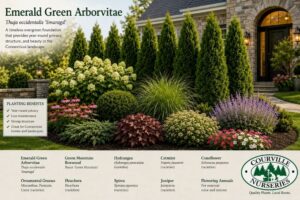 THUJA OCCIDENTALIS ‘SMARAGD’’EMERALD GREEN’
Emerald Green Arborvitae does one job especially well: it creates dependable, year-round structure without taking over the landscape.
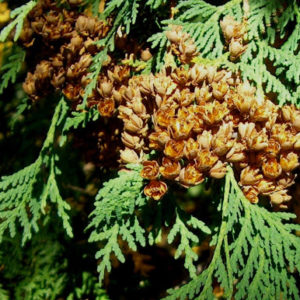
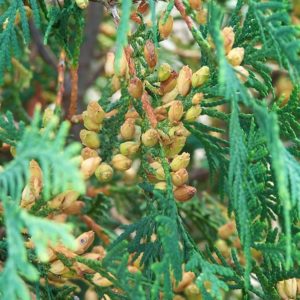
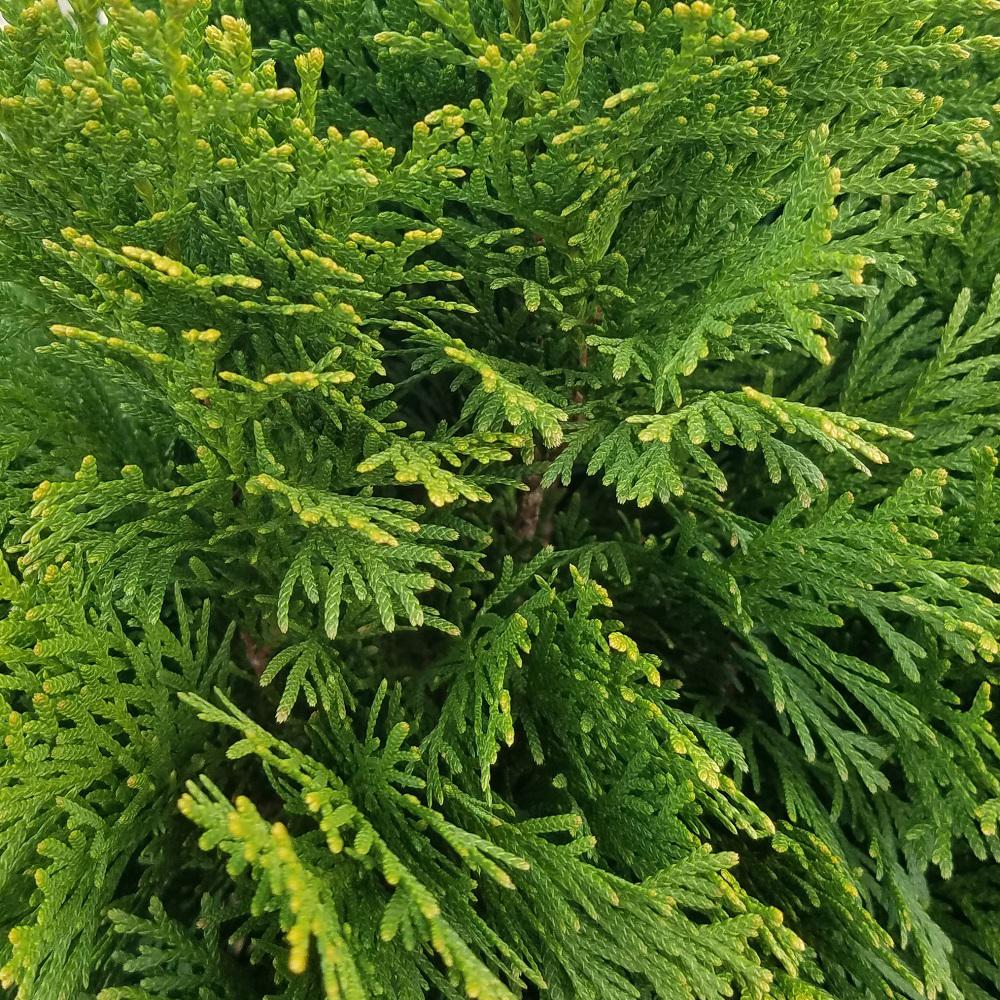
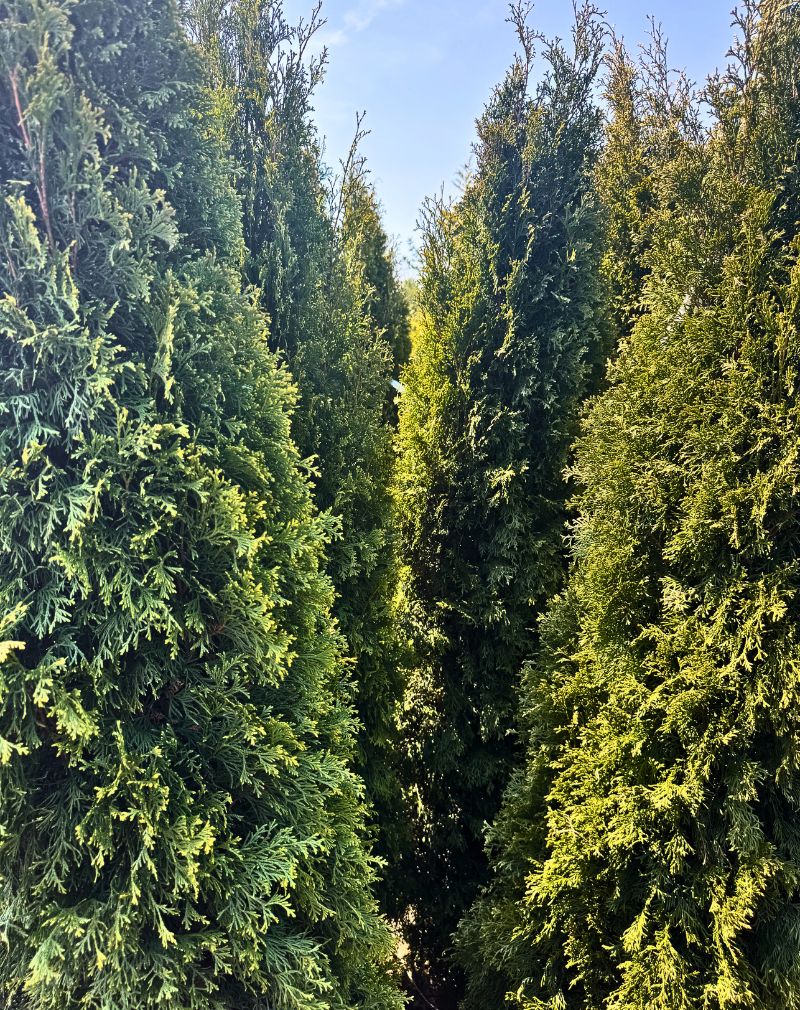
Its narrow, naturally pyramidal shape makes it useful along property lines, beside entrances, around patios, and anywhere a homeowner needs privacy in a relatively limited amount of space. The foliage grows in dense, flattened sprays and generally keeps its rich green appearance through winter.
This is not the arborvitae to choose when the goal is the fastest or tallest possible screen. It grows more deliberately and remains much narrower than large screening varieties. That controlled habit is exactly why it works so well in residential landscapes where appearance, spacing, and long-term size all matter.
Why We Love It
Emerald Green usually looks composed without requiring constant shaping.
Its upright form is naturally formal enough for an entrance or symmetrical planting, but it also works comfortably in a mixed landscape. It provides color and privacy during every season, yet its relatively narrow width allows it to fit into places where broader evergreens would eventually become crowded.
It is also easy for customers to understand. When planted in the right location and watered properly while establishing, it offers a straightforward combination of screening, structure, and manageable size.
Is This Right for You?
Emerald Green is a strong choice when you want:
- A narrow evergreen screen
- Year-round privacy
- A formal or symmetrical appearance
- An evergreen that generally requires little shaping
- Moderate height without the eventual size of a much larger arborvitae
It may not be the right choice when:
- You need a very fast-growing screen
- Deer regularly browse your property
- The site is extremely dry or exposed to winter wind
- The soil remains waterlogged
- You want a wide, informal evergreen barrier
Customers sometimes plant Emerald Greens too close together because the young plants look narrow. The better decision is to plan for their mature width and the amount of separation desired between plants.
Connecticut Perspective
Emerald Green is well suited to many Connecticut properties, especially suburban lots where space is limited but privacy is still important.
The biggest regional concerns are winter exposure, deer pressure, and inconsistent watering. Plants facing strong winter wind or reflected sun may develop winter browning. Newly planted arborvitae are particularly vulnerable if the roots are allowed to dry during summer or fall. (Missouri Botanical Garden)
Heavy snow and ice can also spread or damage stems, especially when plants are poorly established or allowed to become uneven. (NC Extension Gardener Plant Toolbox)
Climate Smart
Because Emerald Green provides a lasting evergreen structure, one well-planned planting can serve the landscape for many years.
Its narrow form also allows homeowners to create privacy without automatically choosing a much larger tree than the site can support. Planting the correct size plant in the correct location reduces unnecessary pruning, replacement, and long-term maintenance.
Water deeply during establishment, mulch properly, and avoid planting where the root zone will repeatedly dry out.
Wildlife
Dense arborvitae foliage can provide shelter and nesting cover for birds, particularly during winter.
However, deer may also feed on the foliage. In areas with heavy deer activity, protection may be necessary, especially while plants are young or during winters when other food is scarce. (NC Extension Gardener Plant Toolbox)
Landscape Uses
Emerald Green Arborvitae works well for:
- Privacy screens
- Property-line plantings
- Formal hedges
- Framing front entrances
- Patio and pool screening
- Foundation accents
- Corner plantings
- Evergreen backdrops
- Narrow side yards
- Repeated architectural plantings
A single plant can serve as an upright accent. A carefully spaced row creates a more continuous screen.
Growing Tips
Plant in full sun to partial shade. Too much shade can cause the foliage to become thinner and less dense. (NC Extension Gardener Plant Toolbox)
Choose soil that holds reasonable moisture but also drains well. Emerald Green does not perform its best in chronically dry soil or in an exposed, windy location.
Water thoroughly after planting and continue deep watering during dry weather while the root system becomes established. Mulch around the root zone, but keep mulch away from the trunk.
Avoid excessive pruning. Light shaping is usually all that is needed. Do not cut deeply into old, bare wood, because arborvitae may not refill those areas reliably.
Inspect periodically for bagworms, spider mites, leaf miner, scale, canker, and winter injury. These problems are not inevitable, but early detection makes them easier to manage. (Missouri Botanical Garden)
Did You Know?
‘Smaragd’ is the true cultivar name. The plant is commonly sold in the United States as Emerald Green Arborvitae. (Missouri Botanical Garden)
Plant Facts
Common name: Emerald Green Arborvitae
Botanical name: Thuja occidentalis ‘Smaragd’
Plant type: Narrow evergreen shrub or small tree
Family: Cupressaceae
Typical mature height: Approximately 7–15 feet, occasionally taller
Typical mature width: Approximately 3–4 feet
Shape: Compact, narrow pyramidal
Foliage: Glossy, bright green, scale-like foliage in flattened sprays
Light: Full sun to partial shade
Soil: Moist, well-drained soil
Water needs: Consistent moisture, especially during establishment
Primary uses: Screening, hedging, foundation planting, accent planting
Notable concerns: Deer browsing, winter burn, snow or ice damage, drought stress
Cultivar note: ‘Smaragd’ is also sold as Emerald or Emerald Green. (Missouri Botanical Garden)
Companion Plants
These should be finalized against Courville’s verified inventory before publication.
Possible landscape companions include:
- Green Mountain Boxwood
- Inkberry Holly
- Hydrangea
- Catmint
- Coneflower
- Ornamental grasses
- Heuchera
- Spirea
- Juniper
- Flowering annuals for seasonal color