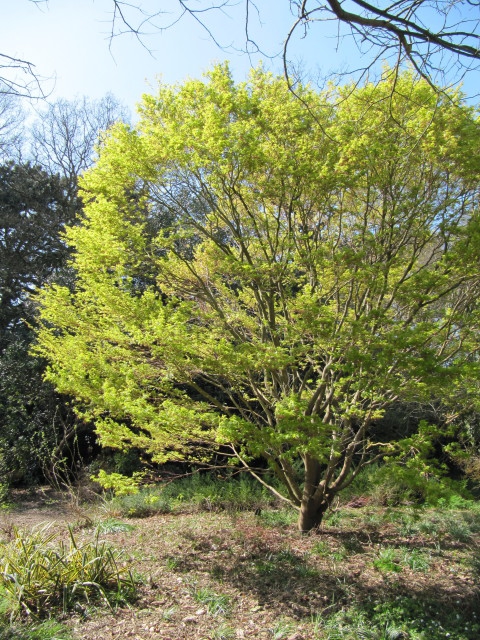
Description

ACER PALMATUM ‘SANGO KAKU’
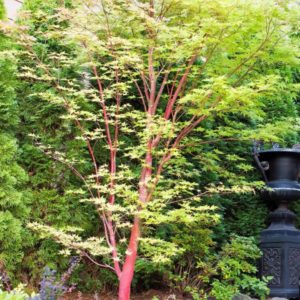
The coral-red bark of Sango Kaku catches winter light like nothing else in the Connecticut garden. When snow falls, when frost crystallizes on bare branches, when the garden feels stripped and sleeping—this Japanese maple glows. But calling it a winter plant would miss the point entirely. Sango Kaku is that rare treasure that performs beautifully across every season, every month, every reason you step outside to check on your garden.
What it looks like
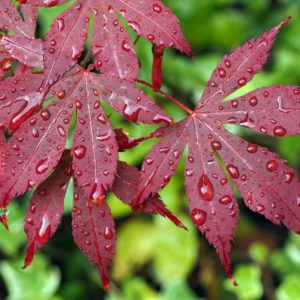
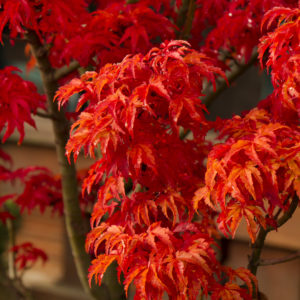
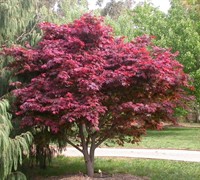
Sango Kaku is a delicate, upright Japanese maple with a graceful, spreading habit that eventually develops an elegant vase shape. The deeply lobed palmate leaves emerge in spring as soft coral-red, then shift to a luminous green-yellow as they mature. That color combination—the red veining persisting through summer—creates an almost luminescent quality, especially when backlit by morning or late afternoon sun. In autumn, the transformation accelerates: emerald shifts to gold, then to warm scarlet and coral. But here’s what makes Sango Kaku truly special: when the leaves drop, the young bark revealed on new growth is brilliant coral-red, becoming deeper orange-red on older branches. In winter, when everything else is dormant, those bare branches become the living centerpiece of your garden.
Growing it in your garden
Japanese maples have a reputation for being fussy, but Sango Kaku is more forgiving than many cultivars, especially if you give it what it needs. In Connecticut, it appreciates morning sun with afternoon shade—those 3-4 hours of direct sun that showcase the leaf color without the stress of hot afternoon exposure. The most critical factor is soil: these are woodland plants that prefer well-draining, slightly acidic conditions with consistent moisture. Never plant in heavy clay or soggy ground. If your soil needs amendment, add compost and work in some peat or pine bark. Sango Kaku wants to feel like it’s growing on the edge of a woodland stream in Japan, not a parking lot in Hartford.
Through the seasons
Spring brings that coral-red new growth, which looks almost wrong in the best way—like the tree is blushing. By early summer, the leaves have greened out but retain those red veins and a overall warm tone that makes the canopy seem to glow. Summer is when you appreciate the fine texture and the dappled shade it casts. Autumn in Connecticut is when Sango Kaku earns its place in every serious gardener’s landscape: the colors build and intensify, and by late October, you have a living torch. Winter is the long slow reveal: as each leaf drops, the coral bark becomes more prominent, and by January and February, it’s an architectural element—a bright, living sculpture when the rest of the garden is monochromatic.
Where it shines
Sango Kaku belongs as a specimen tree where you can see it from inside the house—especially from windows you look out in winter. Pair it with broadleaf evergreens so the coral branches have dark backgrounds that make them pop. It’s stunning on the northeast corner of a house, where morning sun wakes up the colors but afternoon shade protects it from stress. In a shaded woodland garden, it brightens everything around it. Use it as a focal point in a Japanese-style garden, or let it soften the edge of a more traditional New England landscape. Anywhere you want year-round interest and a plant that makes people stop mid-conversation to ask what it is—that’s where Sango Kaku belongs.
Perfect companions
Sango Kaku loves company that respects its preference for moist, well-draining soil and dappled light. Pair it with HOSTA varieties for underplanting, HEUCHERA for color contrast at ground level, and RHODODENDRONS for spring bloom and year-round structure. The silvery foliage of ARTEMISIA in nearby beds picks up the red tones beautifully. Add shade-tolerant ferns like DRYOPTERIS or POLYSTICHUM to create that woodland feeling. For structure, consider evergreen companions like ILEX CRENATA or SARCOCOCCA that won’t compete visually but provide winter form and occasional fragrance.
Care tips
Water regularly during the growing season—Sango Kaku has shallow roots and dislikes drought stress. Mulch around the base with 2-3 inches of compost to retain moisture and keep roots cool. Prune minimally and only in late winter to shape or remove dead wood; Japanese maples don’t need regular pruning. Avoid fertilizers high in nitrogen, which encourage leafy growth at the expense of the colored bark. In New England winters, protect younger trees from harsh wind exposure, which can damage tender coral branches. As the tree matures, it becomes hardier and more established. If you’re growing Sango Kaku in a container, check soil moisture frequently and don’t let it dry out completely.
Quick facts
- Hardiness Zone: Zone 5-7 (thrives in Connecticut)
- Mature Height & Spread: 20-25 feet tall, 15-20 feet wide
- Bloom Season: Spring (small reddish flowers); ornamental bark year-round
- Light Requirements: Dappled shade to part sun; morning light preferred
- Water Needs: Consistent moisture; prefers well-draining soil
- Available at: Both our retail and wholesale locations