Crimson Queen Maple

ACER PALMATUM ‘CRIMSON QUEEN’

The Crimson Queen Japanese Maple is Connecticut’s answer to year-round drama in a compact package. If you’ve ever stood in front of a Japanese maple and thought, “That’s the one—that deep, wine-dark color, that weeping grace, that architectural presence”—you’ve been dreaming about this tree. It’s the kind of plant that stops conversations mid-sentence and makes neighbors ask what you did to make your garden look like a magazine spread.

What it looks like

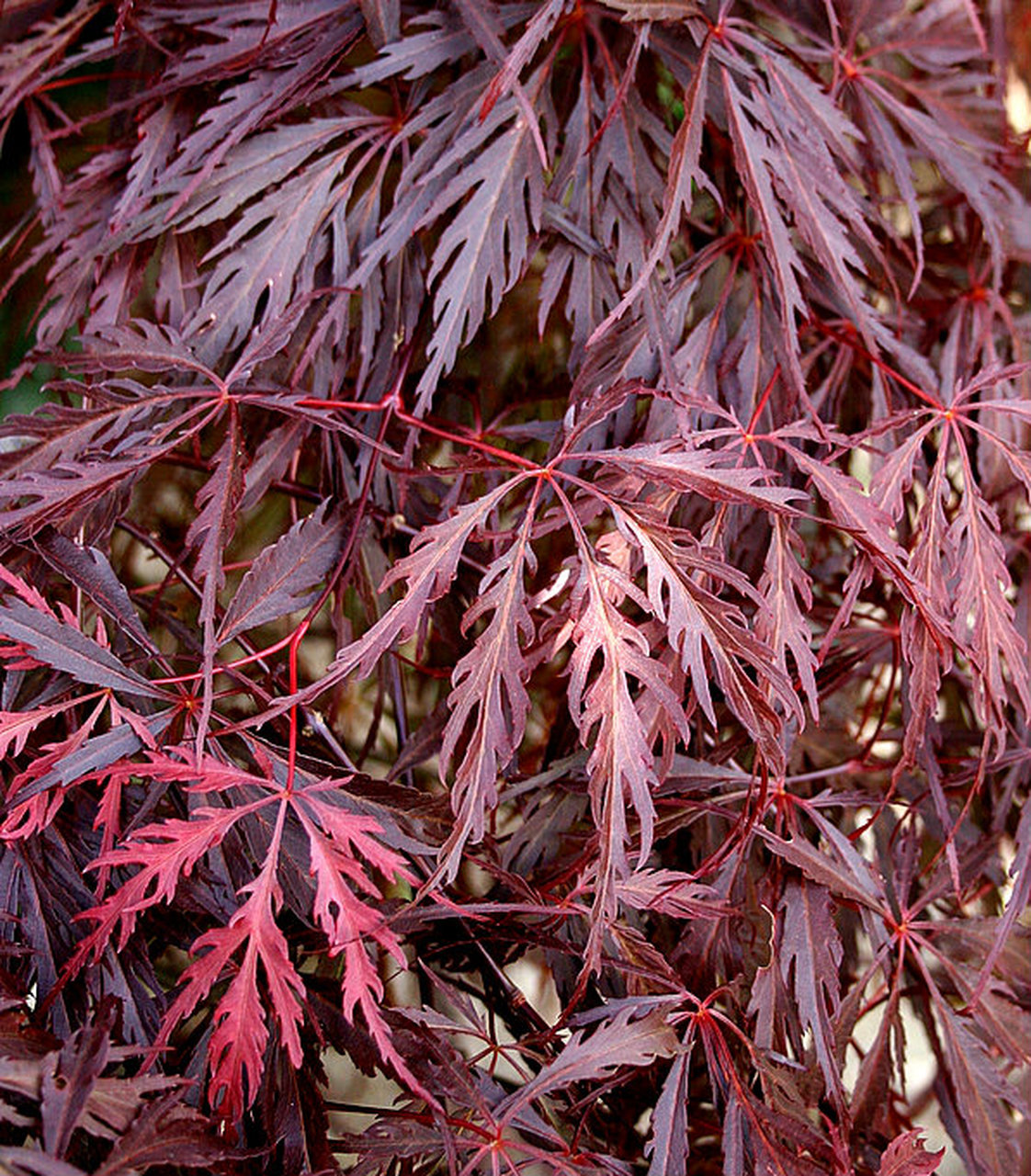
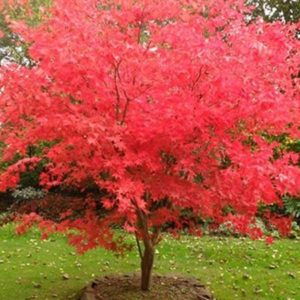
Crimson Queen is a study in contradiction: soft yet bold, delicate yet commanding. Its finely dissected leaves emerge in spring as a deep crimson-purple, almost luminous in morning light. These deeply cut, threadlike leaflets create an impossibly fine texture that seems to defy the plant’s actual structure. The habit is naturally weeping and spreading, with arching branches that create a fountain-like silhouette. Unlike upright maples, this cultivar grows outward more than upward, developing a graceful, cascading form that can reach 15 feet wide while staying closer to 10 feet tall. In autumn, the foliage intensifies to a richer burgundy-black before dropping to reveal elegant branching structure that adds winter interest.

Growing it in your garden

Crimson Queen thrives in dappled shade, and in fact prefers afternoon shade in our Connecticut heat. Morning sun exposure helps maintain that glorious deep color, but harsh afternoon rays can scorch those delicate leaves. Well-draining soil is essential—think of it as one of your maple’s non-negotiables. This plant dislikes wet feet and clay-heavy soil, so amend generously with compost or peat moss when planting. New England’s temperature swings and dry summers won’t faze this hardy tree, though consistent moisture during establishment and drought periods helps tremendously. Plant in spring or early fall to give roots time to settle before extreme weather arrives.

Through the seasons

Spring brings that theatrical crimson emergence that makes everyone stop and stare. Summer is when Crimson Queen really earns its place in your garden—the deep, fine-textured foliage creates a sculptural focal point that needs no flowers to command attention. The color deepens as temperatures warm, becoming almost black-burgundy in peak heat. Fall is the grand finale: that already-dark foliage intensifies further, glowing deepest mahogany against autumn light. Winter reveals the tree’s architectural bones—those graceful, weeping branches traced against sky and snow create a different kind of beauty entirely. Even when bare, it’s a showstopper.

Where it shines

This is the ultimate specimen tree for containers or as a focal point in your garden’s design. Place it where morning light can touch those leaves—near a seating area, at a garden corner, beside an entryway. It’s stunning against evergreens or lighter-foliaged plants that make its color pop. In smaller Connecticut gardens, Crimson Queen works beautifully as a statement tree in tight spaces because it grows more outward than upward. It’s also ideal near water features—the reflection of those weeping branches is simply magical. Use it as a living sculpture in modern gardens or as a contemplative focal point in naturalistic spaces.

Perfect companions

Pair Crimson Queen with Japanese forest grasses like hakone grass (HAKONECHLOA MACRA) or feathertop grass for textural contrast. Shade-loving hostas with blue or chartreuse foliage create striking color combinations. Underplant with burgundy-leaved coral bells (HEUCHERA), creeping jenny (LYSICHITON), or shade groundcovers like sweet woodruff (GALIUM ODORATUM). Evergreen ferns add winter structure and soften the maple’s base. Small flowering plants like astilbe or hellebores work beautifully in dappled shade beneath the canopy.

Care tips

Once established, Crimson Queen needs minimal pruning—the weeping habit develops naturally. Remove any dead or crossing branches in late winter. Keep soil consistently moist (not soggy) the first year, then water deeply during dry spells. A 2-3 inch mulch layer keeps roots cool and helps retain moisture. In Connecticut’s sometimes harsh winter winds, a sheltered location prevents branch damage. These maples rarely have pest problems in our region. Avoid high-nitrogen fertilizers that encourage excessive growth; a balanced fertilizer applied in early spring is all you need.

Quick facts

  • Hardiness Zone: 5-8 (reliably hardy in Connecticut)
  • Mature Height & Spread: 10-15 feet tall, 15-20 feet wide
  • Bloom Season: Ornamental foliage plant; small red flowers in spring
  • Light Requirements: Dappled shade to morning sun, afternoon shade preferred
  • Water Needs: Moderate; prefers consistently moist, well-draining soil
  • Available at: Both our retail and wholesale locations.
Crimson Queen Maple

Category:

If the Crimson King Maple is the bold, commanding monarch of the garden, then the Crimson Queen is the graceful, romantic one — and honestly? She might be even more beautiful. This weeping laceleaf Ja…

Description

Crimson Queen Maple

ACER PALMATUM ‘CRIMSON QUEEN’

The Crimson Queen Japanese Maple is Connecticut’s answer to year-round drama in a compact package. If you’ve ever stood in front of a Japanese maple and thought, “That’s the one—that deep, wine-dark color, that weeping grace, that architectural presence”—you’ve been dreaming about this tree. It’s the kind of plant that stops conversations mid-sentence and makes neighbors ask what you did to make your garden look like a magazine spread.

What it looks like

Crimson Queen is a study in contradiction: soft yet bold, delicate yet commanding. Its finely dissected leaves emerge in spring as a deep crimson-purple, almost luminous in morning light. These deeply cut, threadlike leaflets create an impossibly fine texture that seems to defy the plant’s actual structure. The habit is naturally weeping and spreading, with arching branches that create a fountain-like silhouette. Unlike upright maples, this cultivar grows outward more than upward, developing a graceful, cascading form that can reach 15 feet wide while staying closer to 10 feet tall. In autumn, the foliage intensifies to a richer burgundy-black before dropping to reveal elegant branching structure that adds winter interest.

Growing it in your garden

Crimson Queen thrives in dappled shade, and in fact prefers afternoon shade in our Connecticut heat. Morning sun exposure helps maintain that glorious deep color, but harsh afternoon rays can scorch those delicate leaves. Well-draining soil is essential—think of it as one of your maple’s non-negotiables. This plant dislikes wet feet and clay-heavy soil, so amend generously with compost or peat moss when planting. New England’s temperature swings and dry summers won’t faze this hardy tree, though consistent moisture during establishment and drought periods helps tremendously. Plant in spring or early fall to give roots time to settle before extreme weather arrives.

Through the seasons

Spring brings that theatrical crimson emergence that makes everyone stop and stare. Summer is when Crimson Queen really earns its place in your garden—the deep, fine-textured foliage creates a sculptural focal point that needs no flowers to command attention. The color deepens as temperatures warm, becoming almost black-burgundy in peak heat. Fall is the grand finale: that already-dark foliage intensifies further, glowing deepest mahogany against autumn light. Winter reveals the tree’s architectural bones—those graceful, weeping branches traced against sky and snow create a different kind of beauty entirely. Even when bare, it’s a showstopper.

Where it shines

This is the ultimate specimen tree for containers or as a focal point in your garden’s design. Place it where morning light can touch those leaves—near a seating area, at a garden corner, beside an entryway. It’s stunning against evergreens or lighter-foliaged plants that make its color pop. In smaller Connecticut gardens, Crimson Queen works beautifully as a statement tree in tight spaces because it grows more outward than upward. It’s also ideal near water features—the reflection of those weeping branches is simply magical. Use it as a living sculpture in modern gardens or as a contemplative focal point in naturalistic spaces.

Perfect companions

Pair Crimson Queen with Japanese forest grasses like hakone grass (HAKONECHLOA MACRA) or feathertop grass for textural contrast. Shade-loving hostas with blue or chartreuse foliage create striking color combinations. Underplant with burgundy-leaved coral bells (HEUCHERA), creeping jenny (LYSICHITON), or shade groundcovers like sweet woodruff (GALIUM ODORATUM). Evergreen ferns add winter structure and soften the maple’s base. Small flowering plants like astilbe or hellebores work beautifully in dappled shade beneath the canopy.

Care tips

Once established, Crimson Queen needs minimal pruning—the weeping habit develops naturally. Remove any dead or crossing branches in late winter. Keep soil consistently moist (not soggy) the first year, then water deeply during dry spells. A 2-3 inch mulch layer keeps roots cool and helps retain moisture. In Connecticut’s sometimes harsh winter winds, a sheltered location prevents branch damage. These maples rarely have pest problems in our region. Avoid high-nitrogen fertilizers that encourage excessive growth; a balanced fertilizer applied in early spring is all you need.

Quick facts

  • Hardiness Zone: 5-8 (reliably hardy in Connecticut)
  • Mature Height & Spread: 10-15 feet tall, 15-20 feet wide
  • Bloom Season: Ornamental foliage plant; small red flowers in spring
  • Light Requirements: Dappled shade to morning sun, afternoon shade preferred
  • Water Needs: Moderate; prefers consistently moist, well-draining soil
  • Available at: Both our retail and wholesale locations.