Crimson Queen Japanese Maple

ACER PALMATUM ‘CRIMSON QUEEN’

Some trees demand to be the star of the show, and the Crimson Queen Japanese Maple doesn’t apologize for it. This is the plant that stops you mid-conversation, that makes neighbors lean over the fence, that transforms an ordinary corner of your garden into something genuinely breathtaking. If you’ve ever wanted a tree that’s delicate enough to feel like living artwork yet tough enough to handle Connecticut winters, you’ve found it.

What it looks like

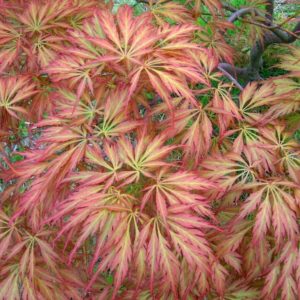
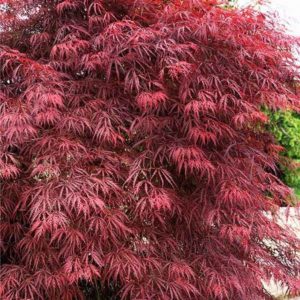
Imagine a maple leaf so finely cut it’s practically lace, then paint it the deepest crimson-red you’ve ever seen. That’s the Crimson Queen. Its deeply dissected foliage creates an airy, almost feathery canopy that seems to glow from within when backlit by morning or evening sun. The color starts as brilliant red in spring, holds strong through summer, and intensifies into jewel tones come fall. Even the delicate twigs have a reddish cast that becomes apparent as the plant matures, adding interest during the bare winter months.

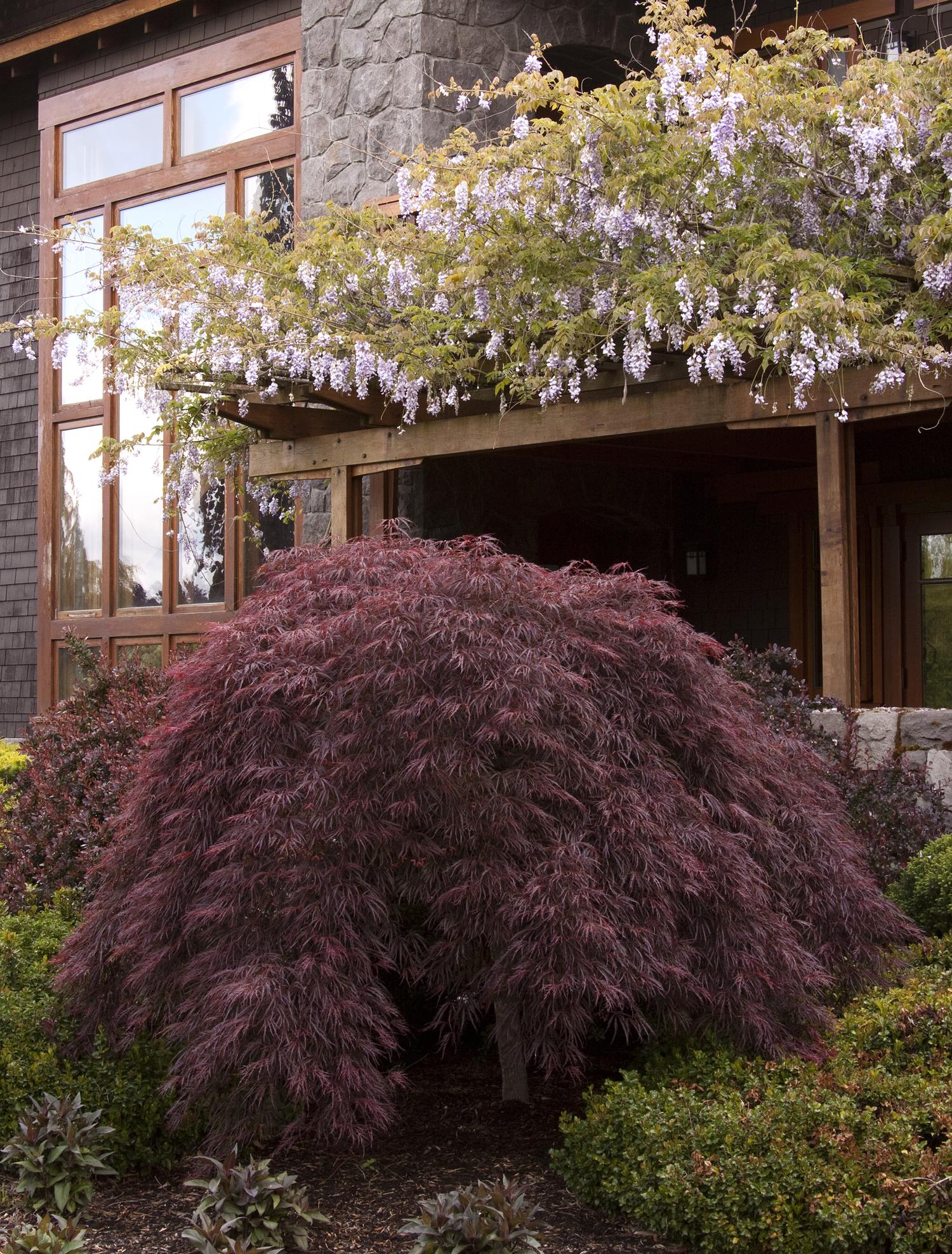
This is a weeping form, so Crimson Queen develops a graceful, cascading habit that reaches outward as much as upward. It’s never stiff or formal—there’s movement and elegance in every branch. The overall shape is that of a small, refined umbrella with crimson silk for a canopy.

Growing it in your garden

Japanese Maples are wonderfully adaptable plants when you choose the right location. Crimson Queen thrives in dappled shade—think of the light under tall deciduous trees where morning sun filters through but afternoon heat is blocked. In Connecticut, this is crucial. While the foliage is stunning in brighter light, the intense afternoon sun of midsummer can scorch those delicate leaves. If you’re planting in a sunnier spot, afternoon shade becomes essential.

Soil matters more than sunlight with these trees. They want well-draining, fertile soil enriched with organic matter. If your garden tends toward heavy clay (very common here in New England), amend generously with compost before planting. Japanese Maples appreciate slightly acidic soil, so if you know your pH is neutral, that’s fine—they’re forgiving about it. The key is drainage. They absolutely cannot tolerate waterlogged roots, particularly during our heavy spring and fall rains.

Crimson Queen is hardy to Zone 5, which means it laughs at our Connecticut winters. You don’t need special protection or coddling. Just give it the right location and good drainage, and it’ll reliably return each spring.

Through the seasons

Spring arrives with burgundy-tinged new growth that deepens to rich crimson. By early summer, the color is fully established—a deep wine-red that provides beautiful contrast to green shrubs and perennials around it. The delicate structure of the leaves means dappled shade moves and dances across the canopy throughout the day, creating living patterns that change with the sun’s angle.

Summer is when you really appreciate having this tree in a spot with afternoon shade. That’s when the red color is most brilliant, and the weeping form offers perfect perching spots for shade-loving hostas, hellebores, and shade perennials underneath.

Fall brings a transformation. As temperatures cool, the already-deep red shifts to crimson-burgundy and scarlet—some years absolutely electric. This is performance-season for Crimson Queen, and it delivers spectacularly.

Winter reveals the architecture. Without leaves, the red twigs and elegant branching structure become visible. The weeping form looks particularly striking with a light snow clinging to the branches.

Where it shines

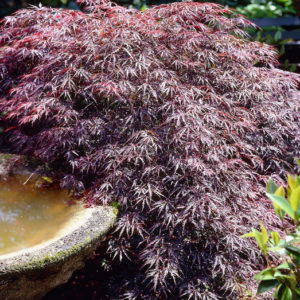
Crimson Queen is essentially a specimen plant—it wants its own moment. Plant it where you’ll see it regularly: near a patio, at the corner of your house, or as a focal point in a shade garden. It’s stunning beside water features, reflecting its form in a small pond. Many gardeners use it in foundation plantings as the anchor piece, with lower-growing shade plants filling in around it.

In smaller Connecticut gardens, this is your tree when you need year-round color and interest in a compact footprint. Unlike many shade trees, it won’t overwhelm a modest property.

Perfect companions

Plant Crimson Queen where it creates shade for other plants. Beneath it, try shade-loving hostas (the blue varieties look stunning against that crimson), Japanese forest grass (HAKONECHLOA), and hellebores. Astilbe adds feathery texture that echoes the maple’s delicate leaves. The white flowers of shade-loving bleeding heart (DICENTRA) create striking color contrast. Perennials with silver foliage—like Japanese painted fern—look luminous in the dappled shade.

Care tips

Pruning is minimal and best done in late winter before growth starts. Remove any crossing branches or ones that disrupt the graceful weeping form. In Connecticut’s humid summers, watch for spider mites on plants in drier, sunnier spots—another reason afternoon shade protection matters. Water regularly during the first growing season and during dry spells thereafter. A 2-3 inch layer of mulch around the base keeps roots cool and moist without creating the waterlogged conditions they despise.

Quick facts

  • Hardiness Zone: 5-8
  • Mature Height & Spread: 12-15 feet tall, 15-20 feet wide
  • Bloom Season: Small red flowers in spring; grown primarily for foliage
  • Light Requirements: Dappled shade to part shade (afternoon shade essential in Connecticut)
  • Water Needs: Moderate; consistent moisture, excellent drainage
  • Available at: Both our retail and wholesale locations
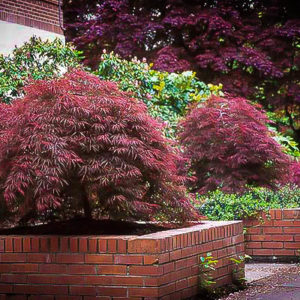
Crimson Queen Japanese Maple

A low-branching, dwarf tree with a delicate, weeping form. The foliage holds its beautiful crimson color throughout summer and can turn bright scarlet in autumn.

Pot Size (gallons), Height: 48-54″

Description

Crimson Queen Japanese Maple

ACER PALMATUM ‘CRIMSON QUEEN’

Some trees demand to be the star of the show, and the Crimson Queen Japanese Maple doesn’t apologize for it. This is the plant that stops you mid-conversation, that makes neighbors lean over the fence, that transforms an ordinary corner of your garden into something genuinely breathtaking. If you’ve ever wanted a tree that’s delicate enough to feel like living artwork yet tough enough to handle Connecticut winters, you’ve found it.

What it looks like

Imagine a maple leaf so finely cut it’s practically lace, then paint it the deepest crimson-red you’ve ever seen. That’s the Crimson Queen. Its deeply dissected foliage creates an airy, almost feathery canopy that seems to glow from within when backlit by morning or evening sun. The color starts as brilliant red in spring, holds strong through summer, and intensifies into jewel tones come fall. Even the delicate twigs have a reddish cast that becomes apparent as the plant matures, adding interest during the bare winter months.

This is a weeping form, so Crimson Queen develops a graceful, cascading habit that reaches outward as much as upward. It’s never stiff or formal—there’s movement and elegance in every branch. The overall shape is that of a small, refined umbrella with crimson silk for a canopy.

Growing it in your garden

Japanese Maples are wonderfully adaptable plants when you choose the right location. Crimson Queen thrives in dappled shade—think of the light under tall deciduous trees where morning sun filters through but afternoon heat is blocked. In Connecticut, this is crucial. While the foliage is stunning in brighter light, the intense afternoon sun of midsummer can scorch those delicate leaves. If you’re planting in a sunnier spot, afternoon shade becomes essential.

Soil matters more than sunlight with these trees. They want well-draining, fertile soil enriched with organic matter. If your garden tends toward heavy clay (very common here in New England), amend generously with compost before planting. Japanese Maples appreciate slightly acidic soil, so if you know your pH is neutral, that’s fine—they’re forgiving about it. The key is drainage. They absolutely cannot tolerate waterlogged roots, particularly during our heavy spring and fall rains.

Crimson Queen is hardy to Zone 5, which means it laughs at our Connecticut winters. You don’t need special protection or coddling. Just give it the right location and good drainage, and it’ll reliably return each spring.

Through the seasons

Spring arrives with burgundy-tinged new growth that deepens to rich crimson. By early summer, the color is fully established—a deep wine-red that provides beautiful contrast to green shrubs and perennials around it. The delicate structure of the leaves means dappled shade moves and dances across the canopy throughout the day, creating living patterns that change with the sun’s angle.

Summer is when you really appreciate having this tree in a spot with afternoon shade. That’s when the red color is most brilliant, and the weeping form offers perfect perching spots for shade-loving hostas, hellebores, and shade perennials underneath.

Fall brings a transformation. As temperatures cool, the already-deep red shifts to crimson-burgundy and scarlet—some years absolutely electric. This is performance-season for Crimson Queen, and it delivers spectacularly.

Winter reveals the architecture. Without leaves, the red twigs and elegant branching structure become visible. The weeping form looks particularly striking with a light snow clinging to the branches.

Where it shines

Crimson Queen is essentially a specimen plant—it wants its own moment. Plant it where you’ll see it regularly: near a patio, at the corner of your house, or as a focal point in a shade garden. It’s stunning beside water features, reflecting its form in a small pond. Many gardeners use it in foundation plantings as the anchor piece, with lower-growing shade plants filling in around it.

In smaller Connecticut gardens, this is your tree when you need year-round color and interest in a compact footprint. Unlike many shade trees, it won’t overwhelm a modest property.

Perfect companions

Plant Crimson Queen where it creates shade for other plants. Beneath it, try shade-loving hostas (the blue varieties look stunning against that crimson), Japanese forest grass (HAKONECHLOA), and hellebores. Astilbe adds feathery texture that echoes the maple’s delicate leaves. The white flowers of shade-loving bleeding heart (DICENTRA) create striking color contrast. Perennials with silver foliage—like Japanese painted fern—look luminous in the dappled shade.

Care tips

Pruning is minimal and best done in late winter before growth starts. Remove any crossing branches or ones that disrupt the graceful weeping form. In Connecticut’s humid summers, watch for spider mites on plants in drier, sunnier spots—another reason afternoon shade protection matters. Water regularly during the first growing season and during dry spells thereafter. A 2-3 inch layer of mulch around the base keeps roots cool and moist without creating the waterlogged conditions they despise.

Quick facts

  • Hardiness Zone: 5-8
  • Mature Height & Spread: 12-15 feet tall, 15-20 feet wide
  • Bloom Season: Small red flowers in spring; grown primarily for foliage
  • Light Requirements: Dappled shade to part shade (afternoon shade essential in Connecticut)
  • Water Needs: Moderate; consistent moisture, excellent drainage
  • Available at: Both our retail and wholesale locations