Garnet Japanese Maple

ACER PALMATUM ‘GARNET’

If you’ve ever walked past a Japanese maple and thought, “I want that drama, that elegance, that show-stopping presence in my garden,” then GARNET is the answer you’ve been waiting for. This cultivar doesn’t just add color to your landscape—it transforms it. With foliage so deeply crimson it’s nearly burgundy, GARNET Japanese Maple commands attention from spring through fall, and honestly, it steals the show even when nothing else is performing.

What it looks like

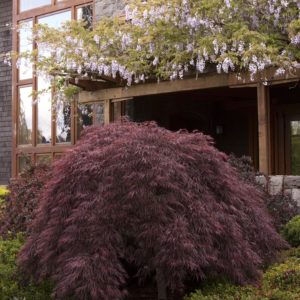
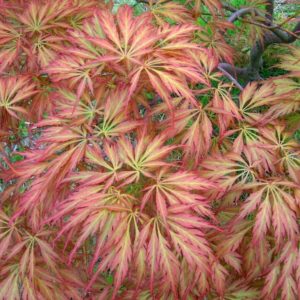
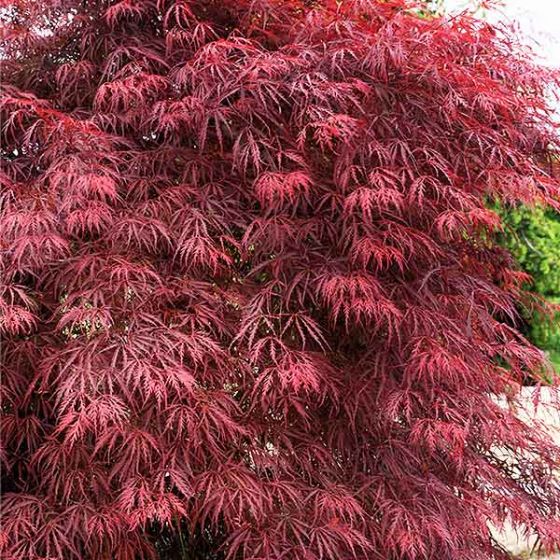
GARNET is the ultimate statement maker. Its deeply lobed leaves emerge in spring with an almost wine-dark purple hue, a color that intensifies as the season progresses. By summer, you’re looking at rich burgundy foliage that seems to glow in afternoon light—especially when the sun shines through those delicate, dissected leaves. The fine-textured canopy creates an almost ethereal quality, with branching that’s naturally graceful and architectural. Fall? Expect even deeper crimson and scarlet tones before the leaves drop. Even in winter, the delicate branch structure provides understated elegance.

Growing it in your garden

Here’s what makes GARNET such a joy to grow: it’s tougher than many Japanese maples. Connecticut’s climate suits it beautifully, and it handles our New England winters without fussing. That said, Japanese maples appreciate thoughtful placement. Give GARNET a spot with morning sun and afternoon shade—this balance keeps the foliage color vibrant without risking leaf scorch during hot summers. In deep shade, the color becomes less saturated. Conversely, all-day blazing sun can stress the tree in our hottest weeks. It’s that Goldilocks situation where you want things just right.

Plant GARNET in well-draining soil that’s been amended with organic matter. These trees prefer soil that stays consistently moist but never waterlogged. Spring planting works beautifully in Connecticut, giving the tree the whole season to establish roots before winter arrives.

Through the seasons

Spring brings that magical moment when GARNET’s new foliage unfurls in deep purple-crimson, signaling the start of the growing season. By early summer, the color has deepened even further, creating a lush, dramatic presence in the garden. Small, delicate flowers appear—reddish in tone and easy to miss—followed by the development of winged seeds (samaras) that flutter down come autumn.

As temperatures cool in fall, GARNET transitions through increasingly vibrant reds and scarlets, often holding its color longer than many other trees. Winter reveals the elegant branch structure—those fine, spreading limbs that remind you why Japanese maples are prized as specimens. The silhouette alone justifies its place in your landscape.

Where it shines

GARNET is a focal point plant. Use it as a specimen tree where you want drama—near an entryway, as a centerpiece in a foundation planting, or as the anchor for a shade garden. Its moderate size makes it perfect for Connecticut properties where you don’t have room for massive trees. It’s also excellent in containers (yes, really), which gives you flexibility in seasonal design.

Plant it where you’ll see it regularly—perhaps visible from a favorite window or along a path you walk often. This is a tree that rewards close observation and deserves a spot where its beauty gets appreciated daily.

Perfect companions

GARNET pairs beautifully with plants that respect its role as the star. Consider underplanting with low-growing hostas with blue or chartreuse foliage—the contrast is stunning. Japanese forest grass (HAKONECHLOA) in gold or bronze tones picks up the warm undertones in the maple’s leaves. For structure, add evergreen companions like dwarf conifers or Japanese holly (ILEX CRENATA). Spring bulbs like hellebores provide early interest without competing for attention later.

In mixed shrub borders, pair GARNET with plants that have lighter or contrasting foliage—golden spireas, variegated euonymus, or white-flowering rhododendrons all work well. The key is letting GARNET be the showstopper while surrounding plants provide supporting interest.

Care tips

Water regularly during the first two growing seasons, especially during dry spells. Once established, GARNET needs consistent moisture but tolerates brief dry periods better than young trees. Mulch around the base (keeping it away from the trunk) to help regulate soil temperature and moisture—important in Connecticut’s variable climate.

Pruning is minimal. Japanese maples naturally develop beautiful form, so resist the urge to heavily prune. Remove any dead wood in early spring, and thin out crossing branches if needed for better air circulation. Avoid heavy pruning in late summer, as new growth will be tender heading into winter.

Watch for spider mites during hot, dry summers—these can stress the tree. A strong spray of water addresses most mite issues organically. Japanese maples occasionally attract sawflies, but this is rarely a serious problem in our region.

Quick facts

  • Hardiness Zone: 5-8 (perfect for Connecticut)
  • Mature Height & Spread: 15-20 feet tall and wide
  • Bloom Season: Spring (insignificant flowers; foliage is the star)
  • Light Requirements: Morning sun to afternoon shade
  • Water Needs: Consistently moist, well-draining soil
  • Available at: Both our retail and wholesale locations
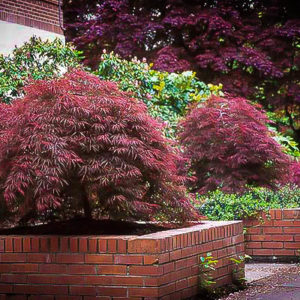
Garnet Japanese Maple

Graceful small tree with lacy, deeply cut dark red leaves that retain their color into fall. Very durable and vigorous with a pendulous, spreading growth habit. Moderately deer resistant. Deciduous.

Trunk Diameter: 2″

Description

Garnet Japanese Maple

ACER PALMATUM ‘GARNET’

If you’ve ever walked past a Japanese maple and thought, “I want that drama, that elegance, that show-stopping presence in my garden,” then GARNET is the answer you’ve been waiting for. This cultivar doesn’t just add color to your landscape—it transforms it. With foliage so deeply crimson it’s nearly burgundy, GARNET Japanese Maple commands attention from spring through fall, and honestly, it steals the show even when nothing else is performing.

What it looks like

GARNET is the ultimate statement maker. Its deeply lobed leaves emerge in spring with an almost wine-dark purple hue, a color that intensifies as the season progresses. By summer, you’re looking at rich burgundy foliage that seems to glow in afternoon light—especially when the sun shines through those delicate, dissected leaves. The fine-textured canopy creates an almost ethereal quality, with branching that’s naturally graceful and architectural. Fall? Expect even deeper crimson and scarlet tones before the leaves drop. Even in winter, the delicate branch structure provides understated elegance.

Growing it in your garden

Here’s what makes GARNET such a joy to grow: it’s tougher than many Japanese maples. Connecticut’s climate suits it beautifully, and it handles our New England winters without fussing. That said, Japanese maples appreciate thoughtful placement. Give GARNET a spot with morning sun and afternoon shade—this balance keeps the foliage color vibrant without risking leaf scorch during hot summers. In deep shade, the color becomes less saturated. Conversely, all-day blazing sun can stress the tree in our hottest weeks. It’s that Goldilocks situation where you want things just right.

Plant GARNET in well-draining soil that’s been amended with organic matter. These trees prefer soil that stays consistently moist but never waterlogged. Spring planting works beautifully in Connecticut, giving the tree the whole season to establish roots before winter arrives.

Through the seasons

Spring brings that magical moment when GARNET’s new foliage unfurls in deep purple-crimson, signaling the start of the growing season. By early summer, the color has deepened even further, creating a lush, dramatic presence in the garden. Small, delicate flowers appear—reddish in tone and easy to miss—followed by the development of winged seeds (samaras) that flutter down come autumn.

As temperatures cool in fall, GARNET transitions through increasingly vibrant reds and scarlets, often holding its color longer than many other trees. Winter reveals the elegant branch structure—those fine, spreading limbs that remind you why Japanese maples are prized as specimens. The silhouette alone justifies its place in your landscape.

Where it shines

GARNET is a focal point plant. Use it as a specimen tree where you want drama—near an entryway, as a centerpiece in a foundation planting, or as the anchor for a shade garden. Its moderate size makes it perfect for Connecticut properties where you don’t have room for massive trees. It’s also excellent in containers (yes, really), which gives you flexibility in seasonal design.

Plant it where you’ll see it regularly—perhaps visible from a favorite window or along a path you walk often. This is a tree that rewards close observation and deserves a spot where its beauty gets appreciated daily.

Perfect companions

GARNET pairs beautifully with plants that respect its role as the star. Consider underplanting with low-growing hostas with blue or chartreuse foliage—the contrast is stunning. Japanese forest grass (HAKONECHLOA) in gold or bronze tones picks up the warm undertones in the maple’s leaves. For structure, add evergreen companions like dwarf conifers or Japanese holly (ILEX CRENATA). Spring bulbs like hellebores provide early interest without competing for attention later.

In mixed shrub borders, pair GARNET with plants that have lighter or contrasting foliage—golden spireas, variegated euonymus, or white-flowering rhododendrons all work well. The key is letting GARNET be the showstopper while surrounding plants provide supporting interest.

Care tips

Water regularly during the first two growing seasons, especially during dry spells. Once established, GARNET needs consistent moisture but tolerates brief dry periods better than young trees. Mulch around the base (keeping it away from the trunk) to help regulate soil temperature and moisture—important in Connecticut’s variable climate.

Pruning is minimal. Japanese maples naturally develop beautiful form, so resist the urge to heavily prune. Remove any dead wood in early spring, and thin out crossing branches if needed for better air circulation. Avoid heavy pruning in late summer, as new growth will be tender heading into winter.

Watch for spider mites during hot, dry summers—these can stress the tree. A strong spray of water addresses most mite issues organically. Japanese maples occasionally attract sawflies, but this is rarely a serious problem in our region.

Quick facts

  • Hardiness Zone: 5-8 (perfect for Connecticut)
  • Mature Height & Spread: 15-20 feet tall and wide
  • Bloom Season: Spring (insignificant flowers; foliage is the star)
  • Light Requirements: Morning sun to afternoon shade
  • Water Needs: Consistently moist, well-draining soil
  • Available at: Both our retail and wholesale locations