Bloodgood Japanese Maple

ACER PALMATUM ‘BLOODGOOD’

The Bloodgood Japanese Maple is Connecticut’s answer to year-round drama. While most trees go through their paces in spring and fall, this one commands attention from the moment it leafs out in spring through the final curtain call in November. If you’ve ever stood in front of a Japanese maple and thought, “I want that, but I need it to be reliable, hardy, and actually perform in New England,” this is the cultivar that delivers on every count.

What it looks like

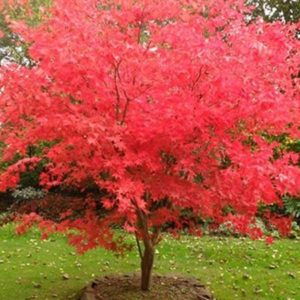
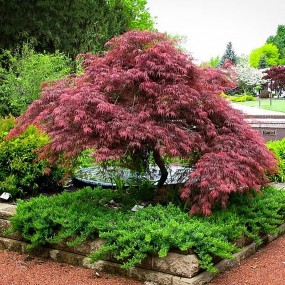
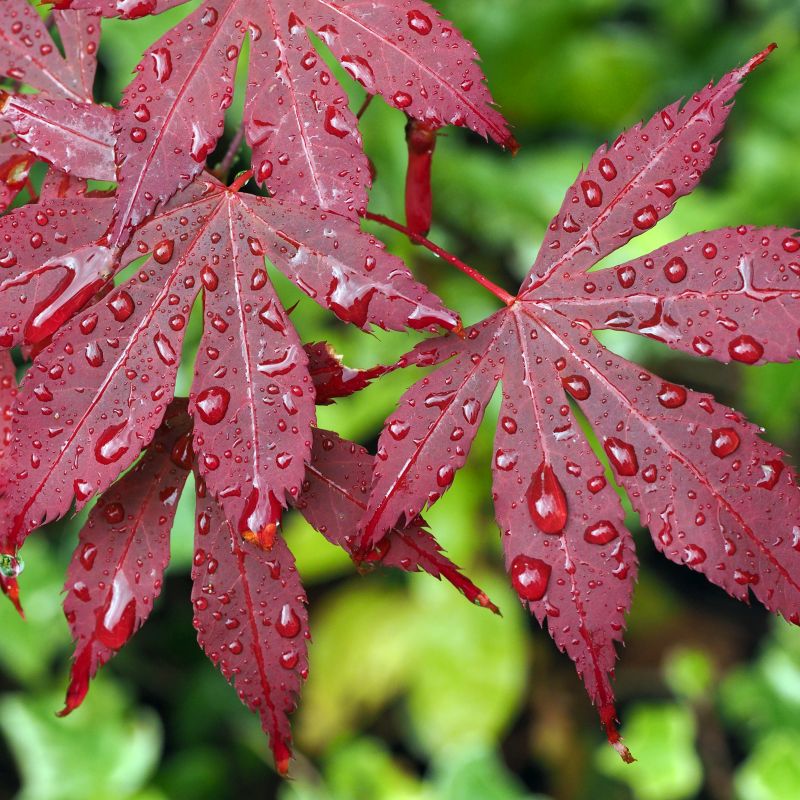
Bloodgood is the kind of plant that makes neighbors ask questions. Its deeply lobed, hand-shaped leaves emerge a dark burgundy-red in spring—not a fleeting blush, but a committed, wine-dark statement that intensifies as the season progresses. The foliage maintains that rich color through summer (unlike some Japanese maples that fade to green), creating a consistently dramatic presence in your garden. Come autumn, when you might expect the show to be over, the leaves shift into an even deeper crimson, almost black-red, before dropping to reveal an elegant branching structure with attractive dark bark. The overall form is naturally vase-shaped and graceful, typically reaching 15 to 25 feet tall in mature specimens, though many Connecticut gardeners enjoy keeping theirs smaller through thoughtful pruning.

Growing it in your garden

Here’s what makes Bloodgood special for New England gardeners: it’s genuinely cold-hardy to Zone 5, which means it laughs at Connecticut winters. While some fancy Japanese maples sulk through our climate, Bloodgood thrives. Plant it where it receives morning sun and afternoon shade—this is especially important in Connecticut, where our summer heat can sometimes stress the foliage. Afternoon shade becomes your secret weapon for keeping that color vibrant without scorching. The tree adapts to most well-draining soils but absolutely prefers slightly acidic, humus-rich earth. If your garden has that woodland loam feeling, with plenty of organic matter worked in, Bloodgood will sing.

Through the seasons

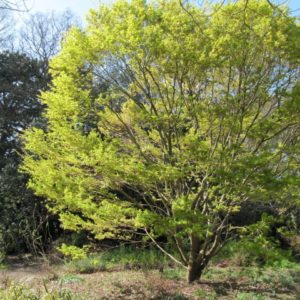
Spring arrives with unfurling burgundy-red leaves and delicate reddish flowers that add another layer of interest before the foliage steals the show. Summer is when most gardeners fall in love—that persistent deep color is mesmerizing, especially when backlit by afternoon light. Fall in Connecticut is Bloodgood’s grand finale: the foliage darkens to a luminous scarlet-black, and you’ll understand why gardeners plan entire landscapes around this moment. Winter reveals the elegant structure beneath, with dark branching that’s attractive against snow and evergreen backdrops.

Where it shines

Bloodgood excels as a specimen plant—that focal point you plant where it deserves to be seen. Position it where you’ll encounter it regularly: near a seating area, where an east or west window frames it, or as the anchor point in a mixed border. It’s also stunning in containers, which gives you the flexibility to move it and protect it during Connecticut’s harshest winters if you choose. This tree particularly shines in Japanese-inspired gardens, contemporary landscapes that embrace bold color, and cottage gardens where its drama provides welcome structure among softer plantings.

Perfect companions

Bloodgood’s deep red tones sing when paired with shade-loving perennials like coral bells, hostas with chartreuse foliage, and hellebores. Evergreen companions—particularly Japanese holly and boxwood—emphasize the maple’s form and provide winter interest. Underplant it with spring bulbs like hellebores and bleeding heart (DICENTRA SPECTABILIS), which appreciate the dappled shade it provides once fully leafed out. Late-season bloomers like sedums extend the garden’s interest as the maple’s foliage reaches its peak color.

Care tips

Bloodgood is remarkably low-maintenance once established. Water regularly during the first growing season to develop a strong root system, then it becomes quite drought-tolerant. Avoid heavy pruning; instead, use a light hand to remove any dead wood or crossing branches in late winter. Mulch around the base with 2 to 3 inches of organic material to keep roots cool and conserve moisture. Most importantly, resist the temptation to move it once planted. Japanese maples prefer to establish themselves in one location.

Quick facts

  • Hardiness Zone: 5 (reliably cold-hardy throughout Connecticut)
  • Mature Height & Spread: 15–25 feet tall and 15–20 feet wide
  • Bloom Season: Spring (reddish flowers precede foliage)
  • Light Requirements: Morning sun, afternoon shade
  • Water Needs: Moderate; consistent moisture preferred, especially during establishment
  • Available at: Both our retail and wholesale locations
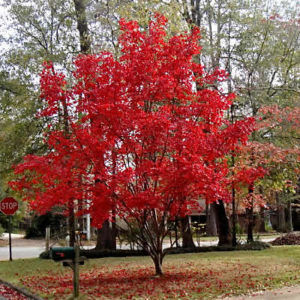
Bloodgood Japanese Maple

Category:

Red foliage persisting through summer.

Zoning: 4-5
Mature Height and Spread:
15′-20′ & 15′-20′
Trunk Diameter: 2-2.5”, 2.5-3”

Description

Bloodgood Japanese Maple

ACER PALMATUM ‘BLOODGOOD’

The Bloodgood Japanese Maple is Connecticut’s answer to year-round drama. While most trees go through their paces in spring and fall, this one commands attention from the moment it leafs out in spring through the final curtain call in November. If you’ve ever stood in front of a Japanese maple and thought, “I want that, but I need it to be reliable, hardy, and actually perform in New England,” this is the cultivar that delivers on every count.

What it looks like

Bloodgood is the kind of plant that makes neighbors ask questions. Its deeply lobed, hand-shaped leaves emerge a dark burgundy-red in spring—not a fleeting blush, but a committed, wine-dark statement that intensifies as the season progresses. The foliage maintains that rich color through summer (unlike some Japanese maples that fade to green), creating a consistently dramatic presence in your garden. Come autumn, when you might expect the show to be over, the leaves shift into an even deeper crimson, almost black-red, before dropping to reveal an elegant branching structure with attractive dark bark. The overall form is naturally vase-shaped and graceful, typically reaching 15 to 25 feet tall in mature specimens, though many Connecticut gardeners enjoy keeping theirs smaller through thoughtful pruning.

Growing it in your garden

Here’s what makes Bloodgood special for New England gardeners: it’s genuinely cold-hardy to Zone 5, which means it laughs at Connecticut winters. While some fancy Japanese maples sulk through our climate, Bloodgood thrives. Plant it where it receives morning sun and afternoon shade—this is especially important in Connecticut, where our summer heat can sometimes stress the foliage. Afternoon shade becomes your secret weapon for keeping that color vibrant without scorching. The tree adapts to most well-draining soils but absolutely prefers slightly acidic, humus-rich earth. If your garden has that woodland loam feeling, with plenty of organic matter worked in, Bloodgood will sing.

Through the seasons

Spring arrives with unfurling burgundy-red leaves and delicate reddish flowers that add another layer of interest before the foliage steals the show. Summer is when most gardeners fall in love—that persistent deep color is mesmerizing, especially when backlit by afternoon light. Fall in Connecticut is Bloodgood’s grand finale: the foliage darkens to a luminous scarlet-black, and you’ll understand why gardeners plan entire landscapes around this moment. Winter reveals the elegant structure beneath, with dark branching that’s attractive against snow and evergreen backdrops.

Where it shines

Bloodgood excels as a specimen plant—that focal point you plant where it deserves to be seen. Position it where you’ll encounter it regularly: near a seating area, where an east or west window frames it, or as the anchor point in a mixed border. It’s also stunning in containers, which gives you the flexibility to move it and protect it during Connecticut’s harshest winters if you choose. This tree particularly shines in Japanese-inspired gardens, contemporary landscapes that embrace bold color, and cottage gardens where its drama provides welcome structure among softer plantings.

Perfect companions

Bloodgood’s deep red tones sing when paired with shade-loving perennials like coral bells, hostas with chartreuse foliage, and hellebores. Evergreen companions—particularly Japanese holly and boxwood—emphasize the maple’s form and provide winter interest. Underplant it with spring bulbs like hellebores and bleeding heart (DICENTRA SPECTABILIS), which appreciate the dappled shade it provides once fully leafed out. Late-season bloomers like sedums extend the garden’s interest as the maple’s foliage reaches its peak color.

Care tips

Bloodgood is remarkably low-maintenance once established. Water regularly during the first growing season to develop a strong root system, then it becomes quite drought-tolerant. Avoid heavy pruning; instead, use a light hand to remove any dead wood or crossing branches in late winter. Mulch around the base with 2 to 3 inches of organic material to keep roots cool and conserve moisture. Most importantly, resist the temptation to move it once planted. Japanese maples prefer to establish themselves in one location.

Quick facts

  • Hardiness Zone: 5 (reliably cold-hardy throughout Connecticut)
  • Mature Height & Spread: 15–25 feet tall and 15–20 feet wide
  • Bloom Season: Spring (reddish flowers precede foliage)
  • Light Requirements: Morning sun, afternoon shade
  • Water Needs: Moderate; consistent moisture preferred, especially during establishment
  • Available at: Both our retail and wholesale locations