ACER PALMATUM ‘SHISHIGASHIRA’

Imagine a Japanese maple that looks like it’s perpetually caught mid-curl, with leaves so deeply dissected and densely packed they seem almost to wrap in on themselves. That’s SHISHIGASHIRA—whose name translates to “lion’s head” in Japanese—and it’s one of those rare plants that stops you mid-walk through the garden. This cultivar is architectural, theatrical, and utterly mesmerizing. Unlike the delicate, lacy maples you might expect, SHISHIGASHIRA challenges every assumption about Japanese maple form, creating a plant that’s sculptural enough to anchor a garden bed or stand alone as the undisputed focal point.

What it looks like

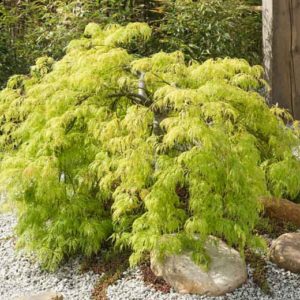
SHISHIGASHIRA is immediately distinctive. Its deeply cut palmate leaves are so finely divided and tightly curled that they create an almost quilted or corrugated texture—hence the “lion’s head” comparison. The leaf margins wave and crimp rather than lying flat, giving the entire plant a feathery, almost fantastical appearance. Spring brings fresh yellow-green emerging growth that gradually deepens to a rich forest green throughout summer, then transforms into shades of orange, red, and amber come autumn. The branching structure is naturally dense and architectural, creating a layered silhouette without any pruning required. Many gardeners describe the overall effect as almost bonsai-like, even at its mature size.

Growing it in your garden

This is a tree for the gardener willing to give Japanese maples what they truly want: afternoon shade, protection from harsh winds, and consistent moisture without waterlogging. In Connecticut, morning sun and afternoon shade is the sweet spot—the morning light brings out the leaf color while afternoon shade protects those delicate, textured leaves from scorching in summer heat. SHISHIGASHIRA appreciates a somewhat sheltered location; those feathery leaves can shred in strong winds, which isn’t a deal-breaker but does affect the visual impact. The good news? This maple is tougher than many of its ornamental cousins, reliably hardy through New England winters when given proper planting conditions.

Soil should be rich, well-draining, and slightly acidic. If you have heavy clay, amend generously with compost or peat moss before planting. Avoid spots where water pools in spring or after heavy rains—Japanese maples despise having wet feet for extended periods, even though they like consistent moisture. Think of it as the Goldilocks principle: not too wet, not too dry, just right.

Through the seasons

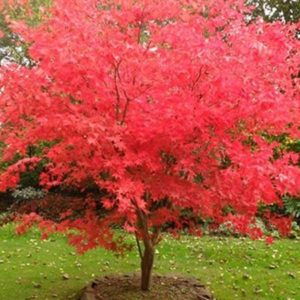
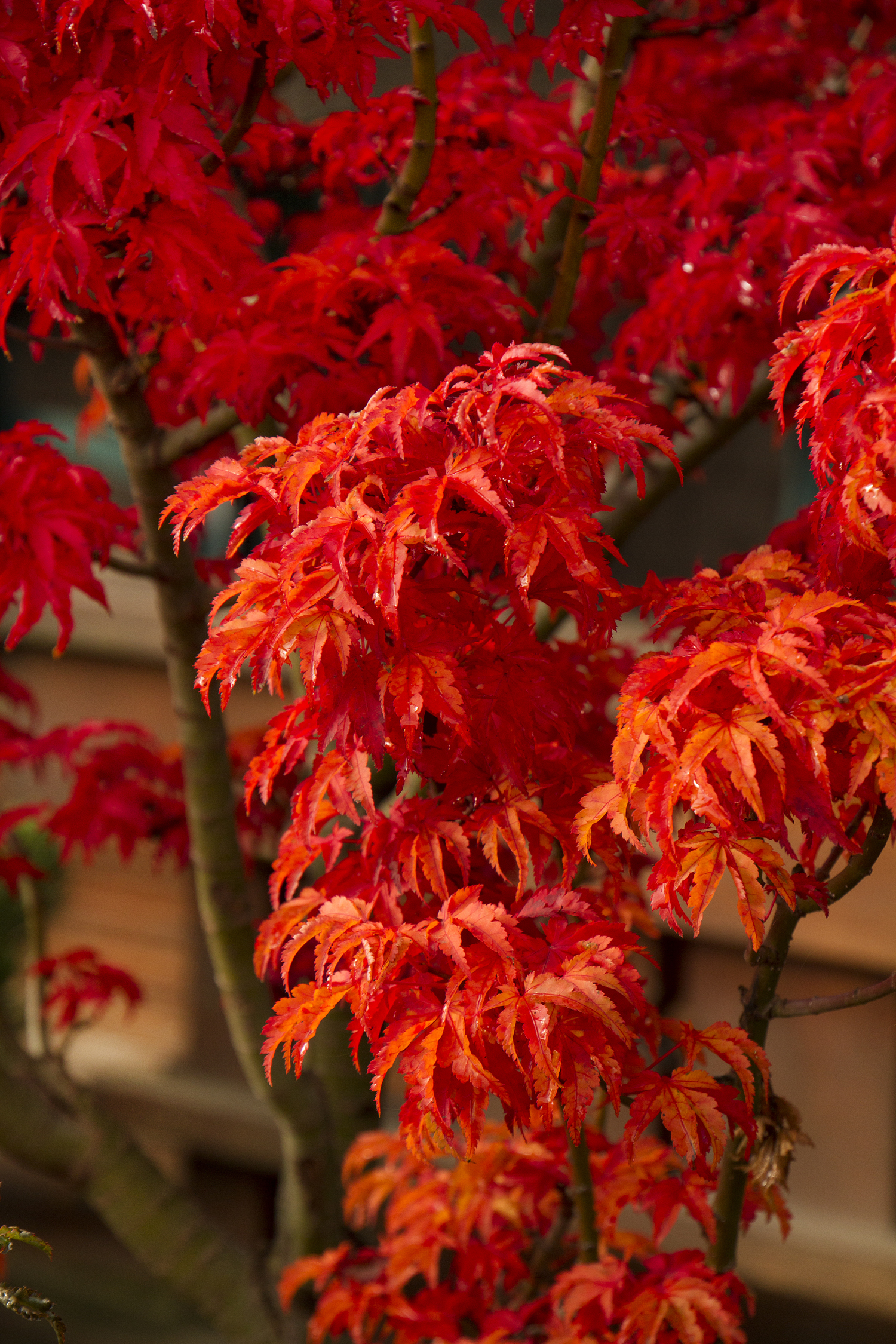
Spring is perhaps when SHISHIGASHIRA is most magical. The new growth emerges in the softest yellow-green, almost luminescent, and those curled leaves seem to reach and unfurl in waves. By early summer, the plant settles into its deep green phase, offering cool, dappled shade beneath its canopy. The textured foliage creates beautiful moving shadows on the ground below—watching it dance in the breeze is genuinely meditative. Late summer through fall is the finale: the leaves gradually shift through orange and red, with some specimens showing impressive crimson tones. The color change is typically more subtle than some flashy maples, but it’s nuanced and elegant, reflecting the plant’s overall refined character. Winter reveals the graceful branching structure, which has its own architectural beauty when frosted.

Where it shines

SHISHIGASHIRA thrives as a specimen plant—the kind of tree you position where you’ll walk past it regularly or see it from your favorite window. It’s perfect for small gardens because it stays relatively compact and doesn’t overwhelm a space. Japanese garden aesthetics suit it beautifully, but it’s equally at home in contemporary landscapes or traditional Connecticut gardens where it provides year-round interest. Consider planting it near seating areas where you can appreciate the textural detail of those remarkable leaves up close. It also works well in containers on a patio or deck, provided you commit to consistent watering during Connecticut’s hotter summers.

Perfect companions

Underplant SHISHIGASHIRA with shade-tolerant perennials that won’t compete for attention. Hostas, heucheras, and Japanese painted ferns echo the refined aesthetic. Hellebores provide winter interest and early spring color. Keep the immediate area relatively open so the maple’s architectural form remains visible and the play of light through its foliage can be fully appreciated. Nearby, evergreen shrubs like boxwoods or dwarf conifers provide contrast and help frame the maple’s delicate form.

Care tips

Water regularly, especially during establishment and through dry Connecticut summers. Mulch around the base with 2-3 inches of organic material to maintain consistent soil moisture and keep roots cool. Prune only to remove dead wood or crossing branches—this maple’s natural form is its best feature. Feed lightly in spring with a balanced fertilizer if desired, though mature trees growing in decent soil rarely need supplemental feeding. Watch for spider mites in hot, dry summers, which can affect Japanese maples; regular watering and occasional light misting help prevent this issue.

Quick facts

  • Hardiness Zone: 5-8
  • Mature Height & Spread: 15-20 feet tall and wide, often smaller and slower-growing in northern New England
  • Bloom Season: Inconspicuous flowers in spring; ornamental value is primarily foliage
  • Light Requirements: Morning sun, afternoon shade; part shade to dappled shade
  • Water Needs: Moderate; consistent moisture, well-draining soil
  • Available at: Both our retail and wholesale locations.
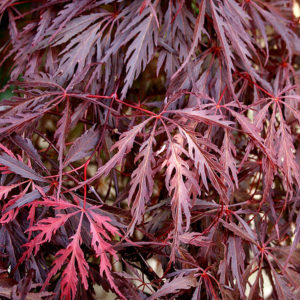
Shishigashira ‘ Lion’s Head Japanese maple

Category:

Heavily curled green leaves give an interesting texture to this compact, shrubby tree. Foliage becomes purple-red with orange-red patterns in fall,

Zoning: 6-9

Description

ACER PALMATUM ‘SHISHIGASHIRA’

Imagine a Japanese maple that looks like it’s perpetually caught mid-curl, with leaves so deeply dissected and densely packed they seem almost to wrap in on themselves. That’s SHISHIGASHIRA—whose name translates to “lion’s head” in Japanese—and it’s one of those rare plants that stops you mid-walk through the garden. This cultivar is architectural, theatrical, and utterly mesmerizing. Unlike the delicate, lacy maples you might expect, SHISHIGASHIRA challenges every assumption about Japanese maple form, creating a plant that’s sculptural enough to anchor a garden bed or stand alone as the undisputed focal point.

What it looks like

SHISHIGASHIRA is immediately distinctive. Its deeply cut palmate leaves are so finely divided and tightly curled that they create an almost quilted or corrugated texture—hence the “lion’s head” comparison. The leaf margins wave and crimp rather than lying flat, giving the entire plant a feathery, almost fantastical appearance. Spring brings fresh yellow-green emerging growth that gradually deepens to a rich forest green throughout summer, then transforms into shades of orange, red, and amber come autumn. The branching structure is naturally dense and architectural, creating a layered silhouette without any pruning required. Many gardeners describe the overall effect as almost bonsai-like, even at its mature size.

Growing it in your garden

This is a tree for the gardener willing to give Japanese maples what they truly want: afternoon shade, protection from harsh winds, and consistent moisture without waterlogging. In Connecticut, morning sun and afternoon shade is the sweet spot—the morning light brings out the leaf color while afternoon shade protects those delicate, textured leaves from scorching in summer heat. SHISHIGASHIRA appreciates a somewhat sheltered location; those feathery leaves can shred in strong winds, which isn’t a deal-breaker but does affect the visual impact. The good news? This maple is tougher than many of its ornamental cousins, reliably hardy through New England winters when given proper planting conditions.

Soil should be rich, well-draining, and slightly acidic. If you have heavy clay, amend generously with compost or peat moss before planting. Avoid spots where water pools in spring or after heavy rains—Japanese maples despise having wet feet for extended periods, even though they like consistent moisture. Think of it as the Goldilocks principle: not too wet, not too dry, just right.

Through the seasons

Spring is perhaps when SHISHIGASHIRA is most magical. The new growth emerges in the softest yellow-green, almost luminescent, and those curled leaves seem to reach and unfurl in waves. By early summer, the plant settles into its deep green phase, offering cool, dappled shade beneath its canopy. The textured foliage creates beautiful moving shadows on the ground below—watching it dance in the breeze is genuinely meditative. Late summer through fall is the finale: the leaves gradually shift through orange and red, with some specimens showing impressive crimson tones. The color change is typically more subtle than some flashy maples, but it’s nuanced and elegant, reflecting the plant’s overall refined character. Winter reveals the graceful branching structure, which has its own architectural beauty when frosted.

Where it shines

SHISHIGASHIRA thrives as a specimen plant—the kind of tree you position where you’ll walk past it regularly or see it from your favorite window. It’s perfect for small gardens because it stays relatively compact and doesn’t overwhelm a space. Japanese garden aesthetics suit it beautifully, but it’s equally at home in contemporary landscapes or traditional Connecticut gardens where it provides year-round interest. Consider planting it near seating areas where you can appreciate the textural detail of those remarkable leaves up close. It also works well in containers on a patio or deck, provided you commit to consistent watering during Connecticut’s hotter summers.

Perfect companions

Underplant SHISHIGASHIRA with shade-tolerant perennials that won’t compete for attention. Hostas, heucheras, and Japanese painted ferns echo the refined aesthetic. Hellebores provide winter interest and early spring color. Keep the immediate area relatively open so the maple’s architectural form remains visible and the play of light through its foliage can be fully appreciated. Nearby, evergreen shrubs like boxwoods or dwarf conifers provide contrast and help frame the maple’s delicate form.

Care tips

Water regularly, especially during establishment and through dry Connecticut summers. Mulch around the base with 2-3 inches of organic material to maintain consistent soil moisture and keep roots cool. Prune only to remove dead wood or crossing branches—this maple’s natural form is its best feature. Feed lightly in spring with a balanced fertilizer if desired, though mature trees growing in decent soil rarely need supplemental feeding. Watch for spider mites in hot, dry summers, which can affect Japanese maples; regular watering and occasional light misting help prevent this issue.

Quick facts

  • Hardiness Zone: 5-8
  • Mature Height & Spread: 15-20 feet tall and wide, often smaller and slower-growing in northern New England
  • Bloom Season: Inconspicuous flowers in spring; ornamental value is primarily foliage
  • Light Requirements: Morning sun, afternoon shade; part shade to dappled shade
  • Water Needs: Moderate; consistent moisture, well-draining soil
  • Available at: Both our retail and wholesale locations.