Description

HYDRANGEA MACROPHYLLA ‘TWIST N SHOUT’
What if one plant could deliver nonstop color from summer through fall, tolerate our unpredictable Connecticut springs, and actually get better with age? Meet Twist ‘n Shout—a reblooming bigleaf hydrangea that’s changing the game for New England gardeners who thought they had to choose between reliable performers and showstopping blooms. This isn’t your grandmother’s hydrangea. It’s a comeback story in plant form, producing wave after wave of enormous flower clusters precisely when you need them most: midsummer through the first hard frost.
What it looks like
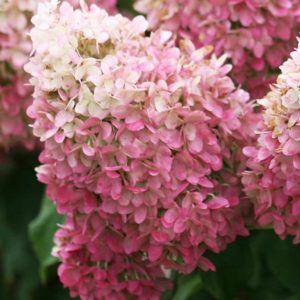
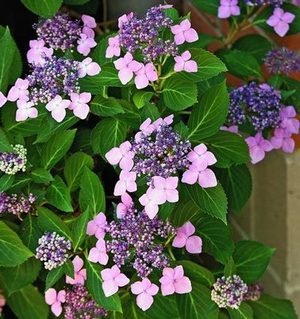
Twist ‘n Shout commands attention. The flower heads are massive—we’re talking 6 to 8 inches across—with a full, rounded form that looks almost architectural against green foliage. The real magic happens in the color. Depending on your soil’s pH, you’ll get either rich blue tones (in acidic soil) or luminous pink and magenta hues (in neutral to alkaline conditions). What makes this variety special is that the flowers often display both colors simultaneously, creating a genuine “twist” of blue and pink in the same cluster. The florets have a slightly ruffled texture that catches light beautifully, and they transition elegantly through the season, aging to deeper, more muted tones by autumn—a color progression that actually improves your garden’s visual depth rather than detracting from it.
Growing it in your garden
Here’s the honest truth about Twist ‘n Shout: it’s remarkably forgiving for a hydrangea. Unlike many bigleaf varieties that struggle with Connecticut’s unpredictable weather, this reblooming type flowers on both old and new wood, which means even if winter takes your buds, you’ll still get a summer-into-fall show from new growth. Plant it where it receives morning sun and afternoon dappled shade—a spot that gives it light without the intense heat that can stress plants during our occasional dry spells. Afternoon shade is especially important in our zone; it protects those extraordinary blooms from scorching while ensuring they get enough light to develop their most vibrant colors.
Soil matters here. Twist ‘n Shout prefers consistently moist (not waterlogged) soil rich in organic matter. Work in compost at planting time and maintain that moisture, especially during its first season and during bloom time. If you want to influence the flower color, adjust your soil pH: add sulfur to acidify for blues, or add lime to increase pH for pinks. The process takes time, but Connecticut’s naturally somewhat acidic soils often lean toward blue tones naturally.
Through the seasons
Spring arrives with fresh, healthy foliage emergence—and here’s where Twist ‘n Shout differs from many hydrangeas. Even if harsh winter winds or late frosts damage the previous year’s wood, this rebloomer will still produce flower buds on this year’s new stems, giving you options and security. By early summer, buds appear and keep coming. The first major flush typically arrives by late June or early July, with smaller subsequent flushes appearing reliably through September and even into October if temperatures remain moderate. The aging flowers fade to more neutral bronzy-pink or slate-blue tones, creating beautiful texture and interest through fall. Leave the dried flower heads on the plant through winter—they’re architecturally striking frosted with snow, and they provide winter interest while protecting next year’s buds.
Where it shines
Twist ‘n Shout excels as a focal point in shrub borders, where its substantial flower production and extended blooming season provide a dependable color anchor. It’s perfect for foundation plantings where you want something that delivers from July through October. In cottage gardens and pollinator-friendly landscapes, it’s invaluable—the flowers attract butterflies and bees throughout the season. It works beautifully in mixed borders with ornamental grasses, perennials, and shade-tolerant companions. It’s also ideal for gardeners who’ve had hydrangea heartbreak before; its reblooming habit means you’re almost guaranteed results.
Perfect companions
Pair Twist ‘n Shout with shade-tolerant Japanese Forest Grass for delicate textural contrast. Astilbe works beautifully nearby, echoing the flower form while preferring the same moist soil. Add shade-loving perennials like Hosta or Hellebores at its base for layered interest. For contrast, consider upright plants like Oakleaf Hydrangea (HYDRANGEA QUERCIFOLIA) or small evergreens such as Dwarf Alberta Spruce.
Care tips
Prune lightly in early spring, removing dead or damaged wood and shaping if needed, but remember that this variety flowers on new growth, so avoid heavy pruning. Deadhead spent flowers during the growing season to encourage more blooms. Water consistently—aim for 1 to 1.5 inches weekly during the growing season, more during heat. Mulch around the base with 2 to 3 inches of compost to maintain moisture and regulate soil temperature. Feed with a balanced, slow-release fertilizer in spring, or use a hydrangea-specific formula. In harsh winters, young plants may benefit from extra mulch protection.
Quick facts
- Hardiness Zone: Zones 5–9 (reliably hardy in Connecticut)
- Mature Height & Spread: 3–5 feet tall and wide
- Bloom Season: July through October
- Light Requirements: Morning sun, afternoon shade
- Water Needs: Consistent moisture; moderate to high
- Available at: Both our retail and wholesale locations