Description

ACER PALMATUM ‘VIRIDIS’
What if elegance could be both delicate and tough? The Viridis Laceleaf Japanese Maple proves that it can be. This cultivar is the answer for gardeners who want that ethereal, almost-lace quality of the finest Japanese maples but need something that won’t break when a Connecticut nor’easter rolls through. It’s the sophisticate who doesn’t need to be babied—rare and wonderful.
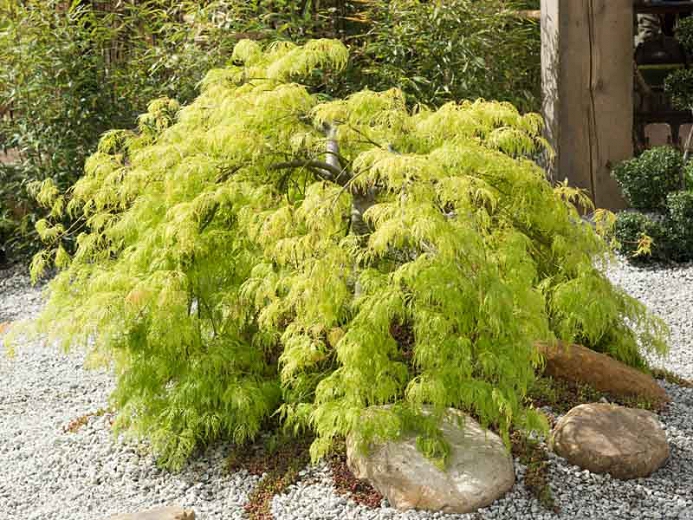
What it looks like
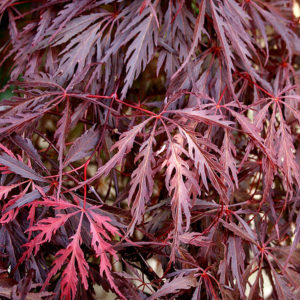
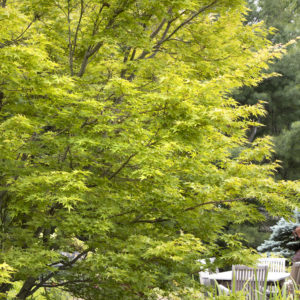
Imagine holding a piece of green silk up to the light. That’s the effect of a mature Viridis Laceleaf in full leaf. This is a deeply dissected laceleaf variety, meaning the foliage is so finely divided it appears almost feathery—each leaf is an intricate masterpiece of threadlike segments. The color is a luminous, almost glowing green in spring and summer, without the red or burgundy undertones you’d find in many other laceleaf selections. In autumn, this particular cultivar shifts into warm golden and amber tones before dropping for winter.
The growth habit is graceful and naturally spreading, creating a layered, fountain-like silhouette that works as a focal point in any garden. The branching structure is fine and delicate, adding winter interest even when the leaves have fallen.
Growing it in your garden
Here’s what makes Viridis Laceleaf special for New England gardeners: it’s a laceleaf Japanese maple with real hardiness. While some laceleaf varieties need coddling, this one genuinely performs in Connecticut’s climate. That said, site selection still matters. Give it a spot with dappled shade or morning sun with afternoon protection—this is especially important in our region, where intense summer sun and dry heat can stress the delicate foliage.
Soil is crucial. Japanese maples despise wet feet, but they’re equally unhappy in drought. You’re aiming for that sweet spot: well-draining soil enriched with organic matter. If you have heavy clay, amend liberally with compost before planting. If you’re in a naturally sandy area, work in plenty of organic matter to help retain moisture. Think of it as creating the forest-floor conditions these trees experience in their native Japanese mountain habitats.
Plant in spring or early fall to give roots time to establish before our most stressful seasons. A layer of mulch—about 2-3 inches, kept a few inches back from the trunk—helps moderate soil temperature and moisture in Connecticut’s variable climate.
Through the seasons
Spring arrives with that glowing green emergence. Watching the fresh lacey foliage unfurl is one of the quiet joys of April and May gardening. By early summer, the canopy has fully developed into a luminous, airy presence in the garden.
Summer is when Viridis Laceleaf truly earns its keep. While other trees fade into background green, this maple positively glows—especially in afternoon light, where light passes through the fine foliage. The lacy texture makes even a still afternoon feel animated and alive.
Autumn transforms it into shades of gold and amber, though it lacks the dramatic scarlets of some varieties. For many gardeners, this is an asset—it’s easier to coordinate in mixed beds with other fall-changing plants.
Winter reveals the graceful branching structure, offering quiet architectural interest until spring returns.
Where it shines
This is a plant for those key focal-point locations. A Viridis Laceleaf needs to be seen—it’s too beautiful to tuck away. Use it as a specimen near a seating area, where afternoon light can play through the foliage. It’s also excellent as a featured plant in Japanese or contemplative gardens, where its delicate form can be properly appreciated.
In mixed shade borders, it provides vertical interest and that sophisticated, refined presence that makes the entire composition feel intentional and designed. Pair it where you want to slow people down and make them look closely.
Perfect companions
Since Viridis Laceleaf appreciates dappled shade and rich soil, it thrives near other shade-tolerant woodland plants. Pair it with hostas in complementary colors, hellebores for early spring interest, or astilbe for a feathery texture play. Ferns—especially Japanese painted fern—echo the lacey aesthetic perfectly. Heuchera in deep burgundy or chartreuse contrasts beautifully with that glowing green foliage.
Underplant with shade-tolerant groundcovers like Japanese sweet spire or creeping jenny. The goal is to create a lush, layered woodland effect that matches the refined elegance of the maple itself.
Care tips
Water deeply during establishment and through dry spells—particularly in hot Connecticut summers. Once established, Viridis Laceleaf is fairly independent, though it appreciates consistent moisture during drought. Prune minimally and only in late winter to maintain that natural, graceful form. This maple doesn’t need aggressive shaping; its natural architecture is part of its beauty.
Watch for Japanese beetle activity in early summer, particularly on young plants. In severe infestations, netting can protect new foliage. No major disease issues in our region—another reason to love this tough beauty.
Quick facts
- Hardiness Zone: 5-8
- Mature Height & Spread: 15-20 feet tall and equally wide
- Bloom Season: Insignificant spring flowers; grown for foliage
- Light Requirements: Dappled shade to part sun; afternoon protection in hot climates
- Water Needs: Moderate; consistent moisture, well-draining soil essential
- Available at: Both our retail and wholesale locations