Crimson Queen Japanese Maple

If you’re looking for a show-stopping focal point that’ll have your neighbors asking questions all season long, the Crimson Queen Japanese Maple (ACER PALMATUM ‘CRIMSON QUEEN’) is absolutely your tree. This is one of those plants that earns its place in your garden year after year, delivering drama, elegance, and that coveted Japanese garden aesthetic right here in Connecticut. With its deeply dissected crimson foliage and graceful weeping form, it’s the kind of specimen that transforms a simple garden into something truly special—and honestly, it’s easier to grow than you might think!

What it looks like

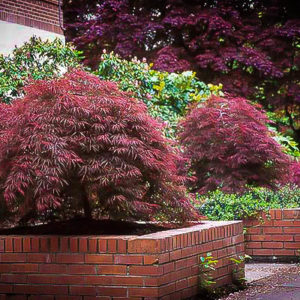
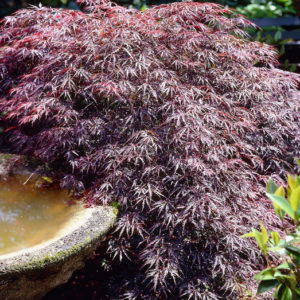
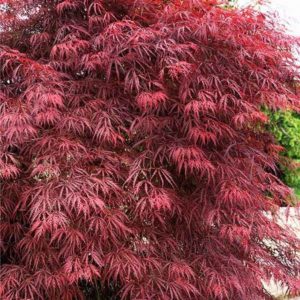
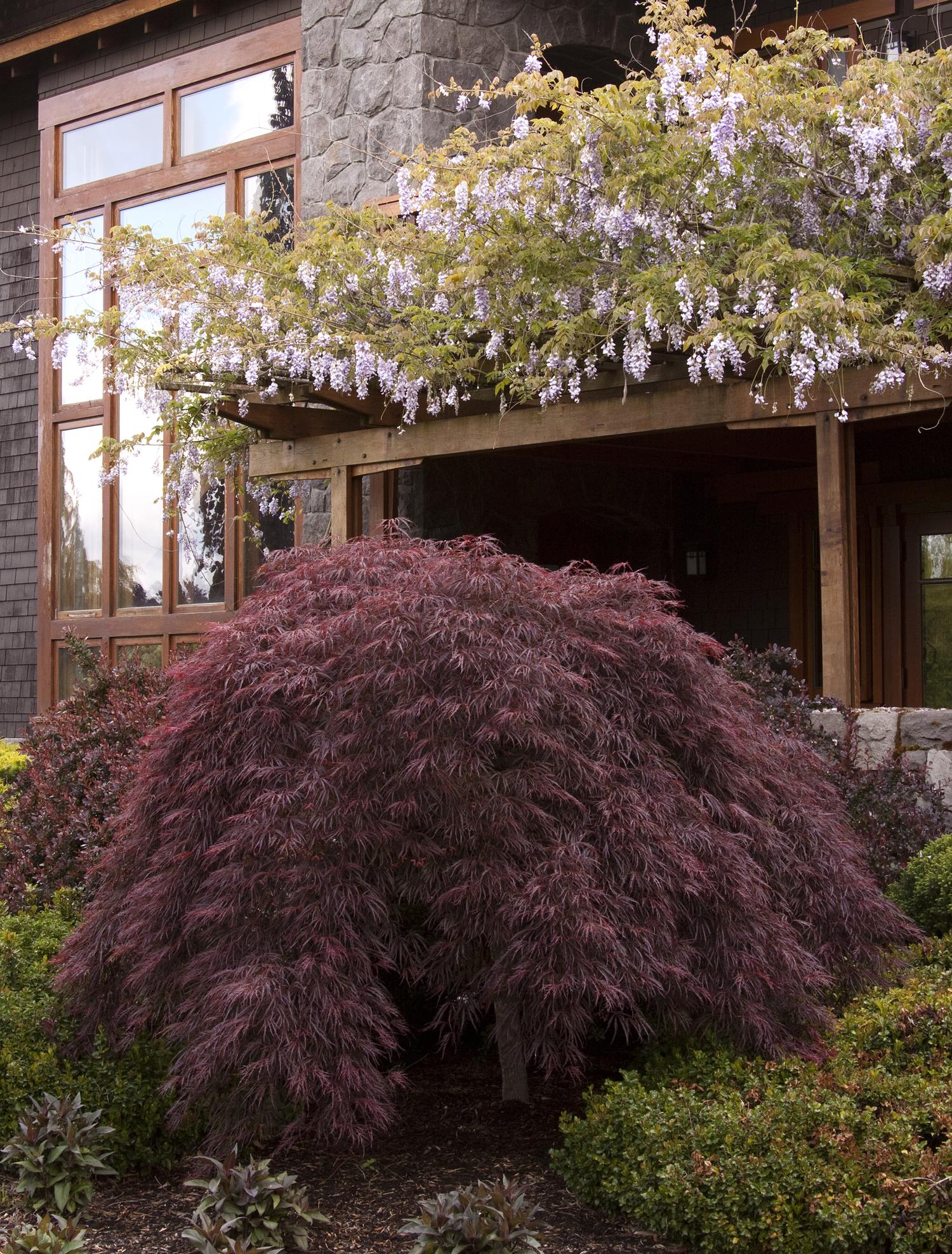
The Crimson Queen is a vision in red. Its delicate, deeply cut leaves are so finely divided that they almost look like lace, displaying a stunning deep crimson to burgundy color throughout the growing season. Unlike some Japanese maples that are more upright, this cultivar has that beautiful weeping, cascading habit—imagine graceful branches that gently sweep downward, creating an almost fountain-like silhouette. Even the young stems are ornamental, showing lovely reddish tones that add interest during winter when you really notice the tree’s architecture. This isn’t a large tree; it’s more of a statement piece that commands attention without taking over your whole yard. The overall effect is both delicate and dramatic, which is exactly why gardeners in New England fall head over heels for it.

Growing it in your garden

Here’s the thing about Japanese maples in Connecticut—they actually thrive here if you give them what they want, and the Crimson Queen isn’t fussy. This cultivar is hardy in Zones 5-8, which means it’s perfectly suited to our New England climate. Plant it in a location where it gets morning sun and afternoon shade; that afternoon shade is particularly important in our hot summers, as it protects the foliage from scorching. Japanese maples prefer soil that’s well-draining and slightly acidic, which honestly isn’t hard to achieve in Connecticut. If you have heavy clay soil, work in some compost or peat moss before planting to improve drainage. The key to success here is ensuring water moves through the soil properly—sitting in soggy conditions is not what this tree wants. Once established, it’s surprisingly resilient and won’t demand constant fussing from you.

Through the seasons

What I absolutely love about the Crimson Queen is that it delivers color and interest across all four seasons in Connecticut. In spring, those new leaves emerge in shades of bright crimson and scarlet—it’s like the tree lights up your garden in May and June. Summer brings consistent deep red foliage that provides wonderful contrast against green plants and lighter flowers. Come fall, you’d think it couldn’t get more stunning, but the foliage intensifies to an even deeper burgundy and wine color before those delicate leaves drift away. And then in winter, when everything else in your garden is dormant and gray, the elegant branching structure of the Crimson Queen becomes a piece of living sculpture, with those reddish stems adding warmth and visual interest during Connecticut’s long cold months. It’s basically year-round beauty.

Where it shines

The Crimson Queen is ideal for creating focal points in smaller gardens or courtyards—it doesn’t have the aggressive spread of larger shade trees, so it’s perfect for those of us working with Connecticut properties that might not have endless space. It’s stunning as a specimen plant near a patio or deck where you can really appreciate its delicate branching structure and changing colors. Japanese maples also do wonderfully in Asian-inspired gardens, shade gardens, or mixed borders where they can be underplanted with shade-loving hostas, hellebores, or ferns. If you have a wooded edge or a shaded corner that needs softening, this tree brings elegance and vertical interest without being overwhelming. Many of our customers use it in containers too, which is a great option if your garden space is limited.

Perfect companions

The Crimson Queen pairs beautifully with shade-loving perennials and groundcovers. Think hostas with their lush foliage providing a nice textural contrast, or delicate Japanese forest grass (HAKONECHLOA MACRA) cascading underneath like a living carpet. Hellebores bloom early when you need winter and spring interest, and their refined nature complements the maple’s elegance. Acid-loving hydrangeas work wonderfully nearby, and shade-tolerant shade ferns and epimediums add wonderful texture at ground level. Really, the key is choosing companions that don’t compete for attention—you want the maple to remain the star while surrounding plants provide supporting interest and fill in the understory.

Care tips

Once your Crimson Queen is established, it’s relatively low-maintenance. Water regularly during the first growing season and during dry spells in summer; Connecticut’s humidity usually helps with moisture, but hot, dry periods require supplemental watering. Mulch around the base with 2-3 inches of organic material to keep roots cool and retain moisture. Pruning isn’t usually necessary—Japanese maples naturally develop beautiful form—but if you need to remove crossing branches or shape it slightly, do that in late winter. Avoid heavy pruning during spring when sap is running. Watch for spider mites during hot, dry summers, which can occasionally be a nuisance in our region, but a strong spray of water usually handles that. Generally speaking, this tree is a low-maintenance beauty that rewards you with stunning color with minimal fussing.

Quick facts

  • Hardiness Zone: 5-8
  • Mature Height & Spread: 8-10 feet tall, 8-10 feet wide
  • Bloom Season: Grown for foliage; spring flowers in winged samaras
  • Light Requirements: Morning sun, afternoon shade (critical in Connecticut summers)
  • Water Needs: Regular moisture; prefers well-draining soil
  • Available at: Both our retail and wholesale locations.

Crimson Queen Japanese Maple

A low-branching, dwarf tree with a delicate, weeping form. The foliage holds its beautiful crimson color throughout summer and can turn bright scarlet in autumn.

Pot Size (gallons), Height: 48-54″

Description

Crimson Queen Japanese Maple

If you’re looking for a show-stopping focal point that’ll have your neighbors asking questions all season long, the Crimson Queen Japanese Maple (ACER PALMATUM ‘CRIMSON QUEEN’) is absolutely your tree. This is one of those plants that earns its place in your garden year after year, delivering drama, elegance, and that coveted Japanese garden aesthetic right here in Connecticut. With its deeply dissected crimson foliage and graceful weeping form, it’s the kind of specimen that transforms a simple garden into something truly special—and honestly, it’s easier to grow than you might think!

What it looks like

The Crimson Queen is a vision in red. Its delicate, deeply cut leaves are so finely divided that they almost look like lace, displaying a stunning deep crimson to burgundy color throughout the growing season. Unlike some Japanese maples that are more upright, this cultivar has that beautiful weeping, cascading habit—imagine graceful branches that gently sweep downward, creating an almost fountain-like silhouette. Even the young stems are ornamental, showing lovely reddish tones that add interest during winter when you really notice the tree’s architecture. This isn’t a large tree; it’s more of a statement piece that commands attention without taking over your whole yard. The overall effect is both delicate and dramatic, which is exactly why gardeners in New England fall head over heels for it.

Growing it in your garden

Here’s the thing about Japanese maples in Connecticut—they actually thrive here if you give them what they want, and the Crimson Queen isn’t fussy. This cultivar is hardy in Zones 5-8, which means it’s perfectly suited to our New England climate. Plant it in a location where it gets morning sun and afternoon shade; that afternoon shade is particularly important in our hot summers, as it protects the foliage from scorching. Japanese maples prefer soil that’s well-draining and slightly acidic, which honestly isn’t hard to achieve in Connecticut. If you have heavy clay soil, work in some compost or peat moss before planting to improve drainage. The key to success here is ensuring water moves through the soil properly—sitting in soggy conditions is not what this tree wants. Once established, it’s surprisingly resilient and won’t demand constant fussing from you.

Through the seasons

What I absolutely love about the Crimson Queen is that it delivers color and interest across all four seasons in Connecticut. In spring, those new leaves emerge in shades of bright crimson and scarlet—it’s like the tree lights up your garden in May and June. Summer brings consistent deep red foliage that provides wonderful contrast against green plants and lighter flowers. Come fall, you’d think it couldn’t get more stunning, but the foliage intensifies to an even deeper burgundy and wine color before those delicate leaves drift away. And then in winter, when everything else in your garden is dormant and gray, the elegant branching structure of the Crimson Queen becomes a piece of living sculpture, with those reddish stems adding warmth and visual interest during Connecticut’s long cold months. It’s basically year-round beauty.

Where it shines

The Crimson Queen is ideal for creating focal points in smaller gardens or courtyards—it doesn’t have the aggressive spread of larger shade trees, so it’s perfect for those of us working with Connecticut properties that might not have endless space. It’s stunning as a specimen plant near a patio or deck where you can really appreciate its delicate branching structure and changing colors. Japanese maples also do wonderfully in Asian-inspired gardens, shade gardens, or mixed borders where they can be underplanted with shade-loving hostas, hellebores, or ferns. If you have a wooded edge or a shaded corner that needs softening, this tree brings elegance and vertical interest without being overwhelming. Many of our customers use it in containers too, which is a great option if your garden space is limited.

Perfect companions

The Crimson Queen pairs beautifully with shade-loving perennials and groundcovers. Think hostas with their lush foliage providing a nice textural contrast, or delicate Japanese forest grass (HAKONECHLOA MACRA) cascading underneath like a living carpet. Hellebores bloom early when you need winter and spring interest, and their refined nature complements the maple’s elegance. Acid-loving hydrangeas work wonderfully nearby, and shade-tolerant shade ferns and epimediums add wonderful texture at ground level. Really, the key is choosing companions that don’t compete for attention—you want the maple to remain the star while surrounding plants provide supporting interest and fill in the understory.

Care tips

Once your Crimson Queen is established, it’s relatively low-maintenance. Water regularly during the first growing season and during dry spells in summer; Connecticut’s humidity usually helps with moisture, but hot, dry periods require supplemental watering. Mulch around the base with 2-3 inches of organic material to keep roots cool and retain moisture. Pruning isn’t usually necessary—Japanese maples naturally develop beautiful form—but if you need to remove crossing branches or shape it slightly, do that in late winter. Avoid heavy pruning during spring when sap is running. Watch for spider mites during hot, dry summers, which can occasionally be a nuisance in our region, but a strong spray of water usually handles that. Generally speaking, this tree is a low-maintenance beauty that rewards you with stunning color with minimal fussing.

Quick facts

  • Hardiness Zone: 5-8
  • Mature Height & Spread: 8-10 feet tall, 8-10 feet wide
  • Bloom Season: Grown for foliage; spring flowers in winged samaras
  • Light Requirements: Morning sun, afternoon shade (critical in Connecticut summers)
  • Water Needs: Regular moisture; prefers well-draining soil
  • Available at: Both our retail and wholesale locations.