Tamukeyama Japanese Maple

ACER PALMATUM ‘TAMUKEYAMA’

What if you could have a Japanese maple that doesn’t just survive Connecticut winters, but actually thrives in them? Tamukeyama is the weeping wonder that transforms a shaded corner into something that makes your neighbors ask “where did you get that?” Year after year, this elegant cultivar delivers on its promise: delicate, deeply cut foliage on gracefully cascading branches, stunning seasonal color changes, and the kind of architectural interest that makes winter as captivating as spring.

What it looks like

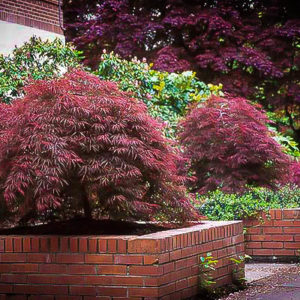
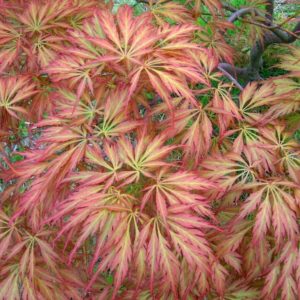
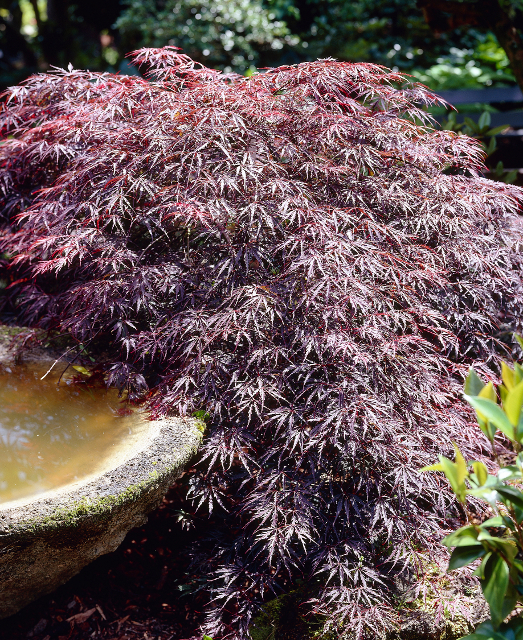
Tamukeyama is a vision of refined Japanese garden aesthetics translated into New England hardiness. Its fine, deeply dissected leaves emerge in spring with a soft reddish-bronze tone, then transition to a brilliant deep crimson through summer. The real magic lies in its weeping form—branches arch and cascade downward in a natural fountain shape, creating layers of movement and texture even on still days. In autumn, the entire plant ignites in shades of scarlet and burgundy. Unlike many ornamental maples, this cultivar holds its color beautifully into October without the brittleness that sometimes affects New England specimens.

Growing it in your garden

Tamukeyama is considerably more forgiving than people assume. Yes, it prefers dappled shade and well-draining soil enriched with organic matter—but “prefers” doesn’t mean “demands.” In Connecticut gardens, afternoon shade protects the foliage from scorching and intensity of full sun exposure. Morning sun is actually beneficial. The key is avoiding exposed locations where harsh winter winds and late spring frosts can damage emerging growth. Plant in a sheltered spot near your house or under the protective canopy of larger trees, and you’ve set this maple up for decades of success. Tamukeyama appreciates consistent moisture during its first two years, but once established, it’s remarkably drought-tolerant compared to other ornamental maples.

Through the seasons

Spring arrives with those unfurling reddish-bronze leaflets—a moment worth planning your garden around. By early summer, the cascading foliage has deepened to a rich crimson that provides stunning contrast against darker evergreens or lighter-colored structures. The weeping branches create soft shadows on the ground beneath, like nature’s own lacework. Fall is pure drama: the entire plant becomes a fountain of scarlet and burgundy, with leaves turning progressively darker as temperatures drop. Even winter has its appeal—the bare, graceful branching structure reveals the maple’s elegant framework and architectural bones, which many gardeners find just as beautiful as the leafed-out version.

Where it shines

This cultivar was born for intimate garden spaces where you can appreciate its details. Consider it for a specimen planting near your patio or deck, where you can enjoy the shifting light through its delicate foliage. It’s spectacular as a focal point in Japanese-inspired gardens or contemporary shade gardens. The weeping form also works beautifully in containers—yes, they can remain potted for years and make spectacular seasonal displays. Tamukeyama is small enough for tight spaces but distinctive enough to anchor a corner garden. It’s equally at home in a mixed shade border or as a standalone accent against a neutral backdrop where its silhouette truly shines.

Perfect companions

Plant Tamukeyama with shade-loving perennials that celebrate its refined aesthetic. Hostas with blue-gray foliage create lovely textural contrast. Hellebores that bloom in early spring extend the color season. Ferns—especially the architectural varieties like Christmas ferns—echo the maple’s delicate, feathery quality. Spring bulbs like hellebores and bleeding hearts emerge and fade before the maple’s growth obscures them. Evergreen groundcovers like creeping phlox or sedums soften the base while providing winter interest. Avoid planting aggressive spreaders nearby; Tamukeyama deserves breathing room to display its graceful form.

Care tips

Mulch around the base with 2-3 inches of organic material to maintain consistent soil moisture and moderate root temperature—especially important during our unpredictable Connecticut springs. Water deeply during dry spells, particularly in the first two growing seasons. Pruning is rarely necessary; the natural weeping habit develops beautifully without intervention. If you do prune, do so in late winter before spring growth emerges. Avoid pruning in fall, which can stimulate tender new growth vulnerable to frost. In Connecticut’s occasionally brutal winters, select a location with morning sun to dry frost from foliage—this reduces damage from late spring freezes.

Quick facts

  • Hardiness Zone: 5-8 (thrives throughout Connecticut)
  • Mature Height & Spread: 8-10 feet tall and 10-12 feet wide
  • Bloom Season: Spring foliage emergence; ornamental foliage spring through fall
  • Light Requirements: Dappled shade to part sun; afternoon shade preferred
  • Water Needs: Moderate; consistent moisture preferred, especially during establishment
  • Available at: Both our retail and wholesale locations.
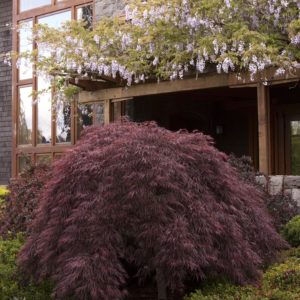
Tamukeyama Japanese Maple

A graceful, mounding, dwarf tree with waxy, deep red bark and beautiful cascading branches. Deeply lobed foliage is a beautiful purple-red throughout the summer and turns bright red in the fall.

Zoning: 5-8

Description

Tamukeyama Japanese Maple

ACER PALMATUM ‘TAMUKEYAMA’

What if you could have a Japanese maple that doesn’t just survive Connecticut winters, but actually thrives in them? Tamukeyama is the weeping wonder that transforms a shaded corner into something that makes your neighbors ask “where did you get that?” Year after year, this elegant cultivar delivers on its promise: delicate, deeply cut foliage on gracefully cascading branches, stunning seasonal color changes, and the kind of architectural interest that makes winter as captivating as spring.

What it looks like

Tamukeyama is a vision of refined Japanese garden aesthetics translated into New England hardiness. Its fine, deeply dissected leaves emerge in spring with a soft reddish-bronze tone, then transition to a brilliant deep crimson through summer. The real magic lies in its weeping form—branches arch and cascade downward in a natural fountain shape, creating layers of movement and texture even on still days. In autumn, the entire plant ignites in shades of scarlet and burgundy. Unlike many ornamental maples, this cultivar holds its color beautifully into October without the brittleness that sometimes affects New England specimens.

Growing it in your garden

Tamukeyama is considerably more forgiving than people assume. Yes, it prefers dappled shade and well-draining soil enriched with organic matter—but “prefers” doesn’t mean “demands.” In Connecticut gardens, afternoon shade protects the foliage from scorching and intensity of full sun exposure. Morning sun is actually beneficial. The key is avoiding exposed locations where harsh winter winds and late spring frosts can damage emerging growth. Plant in a sheltered spot near your house or under the protective canopy of larger trees, and you’ve set this maple up for decades of success. Tamukeyama appreciates consistent moisture during its first two years, but once established, it’s remarkably drought-tolerant compared to other ornamental maples.

Through the seasons

Spring arrives with those unfurling reddish-bronze leaflets—a moment worth planning your garden around. By early summer, the cascading foliage has deepened to a rich crimson that provides stunning contrast against darker evergreens or lighter-colored structures. The weeping branches create soft shadows on the ground beneath, like nature’s own lacework. Fall is pure drama: the entire plant becomes a fountain of scarlet and burgundy, with leaves turning progressively darker as temperatures drop. Even winter has its appeal—the bare, graceful branching structure reveals the maple’s elegant framework and architectural bones, which many gardeners find just as beautiful as the leafed-out version.

Where it shines

This cultivar was born for intimate garden spaces where you can appreciate its details. Consider it for a specimen planting near your patio or deck, where you can enjoy the shifting light through its delicate foliage. It’s spectacular as a focal point in Japanese-inspired gardens or contemporary shade gardens. The weeping form also works beautifully in containers—yes, they can remain potted for years and make spectacular seasonal displays. Tamukeyama is small enough for tight spaces but distinctive enough to anchor a corner garden. It’s equally at home in a mixed shade border or as a standalone accent against a neutral backdrop where its silhouette truly shines.

Perfect companions

Plant Tamukeyama with shade-loving perennials that celebrate its refined aesthetic. Hostas with blue-gray foliage create lovely textural contrast. Hellebores that bloom in early spring extend the color season. Ferns—especially the architectural varieties like Christmas ferns—echo the maple’s delicate, feathery quality. Spring bulbs like hellebores and bleeding hearts emerge and fade before the maple’s growth obscures them. Evergreen groundcovers like creeping phlox or sedums soften the base while providing winter interest. Avoid planting aggressive spreaders nearby; Tamukeyama deserves breathing room to display its graceful form.

Care tips

Mulch around the base with 2-3 inches of organic material to maintain consistent soil moisture and moderate root temperature—especially important during our unpredictable Connecticut springs. Water deeply during dry spells, particularly in the first two growing seasons. Pruning is rarely necessary; the natural weeping habit develops beautifully without intervention. If you do prune, do so in late winter before spring growth emerges. Avoid pruning in fall, which can stimulate tender new growth vulnerable to frost. In Connecticut’s occasionally brutal winters, select a location with morning sun to dry frost from foliage—this reduces damage from late spring freezes.

Quick facts

  • Hardiness Zone: 5-8 (thrives throughout Connecticut)
  • Mature Height & Spread: 8-10 feet tall and 10-12 feet wide
  • Bloom Season: Spring foliage emergence; ornamental foliage spring through fall
  • Light Requirements: Dappled shade to part sun; afternoon shade preferred
  • Water Needs: Moderate; consistent moisture preferred, especially during establishment
  • Available at: Both our retail and wholesale locations.