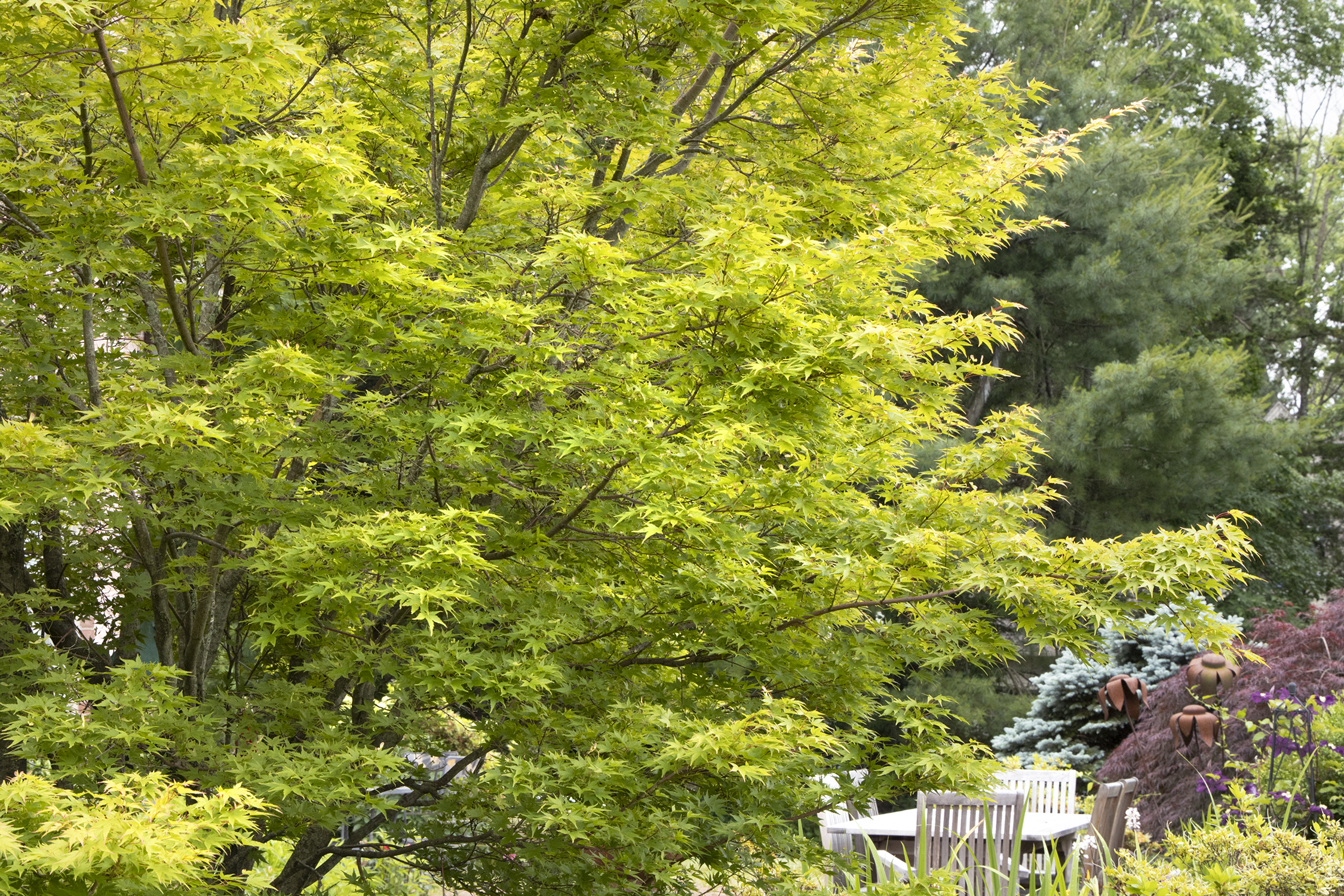
Description
ACER PALMATUM ‘SANGO-KAKU’
Winter in Connecticut is long, and it’s easy to feel like your garden has checked out entirely. But there’s something almost defiant about the Sango-Kaku Japanese Maple—as the rest of the landscape goes gray and dormant, this tree ignites with coral-red bark that seems to glow against the snow. It’s not just a winter showstopper, though. Come spring, tender new growth emerges in a shade of coral-pink so delicate it barely looks real, then unfolds into soft green leaves. This is a Japanese maple that works hard for you across all four seasons, and once you plant one, you’ll wonder how you ever gardened without it.
What it looks like
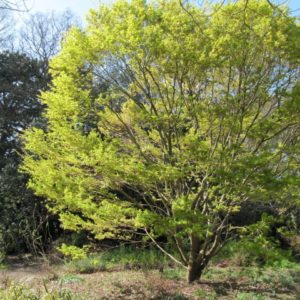
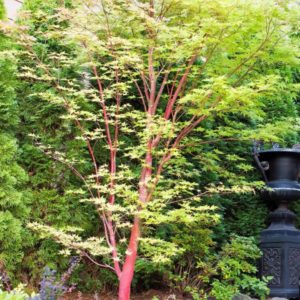
Sango-Kaku is a delicate, refined tree with the signature deeply lobed foliage of Japanese maples—leaves that look almost feathery in their intricacy. During the growing season, those leaves are a fresh, soft green that catches light beautifully and provides an elegant backdrop to other garden plants. But it’s the bark that gives this cultivar its name and reputation. Young stems and branches emerge in brilliant coral-red, and as they age, they deepen into an almost burgundy tone. In winter, when deciduous plants are mostly brown and boring, this bark transforms into living jewelry—brilliant enough to be spotted from across the garden. The tree develops a graceful, upright habit with a somewhat spreading crown, creating a naturally architectural form that looks beautiful even when bare.
Growing it in your garden
Japanese maples have a reputation for being finicky, but Sango-Kaku is one of the more forgiving cultivars for New England gardens. It succeeds best in dappled shade—think the kind of light you’d get under taller deciduous trees or on the east side of a building where it catches morning sun but afternoon protection. The afternoon shade is especially important in Connecticut summers, which can get hot enough to scorch the delicate foliage if the tree is exposed to full afternoon sun. This is not a plant for dark corners, though. It needs enough light to develop that signature coral bark color and to maintain healthy foliage. Afternoon shade with morning or dappled sun throughout the day is the sweet spot.
Soil matters here too. Japanese maples, and Sango-Kaku especially, prefer well-draining, slightly acidic soil that never gets waterlogged. If your garden has heavy clay or poor drainage, amend the planting area generously with compost or peat moss before planting. Sango-Kaku won’t tolerate wet feet—this is especially important to remember during Connecticut’s wet springs. The good news is that it’s quite drought-tolerant once established, making it a plant that rewards good siting and soil preparation with years of reliable performance.
Through the seasons
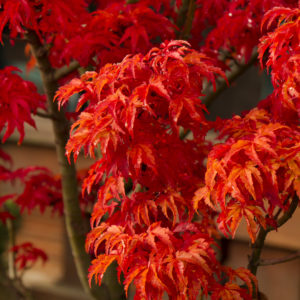
Spring brings the most ethereal display. As new leaves unfurl, they emerge in that distinctive coral-pink shade before gradually shifting to green. Against the brilliant red branches, it’s almost magical. By early summer, the tree settles into deep green, a sophisticated presence in the garden that looks particularly striking when paired with chartreuse plants or dark-leaved perennials. Fall color is respectable—a mix of golden yellow and orange that’s never quite as dramatic as some Japanese maples, but elegant nonetheless. The real showstopper comes in autumn and winter, when the trees drop their leaves and the glowing coral bark takes center stage. In the weak winter light of New England, it absolutely gleams, and after a fresh snow, it’s almost surreal. The coral coloring is best on new growth, so the younger stems will be the most vivid—which means it puts on an even better show as it matures.
Where it shines
Sango-Kaku is perfect as a specimen tree in a Japanese-style garden, a shade garden’s focal point, or as an accent in a mixed border. It’s wonderful near an entry or along a path where you’ll see it regularly, especially during winter. Many gardeners plant it where afternoon light can backlight the coral bark—this makes the color even more dramatic. It works beautifully in containers too, which can be an excellent strategy for controlling drainage in wet areas of your garden.
Perfect companions
Underplant with shade-tolerant hostas, hellebores, or Japanese painted ferns to create a sophisticated woodland feeling. The coral bark pairs gorgeously with white-flowered shade plants like astilbe or with silver-leaved plants like artemisia. In containers, combine it with trailing ivy and shade-loving annuals for a composed look.
Care tips
Water regularly during the first growing season to establish a deep root system. Once established, water during dry spells but allow the soil to dry somewhat between waterings. Prune only to remove dead or crossing branches—late winter is the best time. Avoid heavy pruning, which removes the young coral bark you’re growing it for. A light mulch helps keep roots cool and maintains consistent moisture.
Quick facts
- Hardiness Zone: 5–8 (thrives throughout Connecticut)
- Mature Height & Spread: 25 feet tall and 20 feet wide (often smaller in cultivation)
- Bloom Season: Spring (tiny flowers); fall foliage; winter bark
- Light Requirements: Part shade to dappled shade (morning sun with afternoon protection)
- Water Needs: Moderate; well-draining soil essential
- Available at: Both our retail and wholesale locations