Description
BUXUS SEMPERVIRENS ‘VARIEGATA’
There’s something deeply satisfying about a plant that stays put. That doesn’t get leggy or sprawl beyond its borders. That keeps its composure through Connecticut’s unpredictable winters and summers alike. Variegated Boxwood is exactly that plant—a refined, architectural evergreen that brings structure and sophistication to any garden while offering those creamy white-edged leaves that catch the light like tiny brushstrokes of elegance.
What it looks like
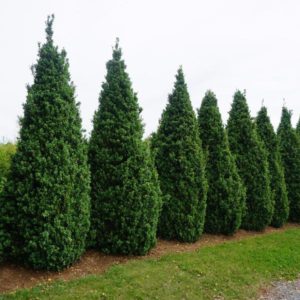
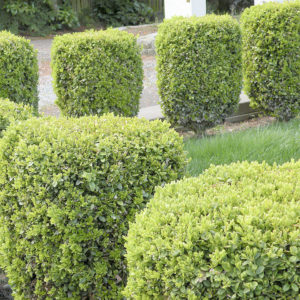
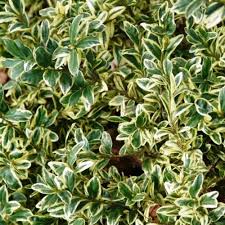
Variegated Boxwood is a study in restraint and beauty. Its small, glossy leaves are distinctly edged in creamy white or pale yellow, creating a luminous quality that makes the plant seem almost to glow in shaded corners. The foliage is dense and compact, naturally forming a tidy mounded or pyramidal silhouette that looks intentional without requiring constant fussing. Unlike its solid green cousins, this variegated cultivar of BUXUS SEMPERVIRENS brings a lighter touch to the landscape—it’s the sophisticated evergreen equivalent of elegant jewelry.
Growing it in your garden
Variegated Boxwood is refreshingly easygoing about where you plant it. It thrives in partial shade to dappled sunlight, making it perfect for those tricky spots under mature trees where so many plants sulk. In full sun, the foliage actually holds its variegation beautifully and may take on subtle warmer tones. It prefers well-draining soil rich in organic matter—work in some compost at planting time and you’ll set it up for years of trouble-free growth. The key to happiness is consistent moisture without waterlogging; think of it like a cup of tea that needs refilling, not a swamp.
Plant in spring or early fall to give roots time to establish before the season’s stress kicks in. Space plants 2 to 3 feet apart if you’re creating a hedge or border, closer if you want a denser effect more quickly. Variegated Boxwood doesn’t mind Connecticut clay, though amending it with compost always helps.
Through the seasons
Winter is where this boxwood truly earns its place in a New England garden. The variegation actually intensifies in cold months—those pale edges become even more pronounced against the darker green base. While some boxwoods turn an unappealing bronze in harsh winters, this cultivar maintains its composure and its color. Spring brings fresh new growth, still variegated from the start. Summer is about maintaining that dense form and keeping foliage lush. Fall transitions the plant subtly, deepening slightly without losing its signature pale-edged character. It’s the evergreen that actually looks good all year, in all seasons.
Where it shines
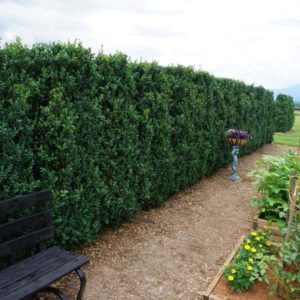
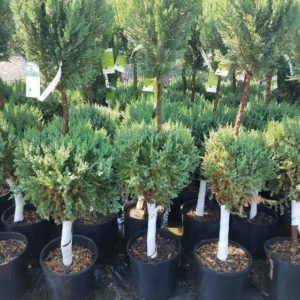
Variegated Boxwood is a team player. Tuck it into a mixed border where its variegation lifts darker-leaved companions like burgundy Japanese Maples or deep green Hollies. Line a pathway with it for a classic, European garden feel. Use it as a specimen in a shaded foundation planting, where its pale edges brighten up the north side of your house. Plant it in containers for a deck or patio—it’s formal enough for that. It’s equally at home in a contemporary minimalist garden or a traditional New England cottage landscape. The variegation means it works harder than a solid green boxwood, earning its place through visual interest rather than just mass.
Perfect companions
Pair Variegated Boxwood with shade-tolerant hostas for textural contrast—the fine-textured boxwood beside broad hosta leaves is always winning. Japanese Ferns bring an airy, delicate quality that plays beautifully against the boxwood’s density. Hellebores (Christmas Rose) at its base extend the season and add subtle color. In sunnier spots, combine it with Ornamental Grasses like Carex or Hakonechloa, which repeat the light, airy feeling of the variegation. For spring bulbs, plant Snowdrops or early Hellebores nearby—they pop up and fade before boxwood’s leafy density becomes dominant.
Care tips
Water regularly during the first growing season, then taper back as the plant establishes itself—Variegated Boxwood is surprisingly drought-tolerant once settled. Prune in late spring or early summer, after new growth emerges, keeping it to the natural shape unless you’re going for a formal hedged look. Avoid heavy pruning in fall, which can spur tender new growth that won’t harden off before winter. Monitor for spider mites in hot, dry spells (unusual in Connecticut, but worth noting), and ensure good air circulation to prevent fungal issues in humid summers. A light feeding in spring with balanced fertilizer keeps foliage lush and variegation vibrant. This is a low-maintenance plant—it rewards restraint.
Quick facts
- Hardiness Zone: 5-9 (thoroughly happy in Connecticut)
- Mature Height & Spread: 3-5 feet tall, 3-4 feet wide (varies with pruning)
- Bloom Season: Inconspicuous flowers in spring; evergreen foliage is the show
- Light Requirements: Partial shade to full sun
- Water Needs: Moderate; keep soil consistently moist but well-draining
- Available at: Both our retail and wholesale locations